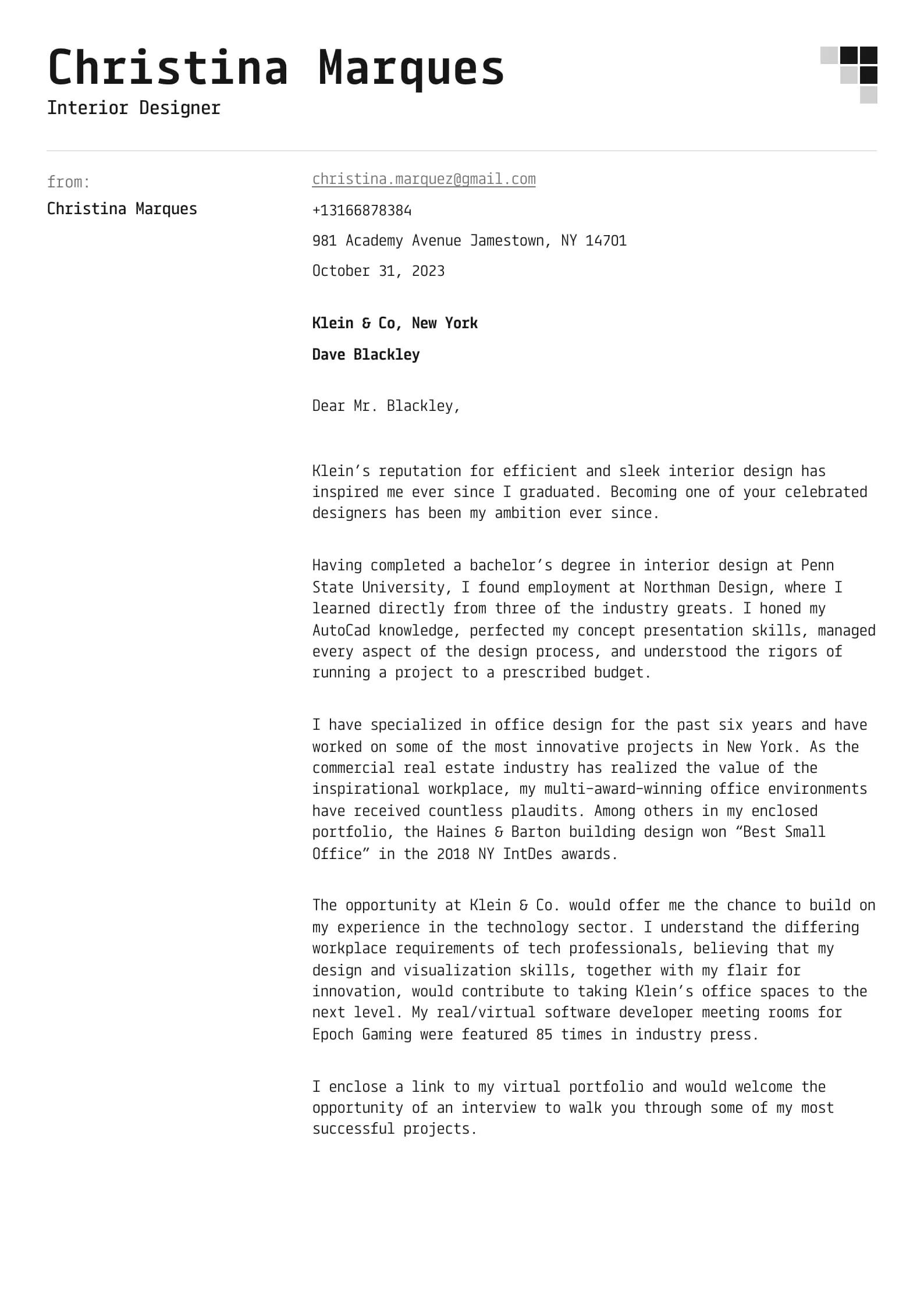
Understanding Designer Cover Letters
A designer cover letter is more than just a formality; it’s your first opportunity to make a strong impression and set yourself apart from other applicants. It’s a crucial tool in a designer’s job search, allowing you to showcase your skills, experience, and personality in a way that a resume alone cannot. Think of it as your personal marketing document, designed to grab the attention of hiring managers and convince them to read your resume. The cover letter provides a space to explain why you’re the perfect fit for the role, highlighting your unique qualifications and expressing your enthusiasm for the opportunity. By crafting a compelling cover letter, you significantly increase your chances of landing an interview and ultimately, the job.
The Purpose of a Cover Letter
The primary purpose of a cover letter is to introduce yourself to a potential employer and provide context to your resume. It serves as a bridge between your qualifications and the requirements of the job. A well-written cover letter demonstrates your interest in the specific position, your understanding of the company’s needs, and your ability to communicate effectively. It also offers a chance to tell your story—to explain career transitions, elaborate on project experiences, or highlight specific skills that align with the job description. Furthermore, a cover letter showcases your personality and communication style, giving the hiring manager a glimpse of who you are beyond your professional accomplishments.
Essential Elements of a Designer Cover Letter

A successful designer cover letter comprises several essential elements that collectively present a comprehensive picture of your qualifications and suitability for the role. Each section plays a vital role in conveying your professional narrative, skills, and enthusiasm to the hiring manager. These elements are not merely components but are interconnected, working in harmony to make a strong and lasting impression. From the initial greeting to the final call to action, each part of your cover letter must be meticulously crafted to maximize its impact and increase your chances of securing an interview.
Contact Information
Begin your cover letter with your contact information at the top, including your name, phone number, email address, and optionally, a link to your online portfolio or LinkedIn profile. This ensures the hiring manager can easily reach you. Ensure that your email address sounds professional.
Personalized Greeting
Address the hiring manager by name whenever possible. Research the company and the specific role to find the name of the hiring manager or the person responsible for reviewing applications. Use ‘Dear Mr./Ms./Mx. [Last Name]’ to show that you have taken the time to personalize your letter. If you can’t find a specific name, use a professional greeting like ‘Dear Hiring Manager’.
Opening Paragraph

Start with a strong opening that captures the reader’s attention and states your interest in the position. Mention where you found the job posting and express your enthusiasm for the opportunity. Briefly highlight a key skill or experience that makes you a strong candidate. The opening paragraph sets the tone for the rest of your letter, so make it engaging and relevant.
Body Paragraphs Highlighting Skills and Experience
The body of your cover letter is where you demonstrate how your skills and experience align with the job requirements. Use specific examples to illustrate your abilities and achievements. Focus on the most relevant aspects of your experience and tailor your content to match the job description. Break down the body into logical sections, highlighting key skills and experiences that align with the job requirements. This structured approach makes it easier for the hiring manager to quickly assess your qualifications and see how you can contribute to their team.
Showcasing Relevant Design Skills
Clearly outline your design skills. Whether you are a graphic designer, a UX/UI designer, or a web designer, specify your expertise. Mention the design principles you understand and can apply to your work, such as typography, color theory, user-centered design, or responsive design. Emphasize your proficiency in design software like Adobe Creative Suite, Sketch, Figma, or other relevant tools.
Demonstrating Experience with Design Tools

List the design tools you are proficient in, and mention any certifications or training you have. Show your ability to create wireframes, mockups, and prototypes. Talk about your use of tools such as Photoshop, Illustrator, InDesign, Sketch, Figma, and others based on the job requirements. If applicable, highlight your understanding of HTML, CSS, and other web technologies.
Quantifying Achievements
Whenever possible, quantify your achievements with data or metrics. Use numbers to show your impact, like improved user engagement or increased conversion rates. Instead of saying ‘Improved website design’, say ‘Increased website conversion rates by 15% through improved UI/UX design’. Highlighting tangible results demonstrates the value you bring to the company and showcases the impact of your work.
Closing Paragraph and Call to Action
In your closing paragraph, reiterate your interest in the position and express your enthusiasm for the opportunity. Thank the hiring manager for their time and consideration. Include a clear call to action, such as ‘I look forward to discussing my qualifications further in an interview’ or ‘I am eager to learn more about this opportunity’. Provide a professional closing, like ‘Sincerely’ or ‘Best regards’, followed by your name and contact information.
Sample Cover Letter Structure

Here’s a sample cover letter structure that you can use as a template to craft your own letter. Remember to customize it to match the specific job and your qualifications.
Header and Greeting
Your Contact Information (Name, Phone, Email, Portfolio/LinkedIn). Date. Hiring Manager Name (if known) and Title. Company Name. Company Address. Dear Mr./Ms./Mx. [Last Name] or Dear Hiring Manager.
Introduction Paragraph
State the position you are applying for and where you found the job posting. Express your enthusiasm for the role and briefly highlight a key skill or experience that makes you a strong candidate.
Body Paragraphs

Focus on 2–3 body paragraphs, each addressing a specific point. The first paragraph can highlight a key skill and provide an example of how you have used that skill. The second paragraph can discuss a project that showcases your abilities. Quantify your achievements with numbers or data whenever possible, focusing on tangible results. The third paragraph could demonstrate your understanding of the company’s values or industry trends.
Closing and Call to Action
Reiterate your interest and enthusiasm, thanking the hiring manager. Include a clear call to action, such as scheduling an interview. Use a professional closing (Sincerely, Best regards) followed by your name and contact information.
Tailoring Your Cover Letter
A generic cover letter will likely end up in the trash. Tailoring your cover letter to each job application is essential. Customize your letter to align with the specific requirements and values of each company and position.
Researching the Company and Job

Before writing your cover letter, thoroughly research the company and the specific job. Understand their mission, values, and recent projects. Analyze the job description to identify the key skills, qualifications, and experiences that the employer is looking for. Demonstrate your understanding of the company’s needs and show how your skills align with their requirements. Showing your knowledge will significantly increase your chances of getting an interview.
Customizing Your Letter for Each Application
Every cover letter you write should be unique. Personalize each letter by addressing the specific requirements of the job and highlighting the skills and experiences that are most relevant. Use keywords from the job description and tailor your language to match the company’s tone. Customize your examples to directly address the requirements. Make sure that you present yourself as the best fit for the particular role. Take the time to customize each letter.
Keywords and SEO
Use keywords from the job description strategically throughout your cover letter. This helps the hiring manager quickly identify your qualifications. Integrate keywords into your skills and experience descriptions. Ensure the keywords fit naturally within your writing. Avoid keyword stuffing, which can make your letter sound unnatural and be a turn-off. You want to show that you know what you’re talking about, not just that you can repeat words.
Common Mistakes to Avoid
Avoiding common mistakes is crucial for making a positive impression on potential employers. Paying attention to these pitfalls can significantly improve the effectiveness of your cover letter and increase your chances of securing an interview. Make sure you proofread your letter multiple times.
Generic Cover Letters
Do not use a generic cover letter. Submitting a generic cover letter is a quick way to get your application rejected. Generic letters lack personalization, showing that you haven’t taken the time to understand the job or the company. Customize your letter for each application to show your genuine interest and demonstrate how your skills align with the specific job requirements.
Typos and Grammatical Errors
Typos and grammatical errors are unacceptable in a cover letter. They reflect a lack of attention to detail and can undermine your credibility. Proofread your letter carefully before submitting it. Have a friend or family member review your letter as well to catch any mistakes you might have missed. Use grammar and spell-checking tools, but do not rely on them completely. Ensure the final draft is error-free.
Lack of Enthusiasm
Your cover letter should convey enthusiasm for the position and the company. Avoid writing a letter that sounds monotonous or disinterested. Express your genuine interest in the role and the opportunity to contribute to the company’s success. Show excitement, highlight aspects of the job that excite you, and explain why you are drawn to the company. Enthusiasm can go a long way in making a positive impression.
Cover Letter Samples to Inspire You
Reviewing cover letter samples can provide valuable insight and inspiration for crafting your own. Here are a few examples tailored to different design roles.
Sample 1: For a Graphic Design Position
Dear [Hiring Manager Name],
I am writing to express my enthusiastic interest in the Graphic Designer position at [Company Name], as advertised on [Platform]. With five years of experience in graphic design and a passion for creating visually stunning and effective designs, I am confident that I possess the skills and creativity to excel in this role.
In my previous role at [Previous Company], I was responsible for developing branding materials, marketing collateral, and social media graphics. I have a strong understanding of design principles, including typography, color theory, and layout. I am proficient in Adobe Creative Suite (Photoshop, Illustrator, InDesign) and other design software.
I am particularly drawn to [Company Name] because of your commitment to [mention something specific about the company’s work or values]. I am eager to contribute to your team and create designs that align with your brand. I look forward to discussing my qualifications further in an interview.
Sincerely, [Your Name]
Sample 2: For a UX/UI Design Position
Dear [Hiring Manager Name],
I am writing to express my keen interest in the UX/UI Designer position at [Company Name]. I have been working with user-centered design for several years, and I am excited about the opportunity to contribute to your team.
I have a strong background in UX/UI design, including user research, wireframing, prototyping, and usability testing. I am proficient in tools such as Sketch, Figma, and Adobe XD. I have a proven track record of improving user experience and increasing conversion rates. I am passionate about creating intuitive and user-friendly interfaces.
I am particularly drawn to [Company Name]’s focus on [mention something specific about the company’s design philosophy or projects]. I am excited about the opportunity to design user experiences that improve the product. I look forward to discussing my qualifications in an interview.
Sincerely, [Your Name]
Sample 3: For a Web Design Position
Dear [Hiring Manager Name],
I am writing to apply for the Web Designer position at [Company Name]. I am a highly creative and experienced web designer with a passion for creating engaging and effective websites. I am excited about the opportunity to contribute to your team.
I have expertise in web design, including front-end development (HTML, CSS, JavaScript) and responsive design. I am proficient in various design tools, including Photoshop, Illustrator, and Figma. I have experience creating websites from start to finish, including design, development, and deployment.
I admire [Company Name]’s innovative approach to web design and its commitment to user experience. I am eager to create and improve the websites. I look forward to the opportunity to discuss my experience with you.
Sincerely, [Your Name]
Final Thoughts
A well-crafted designer cover letter is your key to landing your dream job. By following these guidelines and tailoring your letter to each job application, you’ll significantly increase your chances of making a positive impression and securing an interview. Remember to highlight your skills and experience, demonstrate your enthusiasm, and proofread carefully. Best of luck in your job search!