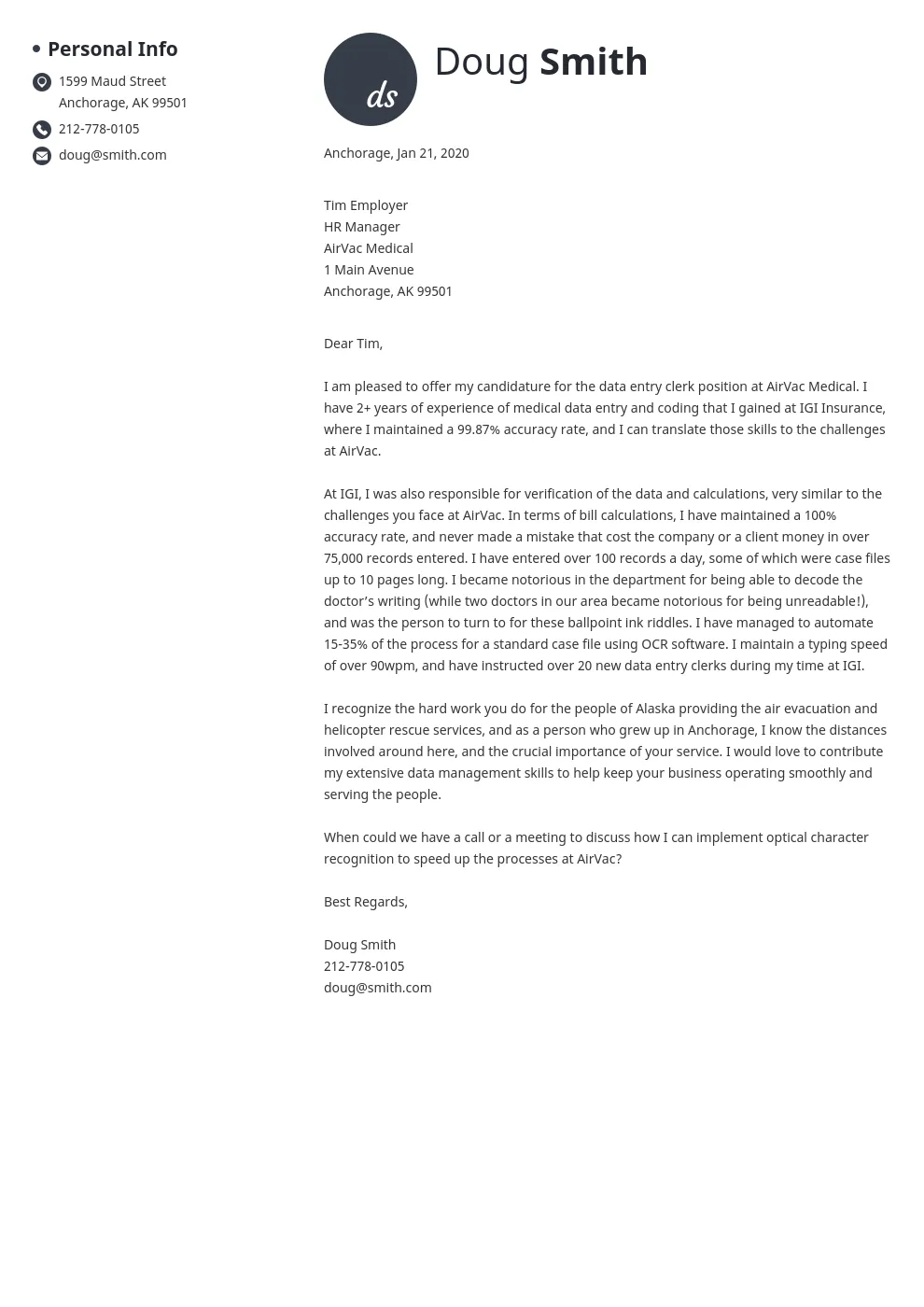
Essential Tips for a Data Entry Cover Letter
Crafting a compelling cover letter is crucial for any data entry job application. Your cover letter is your first impression, and it provides the opportunity to showcase your skills, experience, and enthusiasm for the role. It’s not just a formality; it’s your chance to stand out from the crowd. This guide provides essential tips to help you write a data entry cover letter that grabs the attention of hiring managers and increases your chances of landing an interview. Following these tips will significantly enhance your application, demonstrating that you’re not just qualified but also a great fit for the company culture. Make sure to customize the tips below to your personal strengths for best results.
Highlight Your Skills and Qualifications
Data entry positions require a specific set of skills. Your cover letter should prominently highlight your relevant skills. Begin by identifying the key skills the employer is seeking, often listed in the job description. Some of the most sought-after skills include typing speed, accuracy, attention to detail, and organizational abilities. Other skills include knowledge of database management, proficiency in data entry software like Microsoft Excel, and the capacity to work independently and as part of a team. When listing your skills, provide concrete examples of how you’ve utilized them in previous roles or projects, showcasing your capacity to excel in the position.
Showcase Your Experience

Your experience is a key differentiator. Clearly outline your relevant experience, specifying the types of data entry tasks you’ve performed. Include details about the industries you’ve worked in, the volume of data you’ve handled, and any special projects or responsibilities you had. If you’re a recent graduate or have limited experience, focus on any internships, volunteer work, or academic projects where you’ve gained data entry skills. Frame your experiences in a way that shows your ability to efficiently and accurately manage and process information. Be specific about your role and responsibilities to give the hiring manager a clear picture of your capabilities.
Quantify Your Achievements
Whenever possible, quantify your achievements to make your cover letter more impactful. Instead of simply saying you’re fast and accurate, provide metrics. For example, state your typing speed (words per minute) and accuracy rate. If you’ve improved data processing efficiency, mention the percentage by which you reduced errors or increased output. If you’ve handled a large volume of data, specify the number of records or transactions you processed daily or weekly. Quantifiable achievements demonstrate your skills and provide concrete evidence of your value to a potential employer. This shows potential employers your performance in terms that are easily understood.
Emphasize Relevant Software Proficiency
Data entry often involves using various software applications. Make sure to emphasize your proficiency in the software mentioned in the job description. This might include Microsoft Excel, Google Sheets, CRM systems, or specialized data entry programs. If you’re familiar with different types of data entry software, be sure to include this information, even if it is not explicitly stated in the job description. Mention any certifications or training you’ve received related to these programs. Providing this information will help the hiring manager quickly assess your technical expertise and ensure that you’re comfortable with the tools they use.
Tailor Your Cover Letter to the Job Description

One of the most effective strategies for writing a successful data entry cover letter is tailoring it to each job description. Generic cover letters are often overlooked. Spend time carefully reviewing the job posting and identify the key requirements, skills, and qualifications the employer is looking for. Customize your cover letter to address these specific needs. This demonstrates your genuine interest in the position and shows that you’ve taken the time to understand the company’s needs. By doing so, your cover letter will resonate more with the hiring manager, increasing your chances of getting an interview.
Research the Company
Before you start writing, research the company. Understand the company’s mission, values, and the industry they operate in. This will help you personalize your cover letter and show that you understand the company’s needs and what the role entails. Look at the company website, social media profiles, and news articles. Mentioning a specific company initiative, project, or value in your cover letter can demonstrate your interest and alignment with their goals. This level of detail will show the hiring manager that you’ve put in the effort to learn about the company.
Match Your Skills to the Job Requirements
Carefully analyze the job description and identify the key skills and qualifications that the employer is seeking. Then, match your skills and experiences to these requirements. In your cover letter, clearly state how your skills align with the job’s needs. Use specific examples to show how you’ve used these skills in the past to achieve positive results. Use the language of the job description, including keywords, to make your cover letter more relevant. This shows that you have considered what the company needs and that you are the right candidate to meet those needs.
Use Keywords from the Job Posting

Incorporate relevant keywords from the job posting throughout your cover letter. Recruiters and hiring managers often use Applicant Tracking Systems (ATS) to screen applications. Using the same keywords from the job description increases the likelihood that your cover letter will be selected. Identify the most important keywords related to skills, software proficiency, and experience. Weave these keywords naturally into your descriptions of your experience and skills. Be careful not to stuff keywords; the goal is to show your relevance, not to make the letter sound unnatural.
Format and Structure for Impact
The format and structure of your cover letter are also critical to making a positive impression. A well-formatted cover letter is easy to read and presents your information in a clear, organized manner. A clean and professional layout demonstrates your attention to detail and shows that you are organized. Use a standard business letter format, including your contact information, the date, the hiring manager’s name and title (if available), and a professional closing. Formatting a cover letter that is easy to read can substantially impact your chances of getting an interview.
Keep It Concise and Focused
Hiring managers are busy. Keep your cover letter concise and to the point. Aim for a maximum of one page. Each paragraph should have a clear purpose and should directly address the employer’s needs. Avoid unnecessary jargon or long, rambling sentences. Get straight to the point. Focus on the most important aspects of your skills and experience. You want to quickly convey your value as a candidate without overwhelming the reader with excessive detail. The key is to be concise, yet thorough, and present your information in an easy-to-read format.
Use a Professional Tone

Maintain a professional tone throughout your cover letter. This includes using formal language, avoiding slang and colloquialisms, and using correct grammar and punctuation. Address the hiring manager by name if possible, and use a polite and respectful tone. Present yourself as a serious and dedicated candidate, and emphasize your enthusiasm for the opportunity. A professional tone shows that you understand workplace etiquette and that you can communicate effectively in a business setting. Ensure that your writing reflects your professionalism to create a positive and lasting impression.
Proofread Carefully
Proofreading is an essential step that should not be overlooked. Before submitting your cover letter, thoroughly proofread it for any typos, grammatical errors, or formatting issues. These errors can make you look careless and can negatively impact your chances of getting an interview. Read your cover letter several times, and consider having a friend or colleague proofread it as well. Checking the document thoroughly will help to ensure that your cover letter is error-free, and that you present yourself as a detail-oriented and professional candidate.
Best Practices for Data Entry Cover Letters
Following best practices can significantly improve the effectiveness of your data entry cover letter. By adopting some of the following methods, you will create a cover letter that will catch the eye of a hiring manager. Remember that the more detail and work you put into your letter, the better your chances of getting the job. Make sure to always customize your approach to your experience and desired role.
Use Action Verbs

Use strong action verbs to describe your accomplishments and responsibilities. Action verbs make your cover letter more engaging and help you create a clear picture of your skills and experience. Instead of saying you “were responsible for data entry,” use verbs like “entered,” “managed,” “processed,” “verified,” or “maintained.” Using action verbs is a simple and effective way to add impact to your writing and show hiring managers what you accomplished. Select verbs that align with your actions to ensure accuracy and professionalism.
Demonstrate Attention to Detail
Attention to detail is crucial in data entry, so demonstrate this in your cover letter. Show that you are careful and thorough by carefully reviewing your cover letter for any errors. Make sure your contact information is accurate. Proofread your cover letter multiple times. Ensure your formatting is consistent and professional. By showing attention to detail in your writing, you are demonstrating your commitment to accuracy and your ability to perform well in a data entry role. A single typo can undermine your credibility, so take the time to ensure that your cover letter is flawless.
Express Enthusiasm
Show your enthusiasm for the data entry position and the company. Your cover letter should reflect your genuine interest in the role and the opportunity to contribute to the company’s success. Express your excitement about the company’s mission, values, or recent projects. Explain why you are interested in the data entry role and what you hope to achieve. Enthusiasm can set you apart from other candidates. Being excited shows that you are motivated and eager to learn, and this can leave a positive impression on the hiring manager.
The Data Entry Cover Letter Conclusion

The conclusion of your cover letter is an important opportunity to make a final impression. Use this section to summarize your key qualifications and reiterate your interest in the position. End your cover letter with a strong call to action, inviting the hiring manager to contact you for an interview. A well-crafted conclusion will help you end on a positive note and encourage the employer to contact you for further discussion.
Call to Action
Include a clear call to action in your cover letter conclusion. Encourage the hiring manager to contact you for an interview. Make sure to provide your contact information again (phone number and email address) to make it easy for the hiring manager to reach you. You can also express your eagerness to discuss how your skills and experience can benefit the company. Be proactive and let the hiring manager know that you are looking forward to the next step in the hiring process. Your willingness to take the next step in the interview process will show the hiring manager that you are truly interested in the role.
Thank the Reader
End your cover letter by thanking the reader for their time and consideration. Express your appreciation for their attention to your application. A simple expression of gratitude shows respect and professionalism. Thanking the hiring manager is a polite and courteous gesture that leaves a positive lasting impression. It’s also a way to end your cover letter on a positive and professional note, reinforcing your commitment to the role and the company.