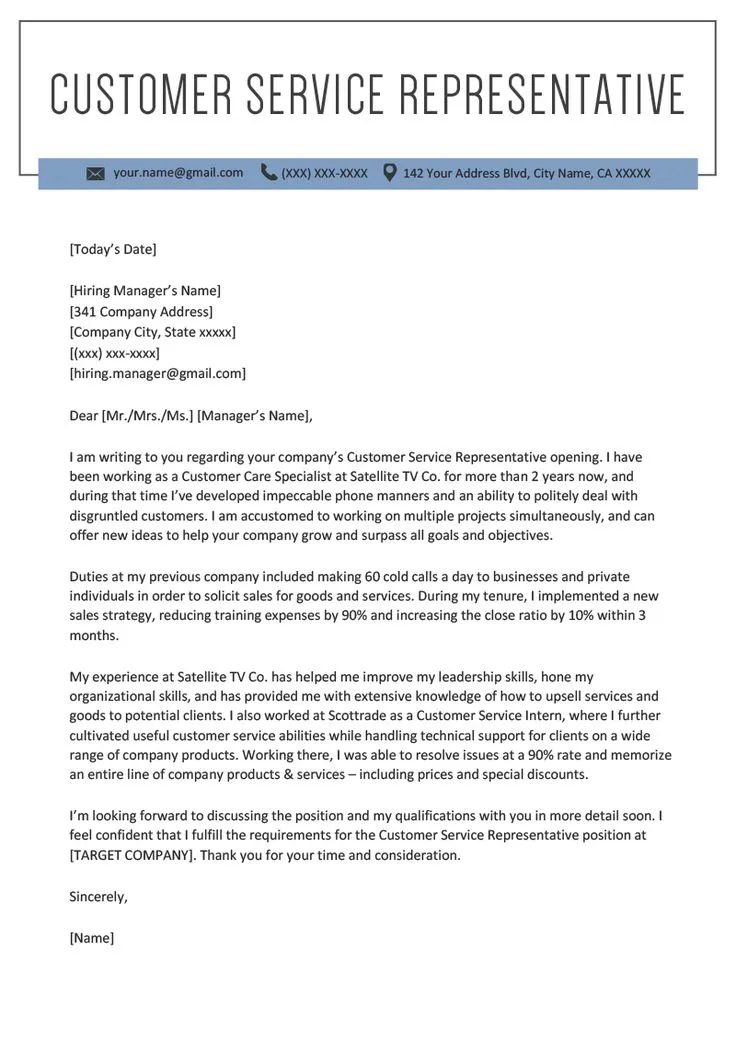
Understanding the Importance of a Customer Service Cover Letter
In the competitive world of job applications, a well-crafted cover letter can be the key to unlocking your dream customer service role. Often overlooked, the cover letter serves as your initial introduction to a potential employer, offering a glimpse into your personality, skills, and enthusiasm. It’s an opportunity to go beyond the confines of your resume and paint a vivid picture of why you are the perfect fit for the position. This guide delves into the intricacies of crafting a compelling customer service cover letter, equipping you with the knowledge and tools to make a lasting impression and secure that all-important interview. A strong cover letter demonstrates your communication skills, attention to detail, and genuine interest in the company and the role.
What is a Cover Letter
A cover letter is a formal document that accompanies your resume when applying for a job. Its primary purpose is to introduce you to a potential employer and provide additional information about your qualifications, skills, and experience that are relevant to the specific job you are applying for. Unlike a resume, which provides a concise summary of your professional history, a cover letter allows you to elaborate on your accomplishments, explain your career goals, and express your enthusiasm for the position and the company. It also gives you a chance to showcase your writing and communication skills, which are crucial in many customer service roles. The best cover letters are tailored to the specific job and company, demonstrating that you’ve taken the time to understand their needs and how you can contribute to their success.
Why a Customer Service Cover Letter Matters

In the customer service field, a cover letter is especially vital because it highlights your communication skills, empathy, and ability to connect with people. It provides a platform to showcase your personality and demonstrate your understanding of customer needs. Employers often look for candidates who can articulate their skills effectively and convey their genuine interest in providing excellent service. A well-written cover letter can differentiate you from other applicants, as it allows you to personalize your application and express your passion for customer interaction. By demonstrating your commitment to customer satisfaction and your understanding of the role’s requirements, you increase your chances of securing an interview and ultimately landing the job. Customer service roles are all about communication and a cover letter is the first communication.
Key Components of an Effective Customer Service Cover Letter
Crafting an effective customer service cover letter involves several key components that work together to create a compelling narrative. From the professional greeting to the closing, each element serves a specific purpose in presenting you as the ideal candidate. Your cover letter should be a reflection of your professionalism, your skills, and your passion for the role. Mastering these components will help you create a cover letter that stands out from the competition and makes a positive impression on potential employers. Remember that a well-structured cover letter showcases your organizational skills and attention to detail, which are crucial traits in the customer service industry. Here are the core elements:
Contact Information and Professional Greeting
Begin your cover letter with your contact information, including your name, phone number, email address, and optionally, your LinkedIn profile URL. Next, address the hiring manager directly if possible; research the company website or LinkedIn to find the correct name. If you can’t find a specific name, use a professional greeting such as “Dear Hiring Manager.” Avoid generic greetings like “To Whom It May Concern,” as they suggest a lack of effort.
Highlighting Relevant Skills and Experience

Focus on the skills and experience that align with the job description. Identify the key requirements and tailor your letter to address them directly. Use action verbs to describe your accomplishments and responsibilities, and provide specific examples of how you’ve excelled in previous customer service roles. Mention your experience with customer relationship management (CRM) software, phone systems, or other relevant technologies. This demonstrates that you understand the demands of the job and possess the necessary abilities to perform well. For example, you could highlight your experience in resolving customer complaints, managing difficult situations, or exceeding customer service goals.
Quantifiable Achievements and Accomplishments
Whenever possible, quantify your achievements to provide concrete evidence of your success. Use numbers and data to demonstrate the impact you’ve had in previous roles. This could include the percentage by which you improved customer satisfaction scores, the number of customer interactions you handled daily, or the amount of revenue you helped generate through customer service efforts. Quantifiable achievements add credibility to your claims and make your cover letter more persuasive. For instance, “Increased customer satisfaction scores by 15% by implementing a new feedback system.”
Expressing Enthusiasm and Company Fit
Show genuine enthusiasm for the position and the company. Explain why you are interested in working for them and what attracts you to their mission, values, or culture. Research the company and tailor your letter to demonstrate that you understand their business and how you can contribute to their success. Express your commitment to providing excellent customer service and your willingness to go above and beyond to meet customer needs. Highlighting your interest in the company and how your goals align with theirs can demonstrate a deeper level of engagement.
Call to Action and Professional Closing

End your cover letter with a clear call to action. Express your availability for an interview and reiterate your interest in the position. Thank the hiring manager for their time and consideration. Use a professional closing, such as “Sincerely,” “Best regards,” or “Yours sincerely,” followed by your typed name. Proofread your entire letter carefully before submitting it to ensure it is free of errors and typos. A strong closing reinforces your professionalism and leaves a positive lasting impression on the reader.
Formatting and Design Tips for Your Cover Letter
The formatting and design of your customer service cover letter are crucial for making a positive first impression. A well-formatted letter is easy to read, visually appealing, and reflects your attention to detail. Choose a clean and professional layout that enhances the readability of your content and highlights your key qualifications. Avoid cluttered designs and excessive use of colors or graphics. Keep in mind that your cover letter should be easy to scan, allowing the hiring manager to quickly grasp your qualifications and experience. Proper formatting ensures your letter is visually engaging and professional.
Choosing the Right Font and Layout
Select a professional and easy-to-read font such as Times New Roman, Arial, or Calibri, with a font size between 11 and 12 points. Use a standard one-inch margin on all sides of the page. Use single spacing within paragraphs and double spacing between paragraphs. Left-align your text and avoid using justified text, which can make it difficult to read. Keep your letter concise and focused, ideally within one page. A well-structured layout with clear headings and bullet points can improve readability and draw attention to important information. Good formatting makes it easier for the reader to quickly scan and understand your key qualifications.
Proofreading and Editing for Perfection

Proofread your cover letter meticulously for any errors in grammar, spelling, and punctuation. Errors can undermine your credibility and suggest a lack of attention to detail. Use a grammar checker and spell-checker, but also read your letter carefully several times. Consider having a friend or family member proofread your letter for a fresh perspective. Ensure that your tone is professional, and that your language is clear, concise, and engaging. A polished and error-free cover letter reflects your professionalism and attention to detail, key qualities for customer service roles.
Customer Service Cover Letter Examples
Reviewing cover letter examples can provide valuable insight into how to structure your own letter and what information to include. Analyzing different examples helps you understand the common elements of a successful cover letter and how to tailor them to your specific situation. By studying successful cover letters, you can learn how to effectively communicate your skills, experience, and enthusiasm to a potential employer. The following examples are templates to help you begin building your own cover letter, but always customize it to match the job description.
Entry-Level Customer Service Cover Letter Example
For entry-level positions, emphasize your soft skills, such as communication, empathy, and problem-solving abilities. Highlight any relevant experience, such as volunteer work or internships. Focus on your eagerness to learn and your passion for providing excellent customer service. The goal is to demonstrate that even with limited experience, you possess the fundamental qualities needed to succeed in the role.
Experienced Customer Service Cover Letter Example

For experienced candidates, showcase your track record of success and quantifiable achievements. Highlight your skills in areas such as conflict resolution, customer retention, and process improvement. Provide specific examples of how you have exceeded customer expectations and contributed to company goals. Demonstrate your proficiency in CRM software and other relevant technologies. Use this as your opportunity to build a picture of success.
Customer Service Supervisor Cover Letter Example
For supervisor roles, emphasize your leadership skills and experience in managing a team. Highlight your ability to train, motivate, and mentor customer service representatives. Mention your experience in performance management, process improvement, and strategic planning. Demonstrate your ability to drive customer satisfaction and achieve business objectives. Provide examples of your ability to lead and improve the performance of a customer service team.
Tips for Customizing Your Cover Letter
Customizing your cover letter is a crucial step in the job application process. A generic cover letter lacks impact and fails to demonstrate your genuine interest in the specific position and company. By tailoring your cover letter to each job you apply for, you increase your chances of capturing the hiring manager’s attention and showcasing your qualifications. Customization shows that you’ve invested time and effort into understanding the role and the company, making you a more appealing candidate. It is what sets you apart from the generic, often mass-produced cover letters.
Researching the Company and Tailoring Your Letter

Thoroughly research the company to understand its mission, values, and culture. Explore their website, social media profiles, and any recent news or press releases. Identify the company’s key priorities and how your skills and experience align with their needs. Customize your cover letter to reflect your understanding of the company and demonstrate your interest in their specific business. Mention the company’s products or services, highlight any recent achievements, and explain how you can contribute to their success. Show how your career goals align with their business goals. (See image: company research)
Using Keywords from the Job Description
Carefully review the job description and identify the keywords that are most important. Incorporate these keywords naturally throughout your cover letter to demonstrate that you meet the required qualifications. Use the same terminology that is used in the job description to show that you understand the role’s requirements. However, avoid simply copying and pasting keywords; instead, integrate them into your sentences in a way that highlights your skills and experience. This helps the hiring manager quickly identify your relevant qualifications. This also helps any automated systems that scan through resumes to identify the best candidates.
Adapting to Different Application Methods
Adapt your cover letter based on the application method. If applying online, make sure your letter is easily readable and well-formatted for digital viewing. If submitting a hard copy, ensure it is printed on high-quality paper. If applying through email, include your cover letter in the body of the email or as an attachment, following the instructions provided by the employer. Customize the subject line of your email with the job title and your name. Be aware that some applicant tracking systems (ATS) may have specific formatting requirements, so be sure to follow any instructions provided by the employer. (See image: customer-service-template)
Common Mistakes to Avoid in Your Cover Letter

Avoiding common mistakes is essential for making a positive impression on potential employers. Certain errors can instantly disqualify you from consideration. Being aware of these pitfalls will help you create a cover letter that effectively showcases your qualifications and skills. Ensure your letter is free from these common errors to increase your chances of success. (See image: avoid common mistakes)
Generic Salutations and Lack of Personalization
Avoid using generic salutations such as “To Whom It May Concern” or “Dear Sir/Madam.” Take the time to research the hiring manager’s name and address them directly. Personalize your cover letter by tailoring it to the specific job and company. Generic cover letters lack impact and suggest a lack of effort. Personalization shows that you are genuinely interested in the role and have taken the time to understand the company’s needs. Tailor your letter with the needs of the employer in mind.
Typos and Grammatical Errors
Carelessly written cover letters with typos and grammatical errors reflect poorly on your attention to detail and professionalism. Proofread your cover letter meticulously before submitting it. Use a grammar checker and spell-checker, but also read your letter carefully several times to catch any errors. Have a friend or family member review your letter for a fresh perspective. Ensure that your writing is clear, concise, and error-free to make a positive impression. This showcases your attention to detail and commitment to quality.
Focusing on Yourself Instead of the Employer’s Needs
While it’s important to highlight your skills and experience, avoid making your cover letter solely about yourself. Instead, focus on how your skills and experience can benefit the employer. Show how you can solve their problems, meet their needs, and contribute to their success. Demonstrate that you understand their business and are committed to helping them achieve their goals. Always show how you can add value to the company by focusing on the employer’s needs.
Final Thoughts and Next Steps
Crafting an effective customer service cover letter is a crucial step in your job search. By following the guidelines outlined in this article, you can create a compelling letter that captures the hiring manager’s attention and highlights your skills and experience. Remember to customize your letter to each job you apply for and showcase your passion for customer service. Ensure your cover letter is free of errors, well-formatted, and tailored to the specific job requirements. A well-written cover letter opens doors and sets you apart from the competition. (See image: professional closing)
Once you’ve created a compelling cover letter, take the next steps in your job search. Tailor your resume to the specific job description, highlighting relevant skills and experience. Practice your interviewing skills to confidently answer common interview questions and showcase your abilities. Network with professionals in the customer service field to learn about job openings and gain valuable insights. Be prepared to follow up with employers after submitting your application. The best job searches are proactive and persistent and require that you put yourself out there. Good luck with your job search!