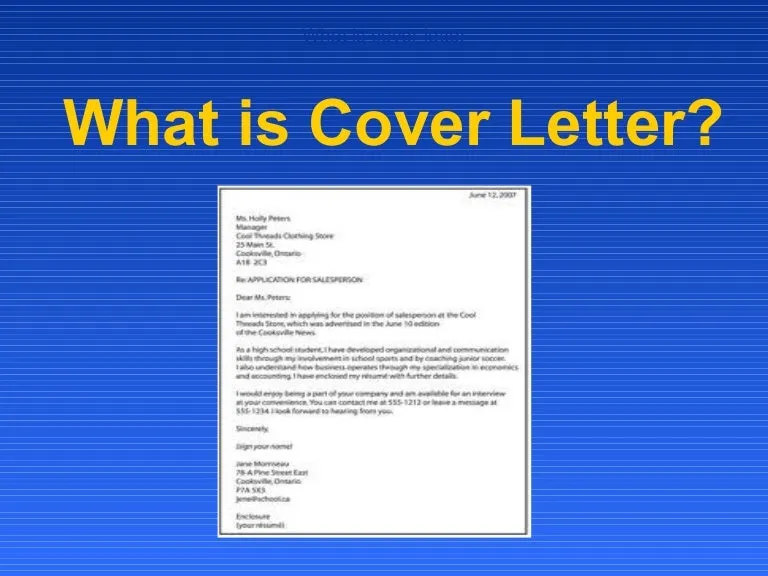
Cover Letter Writing What is It
Cover letter writing is a crucial aspect of the job application process, serving as a personalized introduction and a means to showcase your qualifications. Unlike a resume, which provides a factual summary of your work history and skills, a cover letter allows you to connect with the hiring manager on a more personal level. It provides an opportunity to express your enthusiasm for the position, explain why you are a good fit for the company, and highlight the specific skills and experiences that make you stand out. A well-crafted cover letter can significantly increase your chances of landing an interview, making it an essential tool in your job search arsenal. The aim of this document is to convince the recruiter that you are the best candidate for the job, compelling them to delve deeper into your application by reading your resume.
Purpose of Cover Letters
The primary purpose of a cover letter is to introduce you to a potential employer and express your interest in a specific job opportunity. It serves as a bridge between your resume and the hiring manager, providing context and emphasizing the aspects of your background that are most relevant to the position. A well-written cover letter can help you achieve several key objectives, including securing an interview. It allows you to elaborate on your qualifications, demonstrating how your skills and experiences align with the job requirements. A cover letter also allows you to express your enthusiasm for the role and the company, showcasing your personality and making a positive first impression. It provides an opportunity to explain any gaps in your employment history or address any concerns the hiring manager might have. Ultimately, a cover letter is your chance to make a strong case for why you should be considered for the job.
Cover Letter Writing Essential Components

A compelling cover letter is structured in a way that makes it easy for the reader to quickly grasp the essence of your qualifications and your enthusiasm for the position. This usually includes several key components designed to work together to make a positive impact. These are the most important components of a standard cover letter that will help you get noticed. The structure usually starts with the header and contact information, providing the necessary details for the recruiter to reach you. The salutation follows, addressed to the hiring manager or the appropriate person within the company. The body of the letter, which constitutes the bulk of your letter, is broken down into three distinct paragraphs that address your interest in the role, how your skills and experience match the requirements, and your enthusiasm for the company.
Header and Contact Information
The header of your cover letter should be clear, professional, and easy to read. It typically includes your full name, address, phone number, and email address. Ensure that your contact information is up-to-date and accurate, as this is how the hiring manager will reach you if they are interested in your application. In addition to your contact details, include the date and the recipient’s information, such as the hiring manager’s name, title, and the company’s address. If you are sending your cover letter electronically, you can adjust the formatting to suit the digital medium. The header sets the tone for the rest of your letter, so take care to present it professionally and consistently. The information should be formatted in a way that it is easy to find and read, and it should be consistent with the information provided in your resume.
Salutation and Addressing the Recipient
The salutation is your first point of direct contact with the hiring manager and should be addressed professionally. Ideally, you will want to address the letter to a specific person by name. Researching the hiring manager’s name on LinkedIn or the company website will demonstrate your initiative and attention to detail. If you are unable to find a specific name, use a professional salutation such as Dear Hiring Manager. Avoid generic salutations like To Whom It May Concern, as they come across as impersonal. The salutation sets the tone for the rest of the letter, so it is important to make a positive first impression. Ensure the spelling of the recipient’s name is correct and make a proper title to ensure you show respect. A well-crafted salutation can make a difference in the recruiter’s perception of your application.
Body Paragraph 1 Grab Attention

The first paragraph of your cover letter is critical, as it is your chance to grab the reader’s attention and establish your interest in the position. In this paragraph, state the specific job you are applying for and where you found the listing. Express your enthusiasm for the role and the company, showing that you have done your research and understand their mission and values. This is your opportunity to show the hiring manager that you are not just another applicant sending out a generic cover letter. Use a compelling opening that captures the reader’s interest. Highlight your passion for the role and the company, conveying your excitement and motivation to be a part of their team. The initial impression that you make will dictate whether the recruiter is interested in reading the rest of your cover letter.
Body Paragraph 2 Highlight Skills
The second paragraph is where you demonstrate how your skills and experience align with the job requirements. Carefully review the job description and identify the key skills and qualifications the employer is seeking. Provide specific examples of your accomplishments and how they match the required skills. Use action verbs to describe your achievements, showing the value you bring to the position. Quantify your accomplishments whenever possible, using metrics to showcase your impact. Focus on the aspects of your background that are most relevant to the job. By aligning your skills with the company’s needs, you demonstrate that you are a strong fit for the position. Tailor this paragraph to each job application, ensuring that you highlight the skills and experiences that are most relevant to the specific role.
Body Paragraph 3 Show Enthusiasm
In the final paragraph, reiterate your enthusiasm for the opportunity and express your interest in an interview. Thank the hiring manager for their time and consideration, and provide your contact information one more time. This is also a good place to mention any additional information that you want to emphasize, such as your availability. End the letter with a professional closing, such as Sincerely or Best regards. Your goal in this paragraph is to reinforce your interest in the position and make it easy for the hiring manager to contact you. End your cover letter with a strong call to action that encourages the reader to take the next step. Express your eagerness to discuss how you can contribute to the company’s success.
Cover Letter Writing Dos and Don’ts

Crafting a cover letter is more than just a simple task. It requires focus, proper writing skills, and a good understanding of the purpose of the letter itself. When writing a cover letter, there are several dos and don’ts to keep in mind to create a letter that will help you get noticed by the recruiter. By understanding the do’s and dont’s you will be able to highlight your strengths, experience, and skills in a way that leaves a lasting impression on the hiring manager and increases the chance of getting an interview.
Common Mistakes to Avoid
Avoiding common mistakes will increase your chances of the recruiter reading the letter itself. Several common mistakes can hurt your chances of success. One of the most common mistakes is sending a generic cover letter. Avoid using a generic template that is not tailored to the specific job. Always tailor your letter to the company and the role, demonstrating that you understand their needs. Grammatical errors and typos can damage your credibility and make a negative impression. Always proofread your letter carefully and have someone else review it. Exceeding the recommended length can be a turn-off. Aim for a cover letter that is concise and easy to read, typically no more than one page. A disorganized layout and hard-to-read format can make it difficult for the reader to quickly grasp the main points. Use a clear, professional font, and ensure the letter is well-organized.
Cover Letter Writing Proofreading and Formatting
Proofreading and formatting are critical steps in the cover letter writing process. Errors in spelling, grammar, or formatting can damage your credibility and make a negative impression on the hiring manager. Before submitting your cover letter, it is important to take the time to proofread it carefully. This involves checking for any typos, grammatical errors, and inconsistencies in your writing. It is also beneficial to have someone else review your cover letter. They may catch errors that you may have missed. Ensure that your cover letter is formatted in a way that is easy to read. Use a clear, professional font, such as Arial or Times New Roman, and maintain consistent formatting throughout the document. Your cover letter should be well-organized and visually appealing.
Formatting Tips for Readability

Formatting has a big impact on the way recruiters see your cover letter. Enhance the readability of your cover letter by following these tips. Use a professional font, such as Arial or Times New Roman, with a font size between 10 and 12 points. Ensure consistent formatting throughout the document, including font style, size, and spacing. Use clear and concise language, avoiding jargon or overly complex sentence structures. Use headings and subheadings to break up the text and make it easier to scan. Leave adequate white space to separate paragraphs. A well-formatted cover letter is more likely to be read carefully by the hiring manager. By paying attention to the formatting, you can ensure that your cover letter is professional and easy to read.
Cover Letter Writing Finalizing and Submitting
Before submitting your cover letter, take the time to review and refine it. Ensure that the letter is free of errors, well-organized, and tailored to the specific job. Proofread it again to check for any typos or grammatical errors. If you have a digital copy, save your cover letter in a professional format such as PDF. When submitting your cover letter, follow the instructions provided in the job application. Some companies may require you to submit your cover letter as an attachment, while others may have a specific format or online form. Once you are satisfied with your cover letter, send it with confidence, knowing that you have created a compelling document that showcases your qualifications and increases your chances of landing an interview.