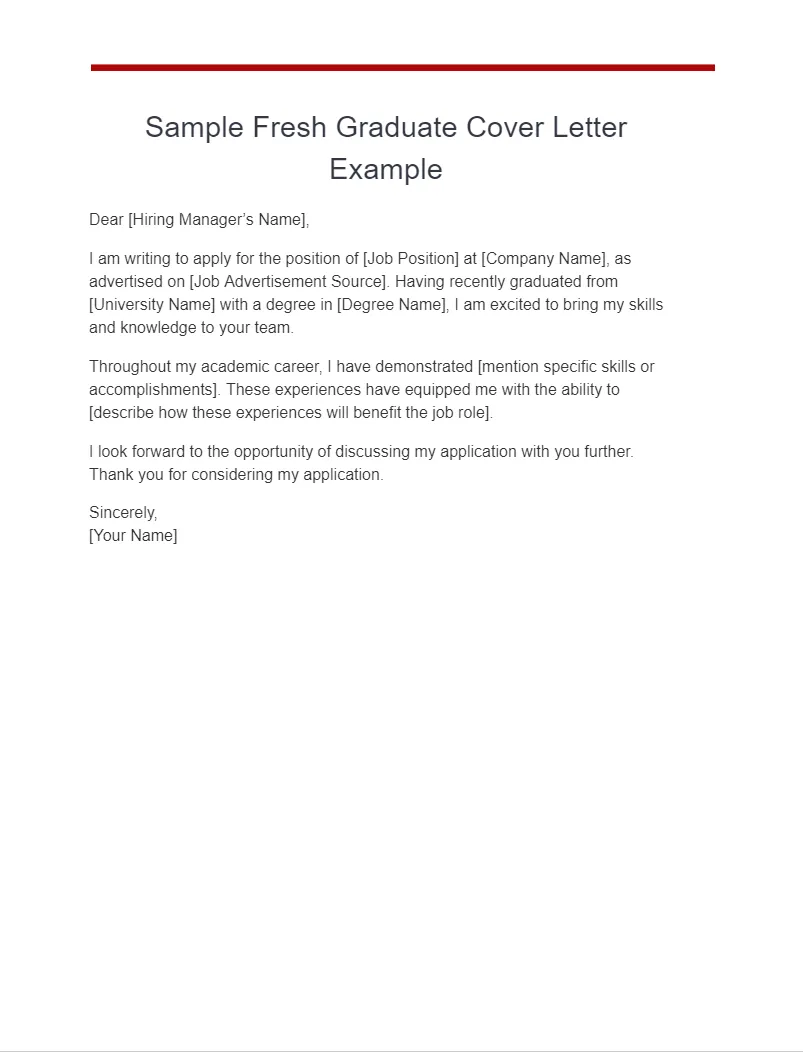
Cover Letter: What’s the Big Deal?
In today’s competitive job market, a well-crafted cover letter is more than just a formality; it’s your personal introduction to a potential employer. For recent college graduates, it’s a critical tool to showcase your potential and bridge the gap between your academic experience and the practical demands of the professional world. It provides an opportunity to highlight your skills, demonstrate your personality, and express your genuine interest in the specific role and company. Unlike your resume, which provides a chronological overview of your experience, the cover letter allows you to tell a story, explaining why you’re the perfect fit and what you can bring to the table. This is especially crucial for new grads who might lack extensive professional experience, allowing them to emphasize transferable skills, projects, and internships that highlight their capabilities.
Why Cover Letters Matter for Grads
For recent college graduates, the importance of a cover letter cannot be overstated. Many employers still consider a cover letter a mandatory part of the application process, using it as a preliminary screening tool to assess communication skills, writing ability, and attention to detail. A strong cover letter demonstrates your ability to articulate your career goals, connect your skills to the job requirements, and express your enthusiasm for the position. It allows you to address any potential gaps in your experience, such as limited work history, by focusing on relevant projects, coursework, and extracurricular activities. Moreover, a well-written cover letter can help you stand out from the crowd, showing employers that you’ve taken the time to personalize your application and understand their needs, setting you apart from candidates who simply submit a resume.
Cover Letter’s Main Purpose

The primary purpose of a cover letter is to introduce yourself to the hiring manager and make a compelling case for why you should be considered for the job. It serves as a bridge between your resume and the employer’s needs, providing context to your qualifications and highlighting your suitability for the role. It’s your chance to express your personality, enthusiasm, and unique selling points, demonstrating that you’re not just a qualified candidate but also a great fit for the company culture. A well-crafted cover letter should quickly capture the reader’s attention, communicate your understanding of the job requirements, and explain how your skills and experiences align with those needs. Ultimately, the goal is to persuade the employer to invite you for an interview, giving you the opportunity to elaborate on your qualifications and further demonstrate your value.
Key Cover Letter Tips for Grads
Crafting a winning cover letter can feel like a daunting task, but following these key tips will significantly improve your chances of success. The focus should be on presenting yourself as a strong candidate. Remember, a cover letter is not just a summary of your resume, but an opportunity to showcase your personality, skills, and enthusiasm for the specific role and company. Make sure to tailor your cover letter to each job application, highlighting the specific skills and experiences that are most relevant to the position. Proofread meticulously for any grammar or spelling errors, as these can undermine your credibility. Finally, aim for a concise and engaging tone, keeping your letter focused, professional, and easy to read. This approach ensures that your cover letter effectively communicates your value and piques the interest of the hiring manager.
Highlight Your Skills & Achievements
One of the most important elements of a cover letter is highlighting your relevant skills and achievements. Don’t just list your skills; demonstrate how you’ve used them to achieve results. Instead of simply stating that you possess strong communication skills, provide an example of a project where you effectively communicated a complex idea to a diverse audience. If you have any achievements from your academic career, such as leading a project, winning an award, or participating in a significant research study, be sure to mention them. Use the STAR method (Situation, Task, Action, Result) to structure your examples, providing context, outlining the task, describing the actions you took, and quantifying the results. By focusing on specific accomplishments, you can make a compelling case for your ability to contribute to the employer’s team.
Tailor to the Job Description

A generic cover letter will rarely impress a hiring manager. It is essential to tailor your cover letter to each job application by carefully reviewing the job description and identifying the key skills and experiences the employer is seeking. Use the job description as a guide to highlight the skills and experiences that are most relevant to the position. Research the company and demonstrate your understanding of their mission, values, and goals. Show that you’ve taken the time to understand the role and the organization, rather than just sending out a mass application. By personalizing your cover letter, you show that you are genuinely interested in the specific opportunity, making you a more attractive candidate to the hiring manager.
Show, Don’t Tell (With Examples)
Instead of simply stating that you are a team player, show the employer how you have collaborated effectively with others in the past. Use concrete examples to illustrate your skills and qualities. Instead of saying you are a problem-solver, describe a situation where you identified a problem, took action to solve it, and achieved a positive outcome. By providing specific examples, you make your claims more credible and memorable. This approach helps the hiring manager visualize your abilities and understand how you can contribute to the team. Moreover, using examples demonstrates your self-awareness and ability to reflect on your experiences, which are highly valued qualities in any candidate.
Quantify Your Accomplishments
Whenever possible, quantify your accomplishments to provide concrete evidence of your achievements. Use numbers, statistics, and percentages to demonstrate the impact of your work. For example, instead of saying you improved customer satisfaction, state that you increased customer satisfaction by 15% through implementing a new feedback system. If you led a team, mention the number of team members or the size of the project budget. Quantifying your accomplishments adds credibility to your claims and makes it easier for the employer to understand the value you can bring. This approach not only highlights your skills but also demonstrates your ability to measure and analyze results, which is highly valued in most professional settings.
Cover Letter Formatting

The format of your cover letter is just as important as its content. The goal is to create a professional and readable document that grabs the reader’s attention and keeps them engaged. A well-formatted cover letter is easy to read, visually appealing, and organized logically. Make sure to include your contact information at the top, followed by the date, the hiring manager’s name (if available), and the company’s address. Keep the body of your letter concise and focused, using clear headings and bullet points to break up large blocks of text. Choose a professional font, such as Times New Roman, Arial, or Calibri, and use a standard font size (11 or 12 points). Finally, proofread your letter carefully to ensure that it is free of any grammatical or spelling errors, as these can create a negative impression.
Choose the Right Font & Layout
Selecting the right font and layout is crucial for ensuring your cover letter is easy to read and visually appealing. Opt for a professional and readable font, such as Times New Roman, Arial, or Calibri. These fonts are widely recognized and are less likely to distract the reader from the content. Choose a font size between 11 and 12 points to ensure the text is clear and easy to read without being too large or too small. Use a standard layout, with one-inch margins on all sides. Left-align your text, and avoid using a justified format, which can create uneven spacing. Break up large blocks of text with headings, subheadings, and bullet points. This will help the hiring manager scan your letter quickly and identify the most important information.
Proofread for Errors
Proofreading is an essential step in the cover letter writing process. Errors can undermine your credibility and create a negative impression. Take the time to carefully proofread your cover letter for any grammatical errors, spelling mistakes, or typos. Use a spell checker and grammar checker, but don’t rely on them entirely. It’s also helpful to have someone else proofread your letter, as a fresh pair of eyes can often catch mistakes that you might miss. Read your letter aloud, as this can help you identify awkward phrasing or sentences that don’t flow smoothly. By taking the time to proofread carefully, you can ensure that your cover letter is polished, professional, and free of any errors.
Common Cover Letter Mistakes

Avoiding common cover letter mistakes is just as important as including the right elements. It is important to understand what can make a cover letter unsuccessful. One of the most common mistakes is submitting a generic cover letter that is not tailored to the specific job or company. Another is including irrelevant information or rehashing the resume verbatim. Overly long cover letters that exceed one page can also be a turnoff, as hiring managers often have limited time to review applications. Grammatical errors and typos are another major no-no, as they can damage your credibility. Finally, using overly formal or informal language can also create a negative impression.
Generic vs. Specific Cover Letters
One of the most critical cover letter mistakes is sending a generic letter that is not tailored to the specific job or company. Generic cover letters often lack the personalized touch that hiring managers are looking for. They fail to demonstrate your understanding of the role and the company’s needs. Generic letters lack the key details, skills, and qualities that make you a strong candidate. Therefore, always customize your cover letter for each job application by carefully reviewing the job description, researching the company, and highlighting the skills and experiences that are most relevant to the position. Show that you’ve taken the time to understand the role and the organization, and explain why you are a good fit for the opportunity.
Ignoring the Employer’s Needs
Another common mistake is failing to address the employer’s needs. A successful cover letter should demonstrate your understanding of the company’s goals, the job requirements, and the challenges the company faces. Instead of just talking about what you want, focus on what you can offer and how you can contribute to the company’s success. Highlight the skills and experiences that align with the job description, and explain how you can solve problems or meet the company’s needs. Research the company’s values, mission, and recent initiatives. By demonstrating your knowledge of the company and addressing their needs, you can show that you are a valuable asset and are worth interviewing.
Conclusion

In conclusion, crafting a compelling cover letter is a critical step in the job search process for recent college graduates. By following these tips—highlighting your skills, tailoring to the job description, providing specific examples, quantifying your accomplishments, formatting your letter professionally, and avoiding common mistakes—you can significantly increase your chances of landing an interview. Remember that your cover letter is your opportunity to make a strong first impression, demonstrate your value, and show the employer why you’re the perfect fit for the job. Take the time to craft a well-written, personalized cover letter for each application, and you’ll be well on your way to launching a successful career.