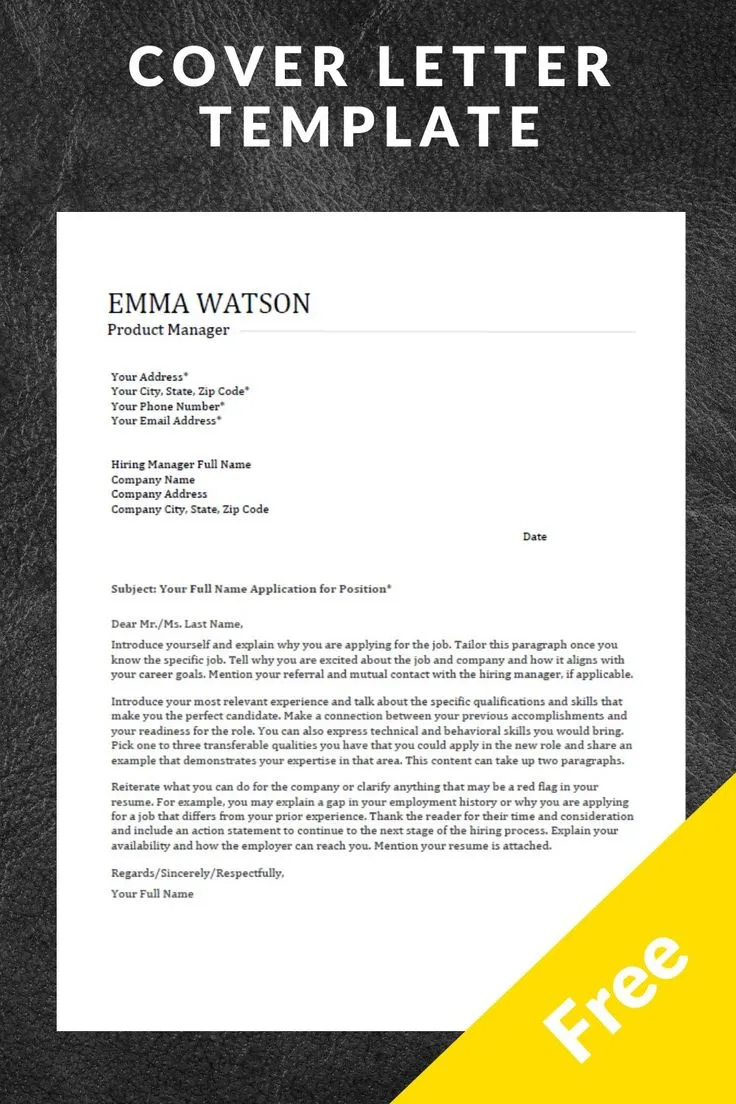
What is a Cover Letter?
A cover letter is a crucial document accompanying your resume when applying for a job. It serves as your personal introduction to the hiring manager, providing context to your qualifications and expressing your interest in the specific position. Think of it as a narrative that complements the bullet points of your resume, offering insights into your personality, skills, and career goals. It’s your opportunity to make a strong first impression and distinguish yourself from other applicants. A well-crafted cover letter can significantly increase your chances of getting an interview, so it’s important to create one that stands out.
Why Use a Cover Letter?
In today’s competitive job market, a cover letter is more than just an optional extra; it’s a necessity. It allows you to showcase your personality and passion for the role, which a resume often can’t fully convey. Hiring managers use cover letters to gauge your communication skills, assess your understanding of the job requirements, and determine if you are a good fit for the company culture. The cover letter provides an excellent space for addressing specific concerns such as gaps in employment, career changes, or any other unique aspects of your professional journey. It’s an opportunity to connect with the hiring manager on a more personal level, making your application more memorable and impactful.
Key Elements of a Cover Letter

A compelling cover letter consists of several key elements, each playing a vital role in presenting you as a suitable candidate. These elements work together to create a cohesive narrative that captures the reader’s attention and persuades them to learn more about you. From the professional header to the closing call to action, each component should be carefully crafted and relevant to the job you are applying for. Understanding these elements will allow you to structure your cover letter effectively, emphasizing your qualifications and illustrating your suitability for the role. Using the proper elements demonstrates your professionalism and attention to detail.
Header
Your cover letter’s header should include your contact information (name, phone number, email, and possibly a LinkedIn profile URL) and the date. It’s important to make sure the header matches your resume’s header for consistency. This immediately gives the hiring manager the necessary information to contact you. Proper formatting ensures that your contact details are clear and easy to find. The header sets a professional tone, showcasing your attention to detail and professionalism right from the beginning.
Greeting
Start your cover letter with a professional greeting. Whenever possible, address the hiring manager by name; this shows that you’ve done your research and are invested in the application process. If you cannot find a specific name, use a general greeting like “Dear Hiring Manager”. Avoid generic greetings that don’t include a name or title, as this will make your letter appear less tailored to the specific company. Tailoring your greeting is an important first step in building a connection with the reader.
Opening Paragraph

Your opening paragraph is your chance to immediately grab the reader’s attention. State the position you are applying for and where you saw the job posting. Then, briefly mention why you are interested in the role and the company. This is also a good place to highlight your most relevant skill or experience. Make it clear why you are a good fit for the job and what makes you stand out. This first paragraph sets the tone for the rest of your letter, so it should be concise, enthusiastic, and impactful.
Body Paragraphs
The body of your cover letter is where you demonstrate your qualifications and suitability for the role. Focus on a few key skills or experiences from your resume that align with the job description. Provide specific examples and quantify your achievements whenever possible. Use action verbs to describe your accomplishments and showcase your capabilities. Tailor the content to match the requirements of the specific job; emphasize the qualifications the employer is looking for. Highlight how your skills and experience align with the company’s needs and the job’s responsibilities.
Highlighting Skills and Experience
Focus on the skills and experiences most relevant to the job. Review the job description carefully and identify the key requirements. Then, select the experiences from your background that directly address these requirements. Use the STAR method (Situation, Task, Action, Result) to describe your experiences, providing context, detailing the task you had to complete, explaining the actions you took, and outlining the results you achieved. This approach shows employers not only what you did but also the positive impact of your work. Tailoring the skills and experience section to the specific job shows your suitability.
Quantifying Achievements

Whenever possible, quantify your achievements to make them more impactful. Use numbers, percentages, and data to illustrate your accomplishments. Instead of saying you “increased sales,” state that you “increased sales by 15% in one quarter.” This provides concrete evidence of your ability to deliver results. Quantifying your accomplishments demonstrates your value to the company and makes your achievements more credible. Data helps create a strong impression on the hiring manager.
Expressing Enthusiasm
Show your enthusiasm for the role and the company. Describe why you are excited about the opportunity and what motivates you. Research the company to gain a better understanding of its mission, values, and culture. Express your alignment with the company’s goals, and explain how you can contribute to their success. Your enthusiasm makes your cover letter more engaging and demonstrates your genuine interest in the position.
Closing Paragraph
In your closing paragraph, summarize your key qualifications and reiterate your interest in the position. Thank the hiring manager for their time and consideration. Express your eagerness to learn more about the opportunity, and show your confidence in your ability to contribute to the company. The closing paragraph should leave a lasting positive impression and reinforce your suitability for the job. It concludes the letter and solidifies the impression that you are the perfect candidate.
Call to Action

End your cover letter with a clear call to action. Request an interview and express your availability for a discussion. Make it easy for the hiring manager to take the next step. Provide your contact information again, just in case it is missed in the header. A clear call to action encourages the hiring manager to take the next step and helps move your application forward. It shows initiative and eagerness for an interview.
Formatting a Cover Letter
Formatting plays a critical role in the readability and overall appeal of your cover letter. Ensure your cover letter looks professional and easy to read. Use a standard font such as Times New Roman, Arial, or Calibri, and maintain a consistent font size. Avoid using complex fonts that might distract the reader. Keep the letter to one page in length to respect the hiring manager’s time. Use clear headings and subheadings to organize your information and make it easy to scan. Proper formatting showcases your attention to detail and professionalism.
Choosing the Right Template
Selecting the right cover letter template can save you time and ensure your letter looks professional. Consider different template options to find one that fits your needs and the requirements of the job application. Think about what will make your letter easy to read, while highlighting your skills and experiences. Remember, the goal is to make your application stand out in a positive way, so choose a template that allows you to effectively present yourself to the hiring manager.
Free Cover Letter Template Resources

Numerous websites offer free cover letter templates that you can download and customize. These templates provide a solid starting point, and make the process of writing a cover letter easier and less time-consuming. Explore different options to find a template that matches your style and the job’s requirements. Remember to tailor the template to your specific experience and the needs of the employer. These resources offer a variety of designs and formats to help you create a professional-looking cover letter, highlighting your best qualities.
Template 1: Modern Cover Letter Template
Modern cover letter templates are characterized by clean lines, contemporary fonts, and often incorporate visual elements. They are ideal for showcasing creativity and innovation, making them suitable for roles in design, marketing, or technology. These templates often include space for a headshot or visual elements to enhance the overall presentation. When choosing a modern template, ensure the design aligns with the company’s brand and culture, making sure it is professional and readable.
Template 2: Professional Cover Letter Template
Professional cover letter templates emphasize a polished and formal appearance. These templates use classic fonts, clear formatting, and a straightforward layout. They are best suited for roles in finance, law, or other industries where professionalism is paramount. The focus is on clarity and readability, ensuring that the reader can easily find and understand the information. Opt for a professional template when you need to project credibility and competence.
Template 3: Creative Cover Letter Template

Creative cover letter templates allow you to express your personality and showcase your unique skills. They often incorporate bold colors, unique layouts, and visual elements to capture attention. Ideal for roles in design, media, or any position where creativity is valued, these templates help you stand out from other applicants. While using a creative template, ensure the design remains professional and relevant to the job. The best creative templates make a statement without being distracting.
Template 4: Basic Cover Letter Template
Basic cover letter templates offer a simple and clean design, providing a straightforward approach. These templates are suitable for all types of jobs and industries, focusing on clarity and ease of reading. With a basic template, you can emphasize your qualifications and experience without any distracting visual elements. These templates are a safe and reliable choice, especially when applying to jobs in more conservative fields.
Customizing Your Cover Letter
Customization is key to creating an effective cover letter. Personalize the template by tailoring it to the specific job description and the company’s needs. Highlight the skills and experiences that are most relevant, and use the employer’s keywords to demonstrate your alignment with the role. Research the company to understand its mission, values, and culture. Customization makes your cover letter unique and shows the hiring manager that you have invested time and effort. Properly customized cover letters show your genuine interest in the specific opportunity.
Proofreading and Editing

Proofreading and editing are crucial steps in ensuring your cover letter is polished and professional. Carefully review your letter for grammar, spelling, and punctuation errors. A single mistake can damage your credibility and reduce your chances of getting an interview. Read the letter multiple times, and use a grammar checker to identify potential issues. Ask a friend or family member to proofread your letter, because a fresh pair of eyes can often catch mistakes you might have missed. Make sure that you have paid attention to every detail. Use a professional grammar checker for any possible error.
Tips for Writing an Effective Cover Letter
Writing an effective cover letter requires careful planning and execution. Follow these tips to maximize your impact and increase your chances of getting an interview. Focus on showcasing your personality and passion. Quantify your achievements to illustrate your value, and use action verbs to describe your accomplishments. Remember to keep the letter concise, and tailor it to each job application. These tips are important for preparing an effective cover letter and they can have a real impact on the success of your job application.
Tailoring to the Job Description
Carefully analyze the job description to understand the required skills, experience, and qualifications. Then, customize your cover letter to address these requirements directly. Use the same keywords and phrases that the employer has used in the job description. Highlight the specific skills and experiences that match the job requirements. Tailoring your cover letter demonstrates that you have carefully read the job posting and understand what the employer is looking for.
Show, Don’t Tell
Instead of simply stating your skills, provide specific examples that demonstrate them. Back up your claims with evidence from your past experiences. Describe a situation, the task you undertook, the actions you took, and the results you achieved. This approach allows the hiring manager to see how you have applied your skills in real-world scenarios. Showing your capabilities will make your cover letter more compelling, allowing your skills to become more vivid and clear.
Using Action Verbs
Use action verbs to describe your accomplishments and skills. Action verbs create a sense of activity and make your cover letter more engaging. Start your sentences with strong action verbs to clearly demonstrate your capabilities. For instance, instead of writing “Responsible for sales,” write “Managed sales” or “Increased sales.” Action verbs will help you show your value in a concise and compelling way. Incorporating action verbs makes your cover letter more impactful and engaging.
Avoiding Common Mistakes
Avoiding common mistakes is essential for creating a professional cover letter. The smallest error can undermine your credibility. Understand these mistakes to prevent them. By avoiding common mistakes, you can significantly improve the effectiveness of your cover letter and increase your chances of landing an interview.
Grammar and Spelling Errors
Grammar and spelling errors are among the most common mistakes, and they can damage your credibility. Always proofread your cover letter carefully, and use a grammar checker to catch errors. A single mistake can give the impression that you are not detail-oriented. Make sure every word is correct before sending your cover letter. Proofreading will help your letter make a positive impression.
Generic Cover Letters
Avoid using a generic cover letter that is not tailored to the specific job or company. Generic letters suggest a lack of interest and preparation. Customize your cover letter to highlight your skills and experiences in a way that aligns with the job requirements. Research the company and demonstrate your genuine interest in the role and the organization. A tailored letter shows that you have taken the time to understand the role and the company’s needs.
Cover Letter Examples for Different Industries
Cover letters should be tailored to the industry you are applying to. Understanding the conventions and expectations of each industry allows you to create a more relevant and compelling letter. Research the industry standards for cover letters. The examples below are a starting point for your own letter.
Example 1: Marketing Cover Letter
Marketing cover letters often highlight your ability to analyze data, develop strategies, and drive results. Use persuasive language, showcase your understanding of current marketing trends, and provide specific examples of successful campaigns. Demonstrate your understanding of the company’s brand and target audience. Your marketing letter should be compelling and show your creativity.
Example 2: IT Cover Letter
IT cover letters should emphasize your technical skills, experience, and problem-solving abilities. Highlight your knowledge of relevant programming languages, software, and systems. Provide examples of how you have resolved technical issues and improved efficiency. Your IT letter should demonstrate your ability to communicate technical concepts clearly and concisely. Technical language should be supported with clear examples.
Example 3: Teacher Cover Letter
Teacher cover letters need to focus on your passion for education, your classroom management skills, and your ability to engage students. Highlight your teaching experience and your ability to create a positive learning environment. Showcase your expertise in lesson planning, curriculum development, and student assessment. Your teacher cover letter should demonstrate your commitment to student success and professional development. Make sure to highlight all the relevant experience.
Where to Find More Templates
There are numerous online resources offering free cover letter templates. Websites such as Microsoft Office, Google Docs, and various job search platforms provide a wide range of templates that you can download and customize. Explore different options to find templates that suit your needs and your job. Utilize these resources to make your cover letter writing easier and more effective. These resources give you great options for creating a unique and professional-looking letter. Research what is available, download the correct one, and start writing.
The Importance of a Well-Crafted Cover Letter
A well-crafted cover letter is an essential tool for job seekers. It serves as your introduction to the hiring manager, allowing you to highlight your qualifications and express your interest in the position. The letter is an opportunity to showcase your personality and stand out from other applicants. Taking the time to create a compelling cover letter significantly increases your chances of getting an interview and landing your dream job. Make sure it’s well-written and professional for a better chance of success.