Why Cover Letters Still Matter
In the age of online applications and automated resume screening, many job seekers question the relevance of cover letters. However, a well-crafted cover letter remains a crucial tool in your job search arsenal. It provides an opportunity to go beyond the confines of your resume and tell your story, showcasing your personality, passion, and the unique value you bring to a potential employer. Cover letters allow you to address specific requirements mentioned in the job description, elaborate on your qualifications, and demonstrate your genuine interest in the role and the company. They help you stand out from the crowd and make a lasting first impression, increasing your chances of landing an interview.
A cover letter allows you to make a personalized introduction, demonstrating your understanding of the company’s needs and how your skills align with their objectives. It is a chance to show your enthusiasm, which can set you apart from other candidates. A thoughtful cover letter proves that you have taken the time to learn about the company and are serious about the opportunity. It can be the deciding factor when employers have to decide between candidates that have similar backgrounds.
Highlight Your Skills and Experience
Your cover letter is the perfect place to emphasize the skills and experiences most relevant to the job you are applying for. Analyze the job description carefully and identify the key requirements. Then, select specific examples from your past roles or projects that demonstrate your ability to meet those requirements. Don’t simply list your skills; provide context by describing how you’ve used them to achieve tangible results. Quantify your accomplishments whenever possible. For instance, instead of saying “Managed social media accounts,” state “Increased social media engagement by 30% in six months.”
Focus on achievements and results instead of simply listing your responsibilities. Use the STAR method (Situation, Task, Action, Result) to structure your examples. This approach helps you provide clear, concise, and compelling evidence of your capabilities. By aligning your skills and experiences with the employer’s needs, you create a strong case for why you are the ideal candidate.
Tailor Your Letter to the Job

Generic cover letters are a major turn-off for hiring managers. Tailor each cover letter to the specific job and company you are targeting. This means more than just changing the name of the hiring manager and the job title. Research the company, its values, and its culture. Show that you understand their industry, their challenges, and their goals. Mention specific projects, initiatives, or recent news about the company. This demonstrates your genuine interest and your proactive approach.
Use the job description as your guide. Identify the keywords and phrases that the employer uses to describe the ideal candidate. Incorporate these terms into your cover letter, but do so naturally. Avoid keyword stuffing, which can make your writing sound forced and inauthentic. Customize your letter to address the specific requirements of the job and explain how your skills and experiences align with the position’s responsibilities.
Showcase Your Personality
Your cover letter is your chance to inject personality into your job application. While professionalism is key, don’t be afraid to let your unique voice shine through. Share your enthusiasm for the role and the company. Write in a conversational tone, and avoid sounding like a robot. Let your passion and genuine interest in the opportunity show. This helps the hiring manager get a sense of who you are and how well you might fit into the company culture.
Share a brief anecdote that highlights a relevant skill or experience. This makes your letter more memorable and engaging. Ensure that your personality complements your professionalism. Be mindful of your tone and ensure it aligns with the company’s values. Showing your personality helps you create a more authentic connection with the reader and increases your chances of making a positive impression.
Use Strong Action Verbs
Action verbs are the building blocks of a compelling cover letter. They bring your accomplishments to life and demonstrate your proactive approach. Start each sentence describing your achievements with a strong action verb. Instead of saying “Responsible for managing projects,” write “Managed projects, delivering them on time and under budget.” This approach immediately grabs the reader’s attention and conveys a sense of impact.
Use a variety of action verbs to avoid sounding repetitive. Examples include “Spearheaded,” “Developed,” “Implemented,” “Led,” “Increased,” “Improved,” “Streamlined,” and “Collaborated.” When you make a resume with a strong action verb will give you an edge over candidates with a list of responsibilities.
Focus on Achievements

Instead of simply listing your job duties, highlight your achievements. Employers are interested in what you accomplished, not just what you did. Use the STAR method (Situation, Task, Action, Result) to structure your accomplishments. Start by setting the stage, then describe the task you undertook, the actions you took, and the results you achieved. Quantify your achievements whenever possible. For instance, instead of saying “Improved customer satisfaction,” write “Improved customer satisfaction by 15% through implementing a new feedback system.”
Focus on achievements shows the value you can bring to the organization. Be specific, use data, and demonstrate how your contributions made a positive impact on your previous employers. Remember to showcase the benefits of your work and how you can replicate these results in the new role.
Proofread Meticulously
Typos, grammatical errors, and formatting mistakes can instantly undermine your credibility. Proofreading is a critical step in the cover letter writing process. Before you submit your cover letter, carefully review it for any errors in grammar, spelling, punctuation, and formatting. Read your cover letter multiple times, and consider reading it aloud. This can help you catch mistakes that you might miss when reading silently. Proofread your cover letter on different devices to catch any formatting errors.
Ask a friend, family member, or career counselor to review your cover letter. A fresh pair of eyes can often spot errors that you may have overlooked. A polished and error-free cover letter shows attention to detail, professionalism, and respect for the hiring manager’s time. These qualities are highly valued by employers, and your cover letter will make a good impression.
Formatting Your Cover Letter for Success
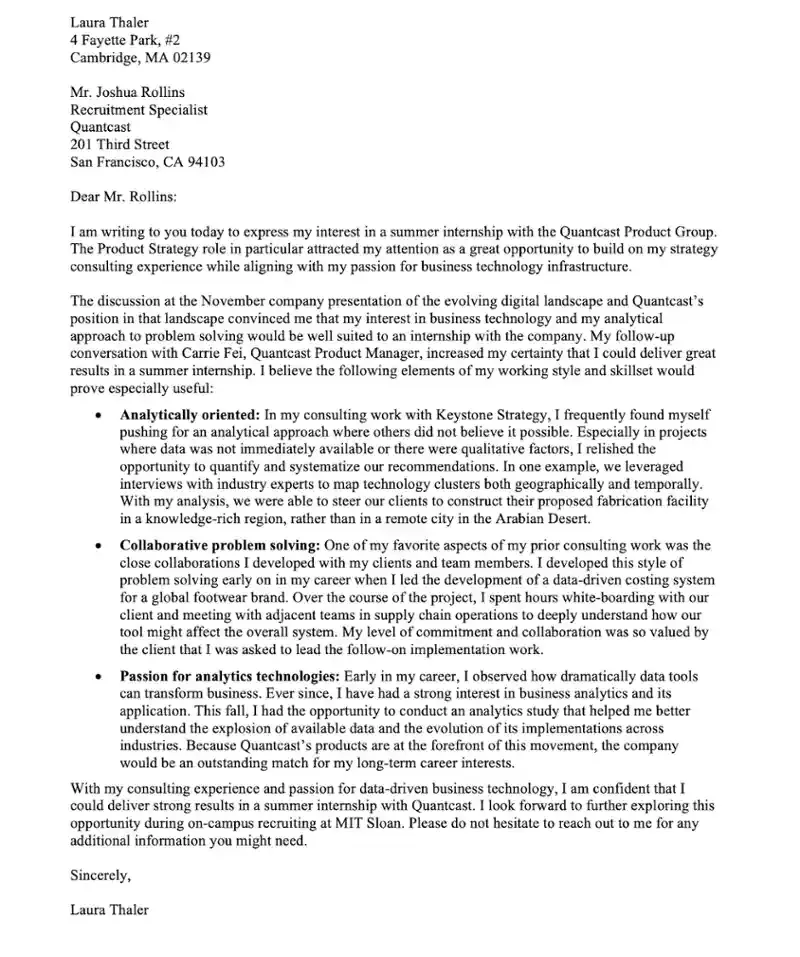
Your cover letter’s formatting should be clean, professional, and easy to read. Use a standard font like Times New Roman, Arial, or Calibri, and stick to a font size between 10 and 12 points. Use single spacing and a standard margin of one inch on all sides. Break up large blocks of text with bullet points and headings. This will help the reader quickly scan your letter and grasp the key points. The goal is to present your information in an organized and visually appealing way.
Use a professional header that includes your contact information. Ensure your name, phone number, email address, and LinkedIn profile link (if you have one) are easily visible. Address the hiring manager by name, if possible. Research their name through the company website or LinkedIn. A well-formatted cover letter creates a positive first impression, showing that you pay attention to detail and understand professional communication standards.
Keep it Concise and Engaging

Hiring managers are busy people. Keep your cover letter concise and to the point. Aim for a length of one page, or approximately 250-400 words. Focus on the most relevant information and avoid unnecessary details. Your cover letter should quickly capture the reader’s attention and convey the key points about your skills and experiences.
Use clear and concise language. Avoid jargon and overly complex sentences. Vary your sentence structure and use active voice to keep your writing engaging. Start your letter with a strong opening statement that grabs the reader’s attention. Maintain a positive and enthusiastic tone throughout your letter. A concise and engaging cover letter is more likely to be read and remembered.
Closing Your Cover Letter
Your cover letter’s closing is your final opportunity to make a lasting impression. Reiterate your interest in the role and the company. Express your enthusiasm for the opportunity to learn more and discuss your qualifications. Provide a clear call to action, such as, “I am eager to discuss how my skills and experience can benefit your team. I am available for an interview at your earliest convenience.”
Thank the hiring manager for their time and consideration. End with a professional closing, such as “Sincerely” or “Best regards,” followed by your name. Proofread the closing section carefully. The closing should be as polished as the rest of your letter. A strong closing reinforces your interest in the role and leaves a positive impression on the hiring manager.
Express Enthusiasm and Gratitude
End your cover letter on a high note by expressing your enthusiasm for the opportunity and your gratitude for the reader’s time and consideration. This shows your positive attitude and respect for the hiring process. You can say something like, “Thank you for considering my application. I am very excited about the opportunity to contribute to [Company Name] and I look forward to hearing from you soon.”
Reiterating your interest leaves a lasting impression. A thoughtful and appreciative closing can tip the scales in your favor. It demonstrates that you value the opportunity and are genuinely interested in the role. It underscores your professionalism and leaves a positive impression on the hiring manager.