Cover Letter Secrets
A cover letter is your first opportunity to make a lasting impression on a potential employer. It’s a crucial part of your job application, complementing your resume and providing a personalized introduction. A well-crafted cover letter can set you apart from other candidates and significantly increase your chances of getting an interview. However, many job seekers overlook the importance of this document. Understanding the secrets to writing a compelling cover letter involves careful planning, strategic writing, and a keen awareness of what hiring managers are looking for. This guide unveils the top five secrets to writing a cover letter that not only impresses but also gets you noticed.
Research the Company
Before you even begin to draft your cover letter, you must do your homework. Research the company you are applying to. Visit their website, explore their social media presence, and read recent news articles about them. Understanding the company’s mission, values, and recent projects will enable you to tailor your cover letter to their specific needs and demonstrate genuine interest. Showing that you understand the company’s goals and challenges immediately sets you apart. This research informs your language, highlighting how your skills and experience align with their specific requirements. A cover letter that directly addresses the company’s priorities shows that you’ve taken the time to understand their business. This level of preparation is highly valued by hiring managers.
Tailor Your Cover Letter

Generic cover letters are easily recognizable and often end up in the rejection pile. Customizing your cover letter for each job application is essential. Review the job description carefully and identify the key skills and qualifications the employer is seeking. Use the language from the job posting in your letter, and provide specific examples of how your experience and skills align with their requirements. Avoid using a one-size-fits-all approach. Each cover letter should be a unique reflection of the specific role and company. This tailoring ensures that your application is relevant, demonstrates your understanding of the role, and shows that you have the skills to be successful. Show the employer that you understand their specific needs and can provide a solution.
Highlight Relevant Skills and Experience
Your cover letter is the perfect place to elaborate on the skills and experiences mentioned in your resume. Don’t simply repeat what’s already there; instead, provide context, explain your achievements, and demonstrate how you’ve applied your skills in previous roles. Use the STAR method (Situation, Task, Action, Result) to tell compelling stories that highlight your accomplishments. Quantify your achievements whenever possible; for example, instead of saying “Managed social media accounts,” say “Increased social media engagement by 30% within six months.” Focus on the most relevant skills and experiences that match the job requirements. This approach helps the hiring manager quickly understand your value and how you can contribute to the company’s success. Focus on the tangible results you have delivered.
Showcase Your Personality
While professionalism is key, don’t be afraid to let your personality shine through. A cover letter should be a reflection of who you are. Use your writing style to convey your enthusiasm, passion, and unique perspective. Avoid sounding robotic or overly formal. This doesn’t mean you should use slang or inappropriate language. Instead, maintain a professional tone while adding a touch of your personality. This can be achieved through word choice, sentence structure, and the overall tone of the letter. Showing your personality helps the hiring manager get a sense of who you are beyond your qualifications. It makes you more memorable and can help you connect with the reader on a more personal level, increasing your chances of standing out from other candidates.
Proofread and Edit

Typos, grammatical errors, and formatting issues can undermine your credibility and damage your chances of getting an interview. Proofreading is an absolute must. Before submitting your cover letter, read it carefully several times, paying close attention to spelling, grammar, and punctuation. Use a grammar checker, but don’t rely on it entirely. Have a friend or family member review your letter. A fresh pair of eyes can often catch errors that you might miss. Ensure that your letter is well-organized, easy to read, and free of any mistakes. Proofreading demonstrates your attention to detail and professionalism. It shows that you care about the quality of your work, and that you are willing to put in the extra effort to ensure it is perfect before submission.
Format Cover Letter
Use a Professional Tone
Maintain a professional tone throughout your cover letter. Use formal language, avoid slang, and refrain from using overly casual expressions. The tone should reflect your respect for the company and the hiring manager. While showcasing your personality is important, it should be done within the bounds of professional etiquette. The tone you adopt should convey your seriousness about the position and your understanding of workplace communication. Make sure every word choice reinforces your professionalism. Ensure your language is clear, concise, and free of jargon. Your goal is to impress the reader with your written skills and demonstrate that you can communicate effectively in a professional setting.
Keep it Concise

Hiring managers often have limited time to review applications. Keep your cover letter concise and to the point. Aim for a length of one page. Avoid unnecessary details and filler content. Every sentence should serve a purpose and contribute to the overall message. Focus on the most important information and avoid rambling. Clearly articulate your value and why you are a good fit for the job. A well-written, concise cover letter shows respect for the reader’s time and demonstrates your ability to communicate effectively. Use strong verbs and concise phrasing to convey your message efficiently. Make every word count. Keep the reader engaged and avoid information overload.
Use Action Verbs
Begin each sentence with strong action verbs to showcase your accomplishments and skills. Action verbs create a sense of energy and impact, making your cover letter more compelling and engaging. Examples of effective action verbs include ‘Managed,’ ‘Led,’ ‘Developed,’ ‘Implemented,’ ‘Achieved,’ ‘Increased,’ and ‘Improved.’ Action verbs describe what you have done and what you are capable of doing. They paint a clear picture of your contributions in previous roles. They make your cover letter dynamic and show your proactiveness and ability to take initiative. Choose verbs that accurately describe your accomplishments and align with the job requirements. Use a variety of verbs to keep your writing engaging.
Focus on Achievements
Instead of simply listing your responsibilities, focus on highlighting your achievements. Describe the results you have achieved in your previous roles. Quantify your accomplishments whenever possible. Use numbers and data to demonstrate your impact. For instance, mention how you increased sales, reduced costs, or improved customer satisfaction. Focusing on achievements provides concrete evidence of your abilities and value. It provides the hiring manager with measurable proof of your skills. When you detail your achievements, you show that you are results-oriented, capable, and a valuable asset to any team. Use metrics and quantifiable results to make your achievements more compelling.
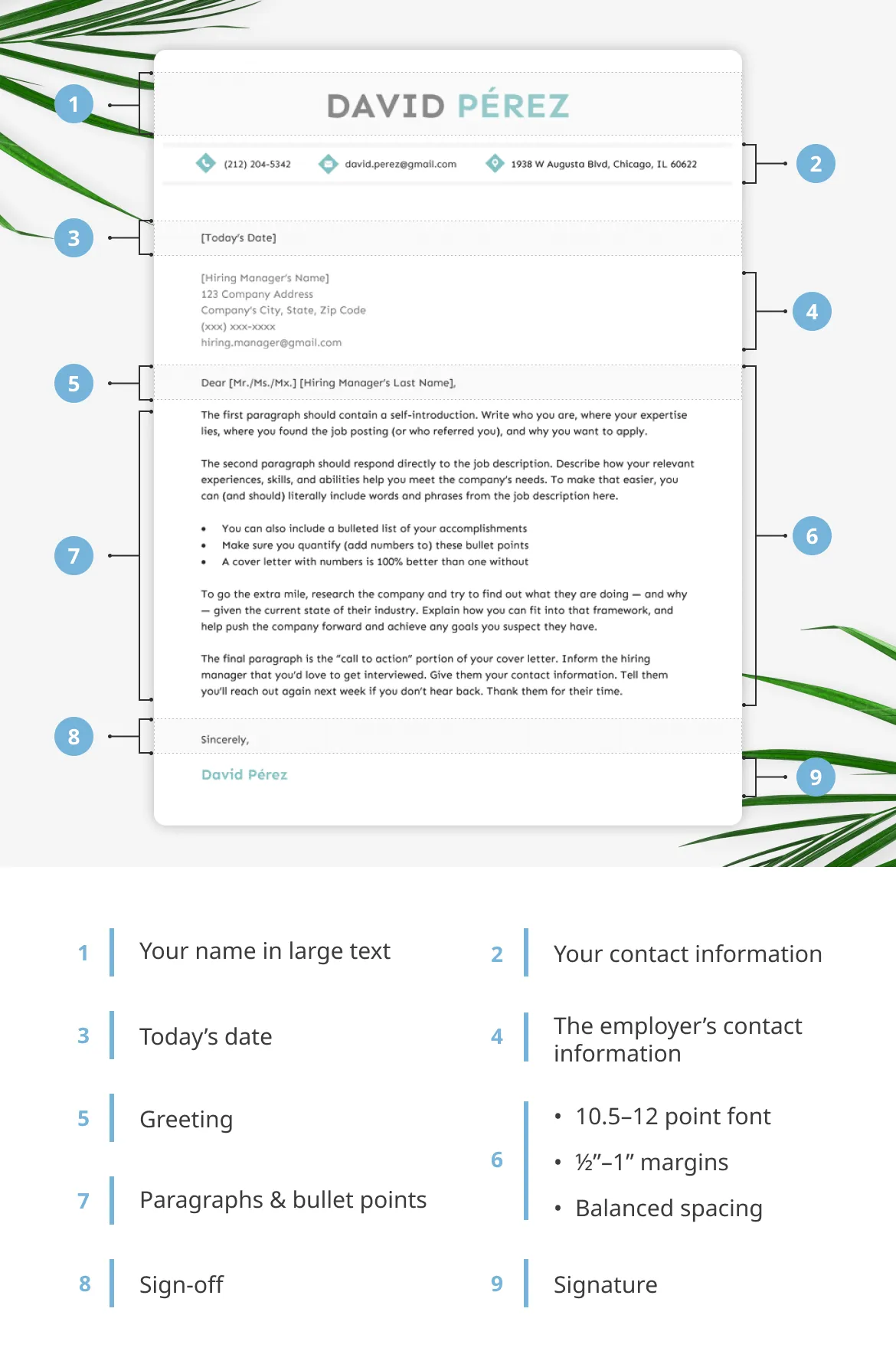
Cover Letter Structure

Contact Information
Start your cover letter with your contact information at the top. Include your full name, phone number, email address, and optionally, your LinkedIn profile URL. This information should be easy to find. This is essential, because it allows the hiring manager to reach you easily for an interview. Ensure your contact information is accurate and up-to-date. Double-check that your phone number is correct and that your email address is professional. Your email address should not be a casual or inappropriate address. Consider including your city and state but omit your full street address for privacy reasons.
Professional Greeting
Begin your cover letter with a professional greeting. Use the hiring manager’s name if it is available. If you are unsure of the hiring manager’s name, use a general greeting such as “Dear Hiring Manager.” Avoid overly casual greetings like “Hi there.” Address the recipient respectfully and professionally. Addressing the letter to a specific person demonstrates that you have done your research. Using the correct name shows attention to detail and a genuine interest in the position. If you cannot find the hiring manager’s name, research the company’s structure to determine the appropriate title.
Opening Paragraph

The opening paragraph should immediately capture the reader’s attention and state the purpose of your letter. Briefly mention the position you are applying for and where you found the job posting. Highlight one or two key skills or experiences that make you a strong candidate. This sets the tone for the rest of your letter and encourages the reader to continue reading. Your opening paragraph is your first opportunity to make a positive impression. It should be concise, compelling, and demonstrate your enthusiasm for the role. Clearly state your intention to apply. Make the hiring manager want to read more about you.
Body Paragraphs
The body paragraphs should provide more details about your qualifications and experience. Explain how your skills and achievements align with the job requirements. Use specific examples and quantifiable results to support your claims. Tailor each body paragraph to address the specific needs of the company and the role. Focus on demonstrating your value and how you can contribute to the company’s success. Each paragraph should have a clear focus, supporting your key strengths. Ensure that the tone remains professional. Structure the paragraphs logically to build a compelling case.
Closing Paragraph
The closing paragraph should reiterate your interest in the position and thank the hiring manager for their time and consideration. Express your enthusiasm for the opportunity and state your availability for an interview. Include a call to action, such as “I look forward to hearing from you soon” or “Thank you for your time and consideration.” Keep the closing paragraph concise and leave a positive impression. End on a high note. Reinforce your interest in the position and express your willingness to discuss your qualifications further.
Sign-off

End your cover letter with a professional sign-off, such as “Sincerely,” “Best regards,” or “Thank you.” Choose a sign-off that reflects the tone of your letter. After the sign-off, leave space for your handwritten signature, if you are printing the letter, and then type your full name. Your signature and typed name are essential for a professional appearance. Ensure the sign-off is appropriate for the context. Maintain a formal and professional tone throughout. The sign-off completes your cover letter and reinforces your professionalism.