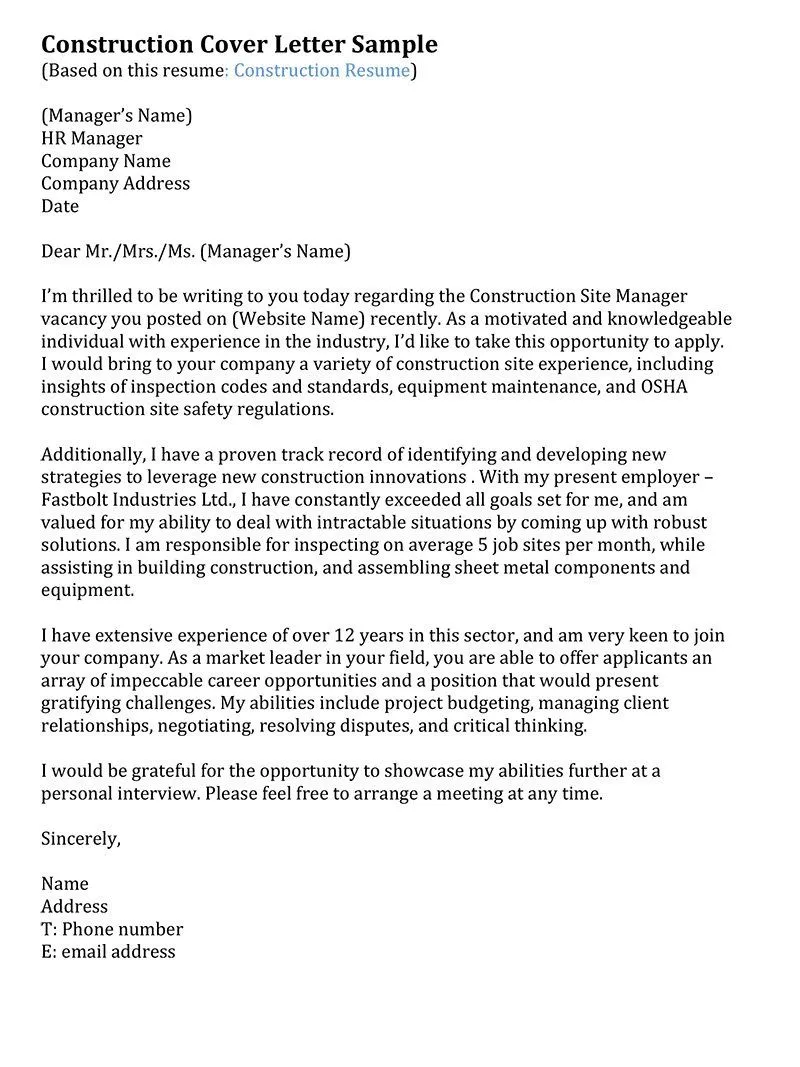
Why a Cover Letter Matters for Construction Proposals
In the competitive world of construction, a well-crafted cover letter is your first and often most crucial opportunity to make a positive impression. It’s more than just a formality it’s a strategic tool that sets the tone for your entire proposal. It allows you to personalize your bid, demonstrating that you understand the client’s needs and are the right choice for the project. A compelling cover letter can be the difference between landing the project and ending up in the rejection pile. It offers a chance to highlight your company’s unique selling points and build a relationship before the client even delves into the technical details. Think of it as your handshake, your introduction, and your initial pitch all rolled into one.
First Impressions Crafting the Perfect Header
The header of your construction proposal cover letter is the visual equivalent of a firm handshake. It should be clean, professional, and immediately identify both your company and the recipient. Include your company’s logo, contact information (address, phone number, email), and the date. Ensure the header is consistent with the branding of your company to project professionalism and establish credibility. A well-designed header suggests attention to detail and a commitment to quality, traits highly valued in the construction industry. The header should be easily scannable and free of clutter, making it easy for the recipient to quickly identify the sender and date of the proposal.
Your Company’s Information

This section should include your company’s name, address, phone number, and email address. It’s essential for the client to know how to contact you easily. Your company’s logo should also be incorporated here for brand recognition and to project a professional image. Ensure all the information is accurate and up-to-date, as any errors can reflect poorly on your company’s attention to detail. This part of the header immediately establishes your credibility and provides the necessary contact details should the client wish to pursue the proposal further. Consider using a professional-looking font and ensuring the information is well-organized for easy readability.
Recipient’s Details
Always address the cover letter to a specific person, if possible. If you know the name of the project manager or the decision-maker, include their name, title, and the company’s address in the recipient’s details section. This personalized approach demonstrates that you’ve taken the time to understand the client’s needs and tailor your proposal accordingly. Addressing the letter to ‘Dear Sir/Madam’ is acceptable if you can’t find a specific contact, but it’s always best to find a name. Researching the client beforehand shows initiative and respect, increasing your chances of a positive response. Ensure the recipient’s information is accurate to avoid any miscommunication or delay.
Opening Strong Grabbing Immediate Attention
The opening paragraph is your hook. It needs to grab the reader’s attention immediately. Start with a strong statement that clearly states the purpose of your letter and the project you’re proposing on. Mention the project name and a brief overview of what your company intends to achieve. Avoid generic phrases and instead, use a compelling sentence or two that showcases your understanding of the project requirements and your enthusiasm to be a part of it. Keep it concise and directly address the client’s needs to establish relevance from the outset. The opening sets the tone for the entire letter and can significantly influence the client’s initial perception.
Highlighting Project Understanding

Demonstrate that you’ve thoroughly reviewed the project requirements and specifications. Briefly mention key aspects of the project that resonate with your company’s expertise. This shows that you didn’t just send a generic proposal but have tailored it to the specific needs of the client. Briefly summarize your understanding of the project goals and objectives, demonstrating that you have a clear grasp of what the client wants to achieve. Refer to specific elements of the project, such as its scope, location, or unique challenges, to show that you’ve put in the effort to understand the project requirements. This targeted approach increases your credibility and showcases your ability to deliver.
Demonstrating Value Proposition
Clearly articulate the value your company brings to the table. What makes you the best choice for this project? Highlight your company’s unique selling points, such as specialized skills, innovative approaches, or cost-saving strategies. Focus on how you can help the client achieve their project goals efficiently, within budget, and to the highest standards. Quantify your value proposition whenever possible, such as by mentioning cost savings, time efficiencies, or improved outcomes. This demonstrates that you’re not just another construction company, but a partner that can deliver tangible benefits to the client. Clearly show how your company can solve the client’s challenges.
Showcasing Relevant Experience
Provide specific examples of past projects that are similar in scope and complexity to the one you’re proposing on. Briefly describe these projects, highlighting your role and the successful outcomes. Mention any awards or recognition your company has received for its work, and the client names. Include any testimonials or positive feedback from previous clients. This builds trust and demonstrates your proven ability to deliver successful projects. Keep the examples concise and relevant, focusing on achievements that directly align with the client’s needs. Showcasing relevant experience is crucial to convince the client that you are competent and capable of handling the project.
Project Specifics & Tailoring

Customize your cover letter to the specific project and client requirements. Reference specific aspects of the project, such as its location, design, or unique challenges. Show that you’ve thoroughly reviewed the project specifications and understand the scope of work. Tailor the letter to reflect the client’s priorities and expectations. Avoid using a generic, one-size-fits-all approach; instead, demonstrate that you’ve invested time and effort in understanding the client’s needs. Tailoring the cover letter will make it more appealing and show the client that you are serious about their project.
Quantifiable Achievements
Whenever possible, use quantifiable data to demonstrate your past successes. Instead of saying ‘We completed projects on time,’ state ‘We have a 95% on-time completion rate.’ Instead of ‘We saved clients money,’ specify the percentage or amount saved. This makes your claims more credible and persuasive. Use numbers, percentages, and specific metrics to back up your claims. Clients appreciate seeing tangible results, so providing quantifiable achievements will enhance your proposal’s effectiveness. Highlighting the value you have provided through your past projects is a great way to set yourself apart.
The Call to Action Securing the Next Step
Conclude your cover letter with a clear call to action. This could involve inviting the client to contact you for further discussion, scheduling a meeting, or requesting a follow-up. Make the call to action specific and easy to understand. Provide your contact information again to make it easy for the client to reach you. The call to action is a crucial part of the cover letter; without it, the client may not know what the next step is. By clearly stating what you want the client to do next, you increase your chances of moving forward in the bidding process.
Expressing Gratitude & Professionalism

Express your gratitude for the opportunity to submit the proposal. Thank the client for their time and consideration. Reiterate your commitment to providing high-quality work and exceptional service. Maintain a professional tone throughout the letter, using formal language and avoiding jargon. Proofread your letter carefully for any errors in grammar or spelling. Ensure that your closing is polite and appropriate, such as ‘Sincerely’ or ‘Respectfully.’ A professional closing will leave a lasting positive impression. Proper closing helps reinforce your company’s commitment to excellence.
Closing with Contact Details
Reiterate your contact information in the closing section. Include your name, title, phone number, and email address. This ensures that the client has all the necessary information to reach you quickly. Ensure your contact details are accurate and up-to-date. Providing easy access to contact information demonstrates your responsiveness and commitment to customer service. This final reminder makes it easy for the client to take the next step and reach out with any questions or to move forward with the project.
Essential Elements & Proofreading Checklist
To ensure your cover letter is effective, focus on including these key elements: a clear header, a strong opening, a concise summary of your project understanding, a clear value proposition, examples of relevant experience, a tailored approach, and a definite call to action. Make sure the letter has a professional layout that’s easy to read. Proofread it carefully, paying attention to grammar and spelling. Consider having a colleague review the letter as a second pair of eyes to catch any missed errors.
Key Components of a Strong Letter

A successful cover letter is built on several key components. It should be concise and to the point, avoiding unnecessary jargon. It should showcase your company’s unique strengths and tailor your company to the client’s needs. It should use a professional tone and language. It should be easy to read and visually appealing. Ensure you adhere to all the specified requirements. The letter should be a clear representation of your company’s values and commitment to the project.
Proofreading for Errors
Proofreading is an essential step that should never be skipped. Thoroughly check your cover letter for any grammatical errors, typos, or inconsistencies. Even minor mistakes can detract from your professionalism and credibility. Use spell-check and grammar-check tools, but also read the letter aloud to catch any awkward phrasing or unclear sentences. Consider having a colleague or professional editor review your cover letter for additional assurance. A final, careful proofread ensures your letter is polished and error-free, which improves your chances of making a positive impression on the client. A well-proofread cover letter demonstrates your attention to detail and your commitment to excellence.
Formatting for Readability
Ensure your cover letter is well-formatted and easy to read. Use a professional font, such as Times New Roman or Arial, with a font size of 12 points. Use clear headings, subheadings, and bullet points to break up large blocks of text. Keep your paragraphs concise, and use white space to improve readability. Avoid using overly complex language or jargon that the client may not understand. A well-formatted cover letter is more engaging and helps the client quickly grasp your key points. A well-formatted letter reflects the quality and organization of your company.
Final Thoughts on Proposal Success

Writing a winning cover letter is a strategic process that requires careful planning, attention to detail, and a focus on the client’s needs. By following the tips and secrets outlined in this guide, you can significantly increase your chances of success. Remember to highlight your company’s unique value proposition, demonstrate your experience, and tailor your letter to each specific project. With a well-crafted cover letter, you can set the stage for a successful bid and secure your next construction project. Always remember to prioritize clarity, professionalism, and the client’s perspective throughout your proposal process.