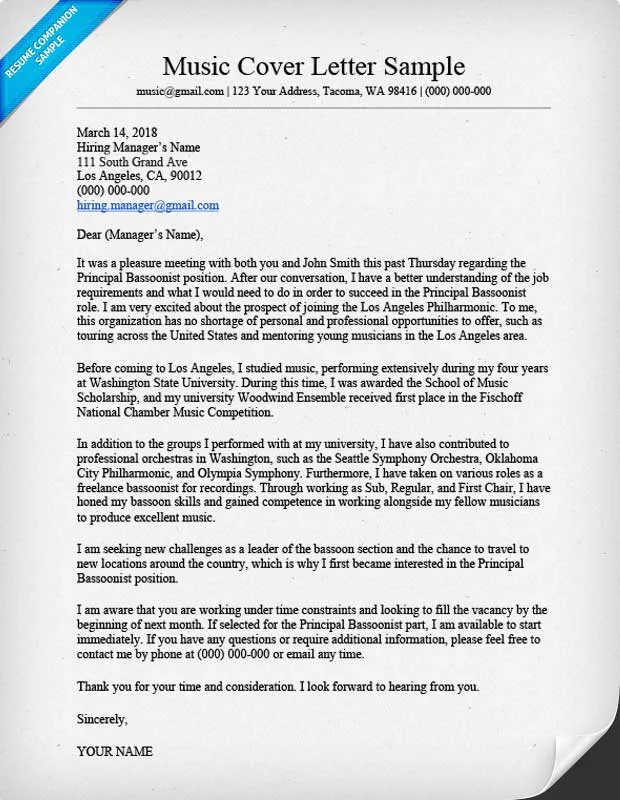
What is a Cover Letter
A cover letter is a crucial document that accompanies your resume when applying for jobs, especially in the competitive music industry. It serves as your first introduction to a potential employer, providing a personalized glimpse into your qualifications, skills, and passion. Unlike a resume, which offers a factual account of your experience, a cover letter lets you articulate why you’re the ideal candidate for a specific role and company. It’s your chance to tell your story, demonstrating how your unique background aligns with the job’s requirements and the organization’s values. Mastering the art of writing a compelling cover letter is essential for making a strong first impression and increasing your chances of securing an interview in the dynamic world of music.
Why a Cover Letter is Important for Music Industry Jobs
In the music industry, passion, creativity, and personality are highly valued. A cover letter allows you to go beyond the bullet points of your resume and showcase your personality and enthusiasm. It’s an opportunity to demonstrate your genuine interest in the company and the specific role, setting you apart from other applicants. Music industry professionals often seek individuals who not only possess the required skills but also understand the industry’s nuances and can contribute to its culture. A well-crafted cover letter can highlight your understanding of the industry, your knowledge of the company’s work, and your unique perspective, giving you a significant advantage in the hiring process. It also provides context for any gaps in your resume or career transitions, something a resume can’t do.
Key Components of a Music Industry Cover Letter

Contact Information Section
Begin with your full name, address, phone number, and professional email address. Ensure your contact information is accurate and up-to-date; this is how potential employers will reach you. Consider including a link to your LinkedIn profile or online portfolio if you have one, showcasing your professional presence. This section should be clear and concise, providing the essential details for the hiring manager to contact you promptly and efficiently.
Greeting and Introduction
Address the hiring manager by name if possible; this demonstrates you’ve researched the company and are taking a personal approach. Avoid generic greetings like “To Whom It May Concern.” In your opening paragraph, state the position you’re applying for and briefly mention where you saw the job posting. Immediately capture the reader’s attention with a concise statement about why you are interested in the role and the company. This initial paragraph sets the tone for the rest of your letter and should pique the reader’s interest in learning more about you.
Showcasing Your Passion for Music

The music industry is driven by passion; showcase your love for music in your cover letter. Share your musical background, such as experience as a musician, composer, or avid listener. Discuss your favorite artists, genres, or industry trends that excite you. Connect your passion with the job requirements, showing how your enthusiasm will drive your performance. Explain how your passion fuels your dedication and commitment to the industry, aligning it with the company’s mission and values. Be specific and authentic to create a memorable impression and demonstrate your genuine interest.
Highlighting Relevant Skills and Experience
Identify the key skills and experiences the job description requires. Provide specific examples from your background to illustrate those skills. Use action verbs to describe your accomplishments, such as “managed,” “coordinated,” or “executed.” If the job requires knowledge of music production, mention your experience with relevant software. If the role involves marketing, highlight your successful campaigns. Quantify achievements when possible; for example, note the percentage increase in social media engagement or the number of events managed. Tailor your skills and experience to match the job’s specific needs, demonstrating you’re a perfect fit.
Tailoring Your Cover Letter to the Job
Customize each cover letter to the specific job and company. Carefully read the job description and address the requirements and expectations. Research the company to understand its culture, values, and recent projects. Show that you’ve taken the time to learn about them. Mention specific projects or initiatives you admire and explain how your skills and experience align with their goals. Avoid sending generic cover letters; personalize each one to show your genuine interest in the role and the company. This tailoring demonstrates attention to detail and commitment to the opportunity.
Using Keywords Effectively

Incorporate keywords from the job description throughout your cover letter. Keywords help your application pass through applicant tracking systems (ATS) and demonstrate your understanding of the role’s requirements. Integrate these keywords naturally within your sentences, rather than awkwardly stuffing them in. Ensure the keywords fit the context of your skills, experience, and accomplishments. Use a mix of general and specific terms to cover all the essential aspects of the job. The goal is to show the hiring manager you meet the job’s requirements without making the letter sound robotic or unnatural.
Quantifying Achievements and Results
Quantify your achievements to demonstrate the impact of your work. Use numbers, percentages, or specific data to illustrate your accomplishments. Instead of saying “Increased social media presence,” say “Increased social media engagement by 30% in six months.” Instead of saying “Managed successful events,” say “Managed over 20 successful events with an average of 500 attendees per event.” Quantifying your achievements provides tangible proof of your skills, making your cover letter more compelling and memorable. Specific results show that you can deliver results, making you a stronger candidate.
Formatting and Design of Your Cover Letter
Keep your cover letter concise, typically one page long. Use a professional font like Arial, Calibri, or Times New Roman, and maintain a consistent font size (11 or 12 points) for readability. Use clear headings, bullet points, and ample white space to break up text and improve readability. Proofread carefully for any grammatical errors or typos. A well-formatted cover letter looks professional and shows attention to detail. Ensure the layout is visually appealing and easy to navigate, helping the hiring manager quickly grasp the important information.
Proofreading and Editing

Proofreading is a critical step. Errors in grammar or spelling can undermine your credibility. After writing, carefully read it multiple times. Check for typos, grammatical errors, and inconsistencies in tone and language. Ask a friend, family member, or career advisor to review your letter and provide feedback. Fresh eyes often catch mistakes you might miss. Proofreading ensures your cover letter is polished, professional, and error-free.
Common Mistakes to Avoid in Music Industry Cover Letters
Generic and Uninspired Openings
Avoid generic openings like “I am writing to express my interest in the position…” These phrases are overused and don’t capture the reader’s attention. Instead, start with a compelling hook that shows your enthusiasm and interest. Mention something specific about the company or the role that excites you. Tailor your opening to reflect your research and understanding of the company. A strong opening sets the tone and makes the hiring manager want to read further.
Focusing Too Much on Yourself

While showcasing your skills is important, avoid making your cover letter overly self-centered. Focus on how your skills can benefit the company and contribute to its success. Provide examples of how you’ve helped other organizations achieve their goals. Frame your accomplishments in terms of how they align with the job requirements and the company’s objectives. Show you understand the company’s needs and are ready to contribute to its mission. This approach makes you a more attractive candidate, demonstrating you understand what employers want.
Ignoring the Job Description
Failing to tailor your cover letter to the job description is a common mistake. Read the job description carefully and address the listed requirements and expectations. Highlight skills and experiences that match the job’s needs. Using keywords can help your application get noticed. A customized cover letter shows you understand the role and have the relevant qualifications. Ignoring the job description shows a lack of attention to detail and a lack of interest.
Providing a Strong Call to Action
End with a strong call to action. Express your enthusiasm and reiterate your interest. State you’re eager to learn more and look forward to discussing your qualifications in an interview. Thank the hiring manager for their time and consideration. Provide your contact information again for easy reach. A clear call to action shows you’re proactive and serious about the job.
Expressing Enthusiasm and Interest

Express your enthusiasm and genuine interest in the role and the company. Show you’ve researched and understand the company’s work. Mention any specific projects or initiatives you admire and explain how your skills align. Let your passion shine through. Demonstrate that you’re not just looking for a job, but an opportunity to contribute and grow. Authenticity and enthusiasm make a lasting impression.
Closing the Cover Letter
Close professionally by thanking the hiring manager for their time. Reiterate your interest and express eagerness to discuss qualifications further. Use a professional closing such as “Sincerely” or “Best regards,” followed by your full name. Ensure your contact information is readily available and proofread one last time. A strong closing leaves a positive final impression and signals your readiness.
Next Steps and Following Up
After submitting your application, follow up with the hiring manager or recruiter within a week or two. This shows your interest. Send a brief email thanking them and reiterating your enthusiasm. If you haven’t heard back, it’s okay to politely inquire about the application status. Following up demonstrates dedication and can help you stay top-of-mind during the hiring process. Be professional, persistent, and positive throughout the process.