Understanding the Importance of a Social Work Cover Letter
In the competitive field of social work, a well-crafted cover letter is your first opportunity to make a lasting impression. It’s not merely a formality; it’s a crucial tool that can significantly influence whether you get an interview or your application lands in the rejection pile. A compelling cover letter allows you to showcase your personality, passion, and qualifications in a way that a resume alone cannot. It demonstrates your communication skills, attention to detail, and genuine interest in the specific role and organization. Think of it as your personal introduction, highlighting your unique value proposition and setting the stage for a successful application. Taking the time to write a great cover letter is an investment in your future as a social worker.
Why a Cover Letter Matters
A cover letter is more than just a formality; it’s your chance to connect with the hiring manager on a personal level. It demonstrates your understanding of the role and the organization’s mission, showing that you’ve done your homework and are genuinely interested. A well-written cover letter expands on your resume, providing context and depth to your experiences and skills. It allows you to articulate your career goals, explain any gaps in your employment history, and express your passion for social work. Without a cover letter, you risk appearing generic and failing to differentiate yourself from other applicants. In a field where empathy and communication are key, your cover letter showcases these vital qualities. It’s a preview of the professional you, making it a vital component of your job application.
Key Elements to Include

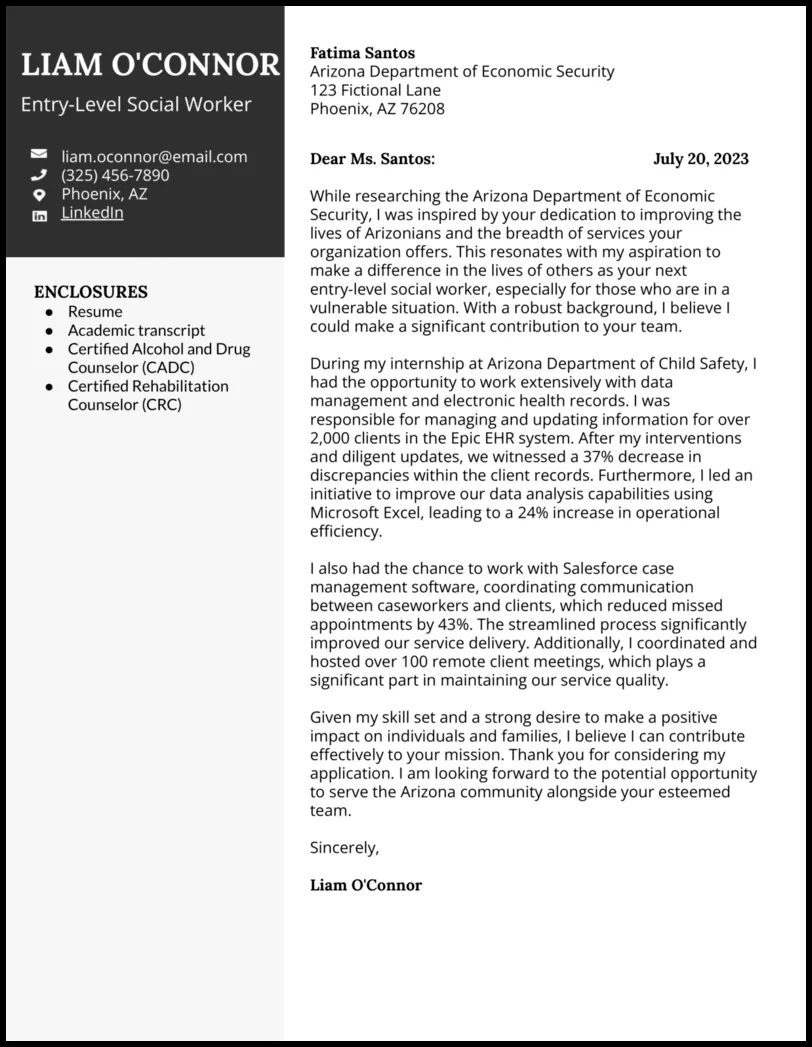
When crafting your social work cover letter, several key elements are essential. Begin with a professional header that includes your contact information and the date. Address the letter to the hiring manager by name, if possible; this personal touch shows you’ve taken the time to research the organization. In your opening paragraph, clearly state the position you’re applying for and how you learned about it. The body of the letter should highlight your relevant skills and experiences, using specific examples to illustrate your accomplishments. Quantify your achievements whenever possible. For example, instead of saying “managed a caseload of clients,” state “managed a caseload of 30 clients, resulting in a 15% increase in successful outcomes.” Conclude by reiterating your interest in the role and expressing your eagerness for an interview. Proofread meticulously before submitting!
Top 5 Tips for a Winning Social Work Cover Letter
Highlight Relevant Skills and Experience
Your cover letter is your chance to shine a spotlight on the skills and experiences most relevant to the job you’re applying for. Don’t simply list your qualifications; provide specific examples of how you’ve utilized your skills to achieve positive outcomes. For instance, if the job description emphasizes crisis intervention, describe a situation where you successfully de-escalated a crisis, highlighting the strategies you employed. If the role requires experience with a particular population, share details about your work with that demographic. Use keywords from the job description to tailor your letter and demonstrate that you possess the specific abilities the employer is seeking. This targeted approach shows that you understand the requirements of the position and are a strong fit.
Quantify Your Accomplishments

Whenever possible, quantify your accomplishments to demonstrate the impact of your work. Instead of saying you improved client outcomes, state that you “increased client success rates by 20% through the implementation of evidence-based practices.” Instead of saying you managed a caseload, specify the number of clients and any improvements achieved. Quantifiable data adds credibility to your claims and provides concrete evidence of your abilities. This could include the number of clients served, the percentage of successful outcomes achieved, or the amount of funding secured. By using numbers and statistics, you provide a clearer picture of your value and make a stronger case for your candidacy. This approach showcases your ability to measure and analyze your impact, which is highly valued in the social work field.
Tailor Your Letter to Each Job
Avoid sending out generic cover letters; tailor each one to the specific job and organization. Research the organization’s mission, values, and the specific requirements of the position. Demonstrate your understanding of their work and explain how your skills and experience align with their needs. Mention specific programs or initiatives you’re interested in. Customize your letter by highlighting the skills and experiences most relevant to the job description. This demonstrates your genuine interest and shows that you’ve taken the time to understand the opportunity. By tailoring your letter, you increase your chances of getting noticed and making a positive impression on the hiring manager. It showcases that you are genuinely interested in the specific opportunity.
Showcase Your Passion for Social Work
Social work is a field driven by passion. Your cover letter is an opportunity to showcase your enthusiasm for the profession and your dedication to helping others. Share what motivates you to pursue this career and what aspects of social work resonate most deeply with you. Explain why you’re drawn to this particular organization and its mission. Mention any specific populations you’re passionate about serving. Express your commitment to ethical practice and your desire to make a positive impact. This personal touch helps the hiring manager understand your values and ensures you’re a good fit for the role and the organization’s culture. Genuine passion will make your application stand out.
Proofread Meticulously

Errors in grammar, spelling, and punctuation can undermine your credibility and make you appear careless. Before submitting your cover letter, carefully proofread it several times. Use a grammar and spell checker, but don’t rely on it entirely. Read your letter aloud to catch any awkward phrasing or inconsistencies. Ask a friend or mentor to review it for you. A polished, error-free cover letter demonstrates your attention to detail and professionalism. It shows that you take your application seriously and are committed to presenting yourself in the best possible light. Always ensure your letter is impeccable before sending it.
Formatting Your Cover Letter for Success
Choose a Professional Font and Layout
Your cover letter’s appearance matters. Select a professional font such as Times New Roman, Arial, or Calibri. These fonts are clean, easy to read, and project a sense of professionalism. Use a standard font size, typically 11 or 12 points. Maintain consistent formatting throughout the document, including the use of clear headings and subheadings. Use adequate margins and spacing to make the letter visually appealing and easy to scan. Avoid excessive use of bolding, italics, or underlining, as this can make your letter appear cluttered. The overall goal is to create a well-organized and visually appealing document that is easy for the hiring manager to read and understand.
Structure Your Letter Logically

A well-structured cover letter flows logically and is easy to follow. Begin with a strong opening paragraph that immediately states the position you’re applying for and how you learned about it. The body of your letter should be divided into paragraphs that highlight your relevant skills, experiences, and accomplishments. Use clear topic sentences to introduce each paragraph and transition smoothly between ideas. Conclude with a call to action, reiterating your interest in the position and expressing your availability for an interview. This clear structure helps the hiring manager quickly grasp your key qualifications and appreciate your organized approach to communication.
Where to Find Cover Letter Samples
Online Job Boards
Many online job boards, such as Indeed, LinkedIn, and Glassdoor, provide cover letter samples as part of their resources. These samples can offer valuable insights into how to structure your letter and highlight relevant skills and experiences. Utilize the search function on these sites to find cover letter examples specific to social work or the type of role you’re interested in. While using these as a guide, be careful not to copy them directly. Customize the samples to reflect your own experiences and the specific requirements of the job you’re applying for. Adapt and personalize the samples so that they showcase your unique value proposition.
University Career Services

If you’re a recent graduate or a student, your university’s career services department is an excellent resource. They often have a library of cover letter samples tailored to various fields, including social work. Career counselors can review your cover letter, provide feedback, and offer guidance on how to improve your application. They can also assist you in customizing your cover letter to align with specific job requirements. Take advantage of these resources to gain expert advice and refine your application materials.
Professional Social Work Organizations
Professional organizations like the National Association of Social Workers (NASW) often provide career resources, including cover letter samples and templates. These resources are designed to assist social workers in their job search. The NASW and similar organizations can offer insight into writing a cover letter that aligns with the standards and values of the social work profession. They can also offer tips on how to tailor your application to specific roles. Review their resources and use their expertise to create an effective and compelling cover letter.
Conclusion
A well-crafted cover letter is an essential tool for any social worker seeking employment. By following these tips and utilizing available resources, you can create a compelling cover letter that effectively showcases your skills, experience, and passion for the field. Remember to tailor your letter to each job, highlight your accomplishments, and proofread meticulously. With a strong cover letter, you’ll be well on your way to securing interviews and advancing your career in social work. Good luck with your job search!