Crafting a Compelling Cover Letter
A well-crafted cover letter is your first impression in the competitive job market. It’s your opportunity to showcase your skills, experience, and personality, setting you apart from other applicants. For Executive and Administrative Assistant positions, a strong cover letter is crucial. It demonstrates your professionalism, attention to detail, and ability to communicate effectively. This guide provides comprehensive cover letter samples and essential tips to help you create a standout cover letter that gets you noticed and ultimately, gets you hired. Mastering the art of the cover letter can significantly increase your chances of landing an interview and securing your dream job.
Understanding the Purpose of a Cover Letter
The primary purpose of a cover letter is to introduce yourself to a potential employer and explain why you are the best fit for the job. Unlike your resume, which provides a factual overview of your qualifications, a cover letter allows you to elaborate on your skills, experiences, and career goals. It provides context to your resume, allowing you to connect your qualifications to the specific requirements of the role. It also gives you the chance to demonstrate your writing skills, personality, and enthusiasm for the position and the company. Think of it as a personalized sales pitch, designed to convince the hiring manager to read your resume and invite you for an interview.
Key Components of an Executive Assistant Cover Letter

A successful cover letter includes several key components. These elements work together to create a professional and compelling document that highlights your strengths and suitability for the role. The structure is critical to present yourself in the best light and should be carefully organized to capture the reader’s attention. The following section offers detailed guidelines for composing each section, giving you a comprehensive approach to crafting a top-notch cover letter.
Contact Information
Start your cover letter with your contact information. Include your full name, phone number, email address, and optionally, your LinkedIn profile URL. This information should be clearly displayed at the top of the document, typically left-aligned. Make sure your email address is professional and easy to read. Ensure that your contact details are up-to-date so the hiring manager can easily reach you.
Date
Below your contact information, include the date. This helps the employer know when you submitted your application. The date format should be consistent with other parts of the document, such as Month Day, Year (e.g., January 15, 2024).
Employer’s Information

Include the hiring manager’s name (if known), their title, the company name, and the company’s address. If you’re unsure of the hiring manager’s name, do some research. Addressing the cover letter to a specific person shows that you have taken the time to learn about the company and the role. This shows that you’re not just sending a generic application.
The Salutation
Use a professional salutation. If you know the hiring manager’s name, use “Dear Mr./Ms./Mx. [Last Name].” If you are unsure of the name, use “Dear Hiring Manager” or “Dear [Department Name] Hiring Team.” Avoid outdated or overly casual greetings, like “To Whom It May Concern.” A well-chosen salutation sets a professional tone from the outset.
Body Paragraph 1 Highlight Your Skills and Experience
The first body paragraph is crucial for grabbing the reader’s attention. Start by stating the position you are applying for and where you found the job posting. Briefly mention your most relevant skills and experiences, aligning them with the job requirements. Clearly state your interest in the role and the company. This is your opportunity to present a concise overview of your qualifications, setting the stage for the rest of the letter.
Detail Relevant Experience

Focus on your experience that is most relevant to the job description. Mention specific roles, responsibilities, and accomplishments that demonstrate your ability to excel as an Executive or Administrative Assistant. Highlight any experience with scheduling, calendar management, travel arrangements, and other administrative tasks. The goal is to show how your past roles have prepared you to meet the specific demands of the target position.
Quantify Accomplishments
Whenever possible, quantify your accomplishments to demonstrate your impact. Use numbers, percentages, and specific data to showcase your successes. For example, instead of saying “Improved office efficiency,” you could say “Streamlined office processes, resulting in a 15% reduction in administrative costs.” Quantifiable results make your cover letter more compelling and show tangible value to the employer.
Body Paragraph 2 Demonstrate Your Value
The second paragraph should delve deeper into why you are a valuable candidate. This is where you can highlight specific skills and qualities that align with the job requirements. Show how your unique abilities make you an ideal fit. The paragraph offers the opportunity to go beyond the surface and highlight personal attributes, demonstrating how well you fit the role and company culture.
Showcase Problem-Solving Skills
Executive and Administrative Assistants often face complex problems. Showcase your ability to solve problems effectively. Provide examples of situations where you identified issues, developed solutions, and implemented them successfully. Mention your analytical skills, your resourcefulness, and your ability to think critically under pressure. Demonstrate your ability to turn challenges into opportunities and your proactive approach to issue resolution.
Emphasize Communication Skills
Effective communication is crucial in these roles. Highlight your excellent written and verbal communication skills. Mention your ability to draft professional emails, manage correspondence, and communicate effectively with various stakeholders. Provide examples of when you successfully communicated complex information, resolved conflicts, or built strong working relationships through communication. Highlight any experience with public speaking, presentations, or client interactions.
Body Paragraph 3 Express Enthusiasm and Interest
The third paragraph should express your genuine enthusiasm for the position and the company. Explain why you are interested in the specific role and how your career goals align with the company’s mission and values. Do some research about the company to personalize your letter. This could involve discussing recent company achievements, mentioning their culture, or expressing how you see yourself contributing to their future success. Demonstrate that you are passionate about the opportunity and eager to contribute.
Tailor to the Specific Job

Customize each cover letter for the specific job you are applying for. Review the job description carefully and identify the key skills and qualifications the employer is seeking. Tailor your letter to address these requirements directly. Highlight relevant experiences and skills that match the job description. The more personalized your letter, the higher your chances of getting noticed and getting an interview.
Closing Paragraphs
The closing paragraphs are essential for reinforcing your interest and encouraging the employer to contact you. This offers a professional conclusion, leaving a lasting positive impression.
The Closing
End your cover letter with a professional closing. Use phrases like “Sincerely,” “Best regards,” or “Thank you for your consideration.” Avoid overly casual closings. The tone should align with the level of formality expected in the organization.
Signature

If submitting a digital cover letter, type your full name below your closing. If you are sending a printed letter, leave space for your signature above your typed name. This gives a professional touch.
Formatting and Design Tips
Formatting and design are crucial for creating a professional and readable cover letter. The appearance of your document makes a significant impact on the hiring manager. Clean and organized formatting, combined with clear writing, conveys attention to detail and professionalism. A well-formatted cover letter makes it easier for the reader to find key information, improving the overall impression. Here are some formatting and design tips to follow.
Font Selection
Choose a professional font that is easy to read. Common fonts like Times New Roman, Arial, Calibri, or Helvetica are usually appropriate. Ensure the font size is between 10 and 12 points for readability. Avoid using unusual or overly decorative fonts, as they can make your letter difficult to read and reduce its overall professionalism.
Readability
Ensure your cover letter is easy to read. Use clear, concise language. Break up large blocks of text into smaller paragraphs. Use bullet points to highlight key skills or accomplishments. Maintain consistent spacing and margins throughout the document. A well-formatted cover letter makes it easy for the hiring manager to scan and digest your information.
Proofreading and Editing
Proofread your cover letter carefully for any errors in grammar, spelling, and punctuation. Errors can damage your credibility. Read your letter aloud to catch awkward phrasing or repetitive sentences. Consider having a friend or family member review your letter. A polished document demonstrates your attention to detail and professionalism.
Cover Letter Samples for Inspiration
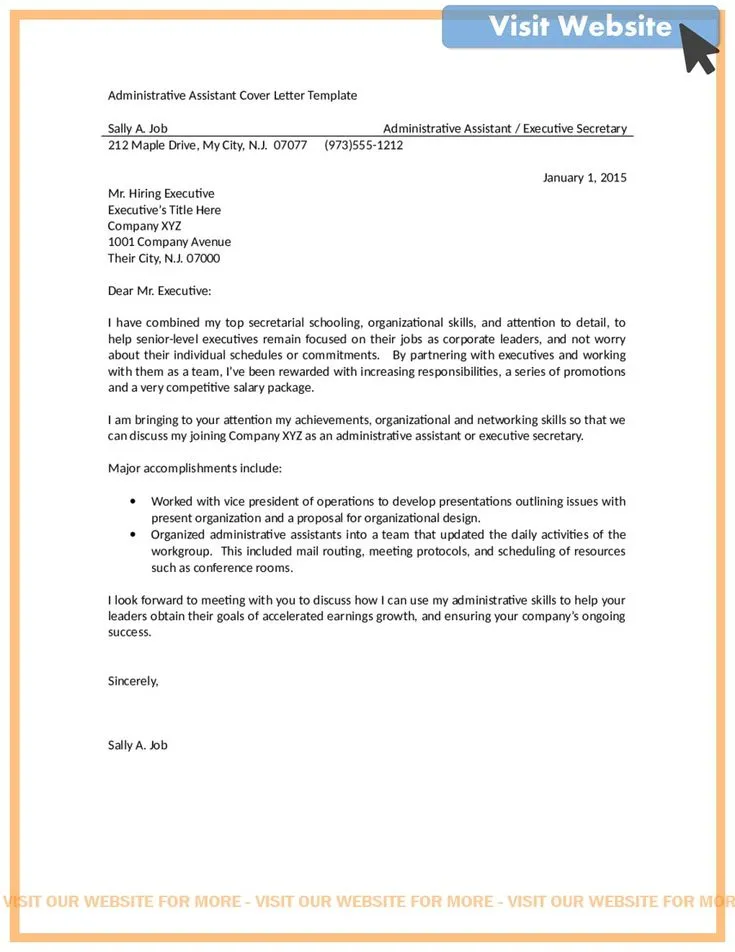
Reviewing cover letter samples provides valuable insights into formatting, language, and tone. These samples offer different examples and structures, enabling you to adapt your own letter. By exploring a variety of samples, you can get inspiration and ensure your cover letter meets industry standards. Modify the samples to align with your unique background.
Executive Assistant Cover Letter Sample 1
This sample demonstrates a candidate with strong organizational skills and experience in managing schedules and communications. The letter emphasizes proactive abilities and a commitment to supporting executives. It provides an effective structure for highlighting key qualifications. (Example Content)
Executive Assistant Cover Letter Sample 2
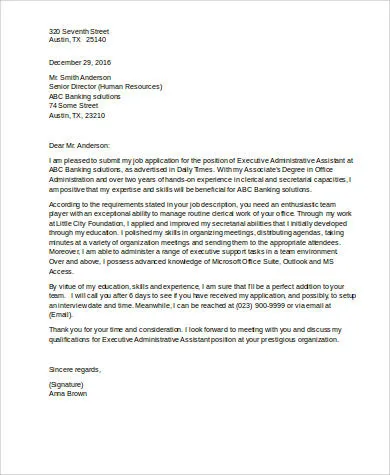
This sample is tailored for a candidate who has strong experience with travel coordination, meeting planning, and handling confidential information. The letter shows how the candidate can provide high-level support. It demonstrates how to convey experience in managing complex logistics and maintaining professionalism. (Example Content)
Administrative Assistant Cover Letter Sample 3
This sample showcases the skills necessary for office management, including proficiency in software, document management, and supporting a team. The letter stresses the candidate’s organizational skills and efficiency in administrative tasks. It offers a good structure for emphasizing experience in general office support roles. (Example Content)
Common Mistakes to Avoid
Avoiding common mistakes is critical in creating a strong cover letter. By identifying and correcting potential errors, you can present yourself professionally. Taking the time to review your work and pay attention to the details can prevent these issues and improve your chances of success. Here are some common mistakes and ways to avoid them.
Typos and Grammatical Errors
Typos and grammatical errors are a major turnoff to employers. Always proofread your letter carefully. Use a spell checker and grammar checker, but do not rely solely on them. Read your letter aloud to catch any awkward phrasing or repetitive sentences. Ask someone else to review your letter for errors. Correct these errors to boost your credibility.
Generic Content
Avoid using a generic cover letter that could be sent to any employer. Tailor your letter to each specific job. Research the company and the role. Show how your skills and experiences match the job description. Generic letters show a lack of genuine interest. Customize each letter to increase your chances of getting noticed.
Ignoring the Job Description
Always read the job description carefully. Highlight the key skills, qualifications, and experiences the employer is seeking. Tailor your letter to address these requirements directly. Show the employer that you understand the role and have the skills needed to succeed. Make sure you are addressing the needs of the employer.
Final Thoughts and Next Steps
Creating a compelling cover letter is a critical step in your job search. By following the guidelines and cover letter samples provided, you can create a standout letter that effectively showcases your skills, experience, and enthusiasm. Remember to tailor each letter to the specific job. Proofread it carefully. By taking these steps, you can significantly increase your chances of landing an interview and securing the job. Good luck with your job application!