What is a Cover Letter?
A cover letter is a crucial document accompanying your resume when applying for a job. This letter serves as an introduction to your qualifications, providing an opportunity to elaborate on your skills, experience, and why you are a suitable candidate. It offers the hiring manager insights beyond a simple summary of your background, demonstrating your personality, enthusiasm, and specific interest in the role and the company. Tailoring your cover letter to each job application is essential. Doing this demonstrates your research and understanding of the position’s requirements. The cover letter should highlight key achievements and skills that align with the job description. This ensures your first impression is compelling and well-written. A well-written cover letter is your opportunity to make a strong first impression.
Why Cover Letters are Essential
Cover letters are essential as they offer a platform to showcase your personality and genuine interest in a role. They provide context to your resume, letting you explain gaps in employment or career changes relevant to the application. A well-crafted cover letter highlights your skills and experience, illustrating how they match the job requirements. It enables you to demonstrate your understanding of the company’s culture and values, showing that you have researched and are truly interested in the opportunity. In a competitive job market, a strong cover letter sets you apart, giving you an advantage in the hiring process. They allow you to connect with the hiring manager on a personal level, creating a lasting impression. This makes you more likely to be seriously considered.
Cover Letter Structure for a Manager Position

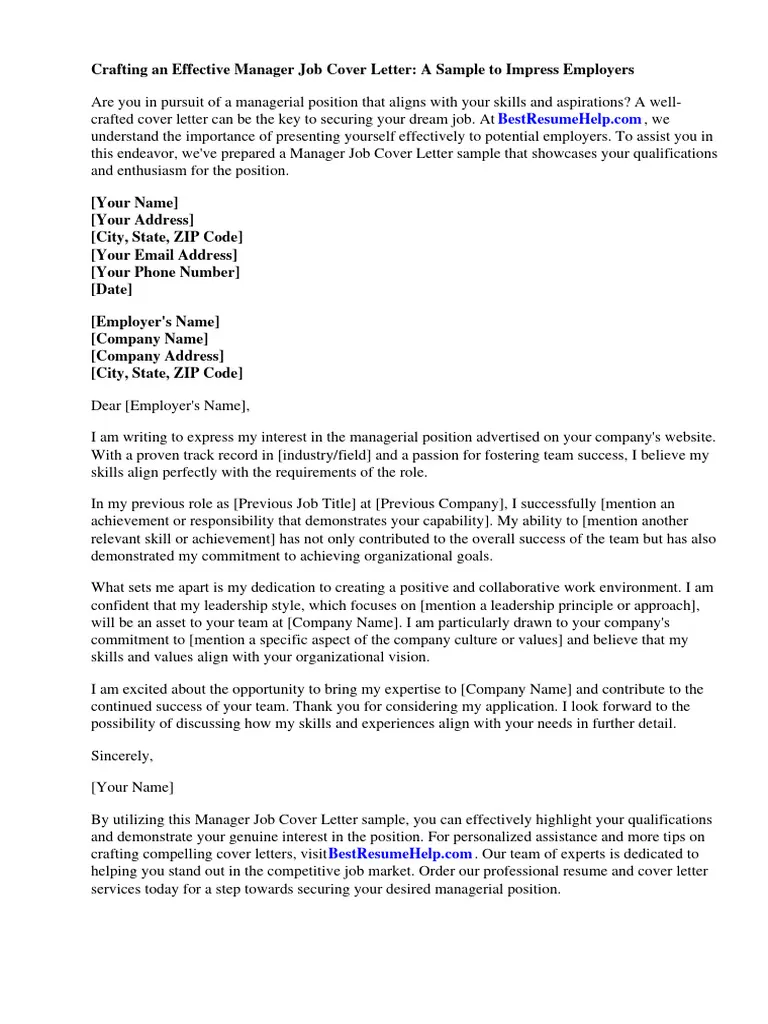
Structuring your cover letter effectively is critical to its success. Begin with a clear, professional header, including your contact information and the date. Then, include the recipient’s information: their name, title, and company address. Your opening paragraph should immediately capture the reader’s attention by stating the position and how you learned about it. The body should highlight your relevant skills and experiences, including specific examples and quantifiable achievements. Use action verbs to illustrate your accomplishments and leadership skills. End with a strong closing paragraph, expressing enthusiasm and including a call to action, such as requesting an interview. Maintaining a professional tone throughout the letter is vital, as is ensuring your writing is free from errors and conveys confidence. An organized, well-structured cover letter demonstrates your attention to detail.
Header Section
The header is the first element of your cover letter and is essential for conveying professionalism. It should include your full name, address, phone number, and email address. Ensure this information is accurate and up-to-date, as it allows the hiring manager easy access to your contact details. The header sets the tone, so pay attention to formatting, using a clean, legible font. A professional email address is key; avoid nicknames or unprofessional handles. Always double-check accuracy to ensure recruiters can contact you without issues. Accuracy in the header section is a must for a cover letter.
Contact Information
Accurate contact information is vital. This section mirrors the header but requires emphasis. Include your phone number, email address, and LinkedIn profile (if you have one). Set up a professional voicemail for your phone number. Check your email regularly for replies. Use a professional email address, avoiding nicknames or informal phrasing. Keep this section concise, providing only essential details and maintaining consistency with the header’s formatting. Remember, the goal is to enable the recruiter to reach you quickly and easily. Ensure your contact information is easily accessible.
Date

The date is a standard element, placed directly below your contact information, indicating when you wrote the letter. Use the current date and maintain consistent formatting with the rest of your document. It helps the employer keep track of when you applied and is useful for their records. This detail adds professionalism, showing the cover letter is current and tailored to the job posting. The date gives an impression of timeliness and relevance. Proper formatting ensures the letter appears polished.
Recipient’s Information
Direct your cover letter to a specific person whenever possible, demonstrating your initiative. Research the hiring manager’s name and title. If unavailable, use a professional title such as “Hiring Manager.” Include the recipient’s name, title, and company address below the date. Addressing the letter personally can create a stronger connection. If the hiring manager’s name is unavailable, a general greeting such as ‘Dear Hiring Manager’ is appropriate. Ensure correct spelling to show you have personalized your application. This personalization shows you are taking the application seriously.
Opening Paragraph
Your opening paragraph sets the tone for your letter. It should clearly state the position you are applying for and how you learned about the job. Mentioning the specific job title immediately establishes your purpose. Briefly explain where you saw the job posting, whether a company website, job board, or referral. The opening should be concise and capture the reader’s interest quickly. State your enthusiasm and demonstrate an understanding of the role. Keep it professional, showing interest in the role and the company, setting the stage for the information to follow. Make the opening paragraph impactful to make the hiring manager read more.
Highlighting Relevant Skills and Experience

The main body of your cover letter should focus on your relevant skills and experiences. Tailor this section to the job description, highlighting the skills the employer seeks. Use your experience to match the requirements outlined. Provide concrete examples of how you have demonstrated these skills. Use specific language to match the keywords from the job description. Demonstrate how your skills and experience align with the role’s requirements. Explain why you are a suitable candidate and what you can bring. The goal is to show the employer why they should interview you by highlighting relevant accomplishments. Make sure your skills match up well with the requirements.
Quantifiable Achievements
Showcase your achievements using quantifiable results. Use numbers to illustrate accomplishments, such as a percentage increase in sales, the number of projects completed on time, or the amount of money saved. Quantifiable achievements provide concrete evidence of your capabilities. Using numbers creates a more impactful impression, helping the employer understand your value. Use phrases like ‘Increased sales by 20%’ or ‘Managed a team of 10, delivering projects under budget.’ Quantifiable achievements add credibility and make your cover letter more convincing. Ensure your accomplishments align with the job requirements. Include numbers whenever possible for credibility.
Use of Action Verbs
Action verbs are crucial for making your cover letter dynamic. Start each sentence with strong verbs to describe your accomplishments and responsibilities. Examples include ‘Managed,’ ‘Led,’ ‘Implemented,’ ‘Developed,’ ‘Achieved,’ ‘Increased,’ and ‘Improved.’ Action verbs convey confidence and make your cover letter more engaging. Using them helps showcase your initiative and effectiveness. Vary your verbs to avoid repetition, and highlight your skills. This brings your experiences to life. Show your value as a candidate by using action verbs appropriate for a manager, focusing on leadership and strategic skills. These verbs help portray you as a proactive manager.
Demonstrating Leadership Skills

Manager positions require strong leadership skills. Demonstrate these by providing examples of leading teams, mentoring employees, and making strategic decisions. Highlight situations where you motivated a team to achieve a common goal. Explain how you resolved conflicts, provided feedback, and fostered a positive work environment. Use action verbs to emphasize leadership, showing your ability to guide and inspire. Quantify achievements, such as improving team performance or increasing employee satisfaction. Show your leadership experience using specific examples and explaining how you would apply them in the new role. Leadership skills are of utmost importance for a manager.
Addressing the Job Requirements
Carefully review the job description and address each requirement. Ensure your cover letter directly responds to what the employer seeks. Highlight your skills and experiences that align with the job duties outlined. Explain how your background and abilities make you a good fit. Tailor your letter to show you understand the company’s needs. Use keywords from the job description to show you meet expectations. Demonstrating your understanding of the role is essential. Ensure you show you meet the requirements outlined in the job posting. Make your cover letter relevant to the job.
Showcasing Company Alignment
Showcase your understanding of the company’s values and culture. Demonstrate that you have researched the organization and its mission. Explain why you want to work for that specific company. Mention any products, services, or initiatives that resonate with you. Explain how your values align with the company’s. This demonstrates genuine interest. Show that you are not just applying for any job. Demonstrating company alignment increases your chances of being selected for an interview. Research and show an understanding of the company. Show that you want to be a part of their mission.
Closing Paragraph

Your closing paragraph should summarize your interest in the position and reinforce your value. Express your enthusiasm and reiterate why you are the ideal candidate. Keep your tone professional and confident. Avoid repeating information from previous paragraphs. Summarize the most important points. Thank the hiring manager for their time and consideration. Reiterate your interest in the role. End with a clear call to action, such as requesting an interview. A strong closing paragraph can leave a lasting impression. Include a call to action to show your confidence.
Expressing Enthusiasm
Expressing genuine enthusiasm is vital for making a strong impression. Clearly state your excitement about the opportunity. Use words like ’excited,’ ’eager,’ ‘passionate,’ and ‘motivated.’ This makes you appear more personable, showing your interest. Relate your excitement to specific aspects of the role or responsibilities you are looking forward to. Mention particular projects or responsibilities you are looking forward to. Emphasizing your passion for the company is essential. Be sincere, ensuring your enthusiasm is genuine. Enthusiasm makes you appear motivated and a good fit for the manager position.
Call to Action
Include a clear call to action at the end of your cover letter. State that you are available for an interview. Provide your contact information again, making it easy for them to reach you. Express your eagerness to discuss your qualifications further. Make it easy for the recruiter to contact you by including your contact details. End with a professional closing, such as “Sincerely” or “Respectfully.” Always ensure your contact information is accurate. A strong call to action indicates confidence and readiness for the next step.
Professional Tone

Maintain a professional tone throughout your cover letter. This means using formal language, avoiding slang and jargon, and ensuring clarity and conciseness. Use a professional font and format for readability. Keep the language positive, focusing on your accomplishments. A formal tone throughout the letter is a must. Ensure your tone aligns with the company’s culture. Proofread to eliminate grammatical errors or typos. A professional tone is important to show you are a professional manager.
Proofreading and Editing
Proofreading and editing are essential to success. Errors can undermine your professionalism and make the hiring manager question your attention to detail. Carefully check your letter for grammatical errors, spelling mistakes, and typos. Use a grammar checker, but do not rely on it completely. Read the letter aloud to catch any awkward phrasing. Make sure your letter is clear, concise, and easy to read. Get a second pair of eyes to review your cover letter. A polished, error-free cover letter reflects professionalism and attention to detail. Make sure you have a clear, well-proofread cover letter.
Checking Grammar and Spelling
Carefully checking grammar and spelling is crucial. Errors create a bad impression. Use grammar-checking tools but do not rely on them completely. Proofread multiple times to catch errors the tools might miss. Make sure sentences are well-structured. Ensure your writing is clear and concise. Consistent grammar and spelling demonstrates attention to detail. Always proofread before submitting your cover letter. A well-written, well-formatted letter enhances your reputation.
Seeking Feedback
Seek feedback from others to improve your cover letter. Ask friends, colleagues, or career advisors to review your letter. Their feedback identifies areas for improvement that you might miss. Ask them to assess your cover letter for clarity, grammar, and overall effectiveness. Fresh perspectives can help you refine your message and increase your chances of getting the job. Be open to criticism and use feedback to improve your writing. Seek professional help if needed, for deeper insights, especially for a manager position. Seek feedback for improvement.
Cover Letter Samples: Manager Position
Reviewing different cover letter samples provides valuable insights. Samples help you understand the best ways to format and write letters. Tailor the sample to your background, skills, and the company’s requirements. Analyze the language and tone of the samples. They can guide your writing. Samples provide a template, and you should adapt it based on your goals. Use these samples as guidance, but be sure to customize the information.
Sample 1 Project Manager
A cover letter for a project manager must focus on project management skills. Emphasize experience in planning, executing, and closing projects. Include details about managing project budgets, timelines, and resources. Highlight your ability to lead teams and communicate with stakeholders. Use action verbs like ‘Managed,’ ‘Coordinated,’ ‘Implemented,’ and ‘Delivered.’ Emphasize working efficiently under pressure. Showcase skills with project management tools. Provide quantifiable results to illustrate success in managing projects. The focus should be on your ability to oversee projects from start to finish. Project management experience must be the focus.
Sample 2 Marketing Manager
Marketing manager cover letters must showcase marketing and communication skills. Mention experience creating and executing marketing campaigns. Highlight your analytical skills and ability to analyze market data. Mention skills related to social media marketing, content marketing, and digital marketing. Show experience managing marketing budgets and meeting deadlines. Detail your ability to lead and motivate marketing teams. Use persuasive language to emphasize marketing skills. Quantify achievements, such as increases in brand awareness or sales. Focus on your ability to drive marketing strategies. Make sure the skills match your marketing background.
Sample 3 Operations Manager
Operations manager cover letters must highlight operational and management skills. Emphasize experience in streamlining operations and improving efficiency. Detail your ability to manage teams and achieve goals. Mention experience with supply chain or inventory management. Include experience with analyzing data to optimize operations. Use action verbs for achievements. Highlight your understanding of the company’s operational structure. Showcase your ability to improve processes and reduce costs. Focus on optimizing operational efficiencies. Be sure your skills are aligned with the job’s requirements.