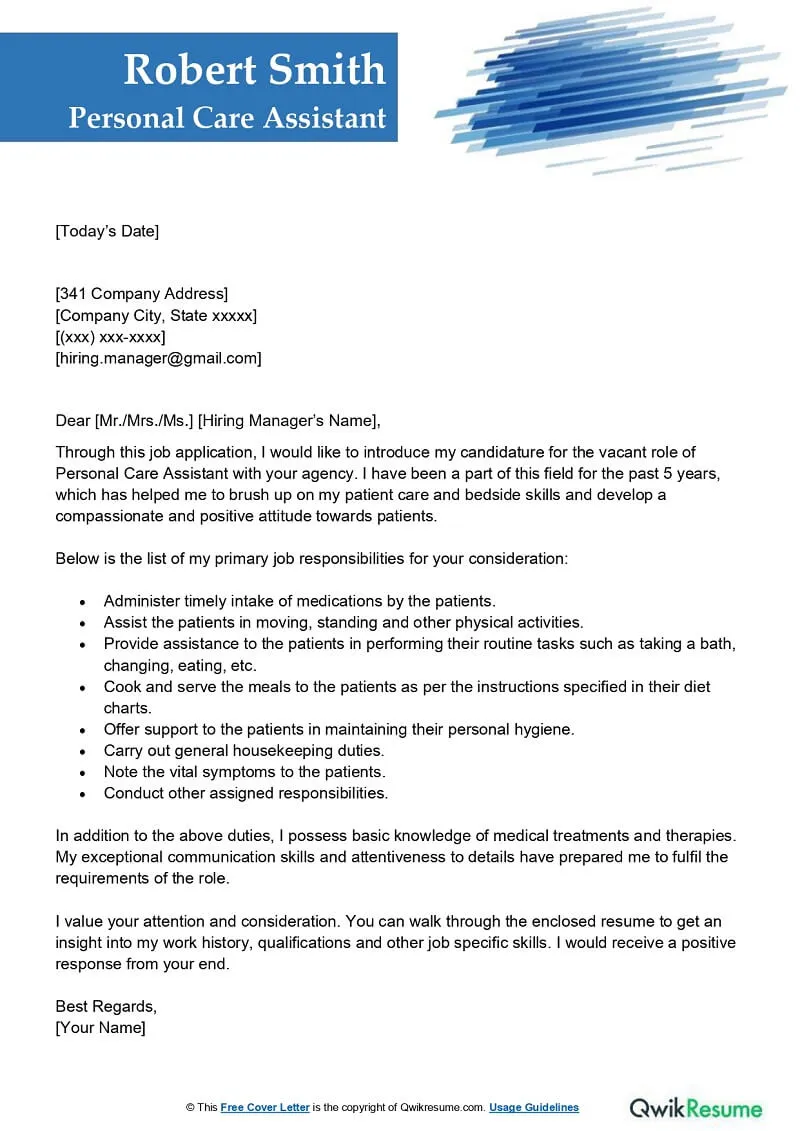
Crafting a Standout Cover Letter
A well-crafted cover letter is your first opportunity to make a positive impression on a potential employer. It serves as an introduction, a summary of your skills, and a demonstration of your interest in the personal assistant position. Unlike a resume, which lists your qualifications, a cover letter allows you to elaborate on your experiences, highlight your personality, and explain why you are the ideal candidate for the role. This is the document where you can truly shine, showing off not just what you’ve done but also how you can contribute to the company’s success. A strong cover letter sample will always be tailored for the specific job and employer.
Understanding the Purpose of a Cover Letter for a Personal Assistant
The primary purpose of a cover letter for a personal assistant is to convince the hiring manager that you possess the necessary skills, experience, and personality traits to excel in the role. It’s a chance to go beyond your resume and demonstrate your understanding of the job requirements. You can showcase your communication skills, organizational abilities, and attention to detail, all of which are essential for a PA. The cover letter also provides an opportunity to explain any gaps in your work history or to highlight any unique qualifications that make you stand out from other applicants. Showing genuine interest in the company and the role is critical. Explain why you want to work for them and what you admire about their values, culture, and success. By clearly articulating your understanding of the PA role and the value you bring, you’ll increase your chances of securing an interview.
Highlighting Key Skills and Qualities

Personal assistants require a diverse set of skills and qualities to effectively support their employers. Your cover letter should showcase these attributes, making sure to align them with the specific requirements of the job description. Employers look for candidates who possess strong organizational skills, excellent communication abilities, and a high degree of discretion. You must show that you’re able to prioritize tasks, manage schedules, and handle confidential information with utmost professionalism. Demonstrating that you are proactive, detail-oriented, and adaptable will significantly increase your appeal. The cover letter is where you bring these soft skills to life with examples of how you’ve utilized them in previous roles.
Organization and Time Management Skills
Effective organization and time management are essential for any personal assistant. Your cover letter should emphasize your ability to manage schedules, prioritize tasks, and meet deadlines efficiently. Provide examples of how you’ve successfully organized complex projects, managed multiple calendars, or streamlined workflows. Consider using quantifiable achievements to illustrate your skills, such as, ‘Successfully managed the schedules of three executives, resulting in a 15% increase in meeting efficiency.’ Highlight any software or tools you’re proficient in using for organization, such as calendar applications, project management software, or CRM systems. Your ability to keep things running smoothly reflects your efficiency and dedication.
Communication and Interpersonal Abilities
Personal assistants frequently serve as the primary point of contact for their employers, requiring excellent communication and interpersonal skills. In your cover letter, emphasize your ability to communicate clearly and professionally, both in writing and verbally. Describe how you’ve handled client interactions, managed phone calls, or drafted professional correspondence. Highlighting your ability to build rapport, maintain confidentiality, and work effectively with diverse individuals is crucial. Share examples of how you’ve resolved conflicts, handled difficult situations, or successfully negotiated on behalf of your employer. Also show that you understand the importance of clear, concise, and professional language.
Discretion and Confidentiality

A crucial aspect of the personal assistant role is maintaining a high level of discretion and confidentiality. Your cover letter should explicitly address your understanding of these principles and showcase your ability to handle sensitive information with integrity. Highlight any experience you have in handling confidential documents, managing sensitive communications, or protecting privileged information. If you have worked in a role where you were entrusted with personal or financial details, be sure to mention it. You must reassure the employer of your commitment to privacy and discretion, and show that you’re a trustworthy individual who can be relied upon to protect confidential information.
Tailoring Your Cover Letter
Generic cover letters rarely make a strong impression. To truly stand out, you must tailor each cover letter to the specific job and employer. This involves researching the company, understanding the job requirements, and customizing your letter to match. Read the job description carefully and identify the key skills and qualifications the employer is seeking. Then, use your cover letter to demonstrate how your experience and abilities align with those needs. Referencing the company’s values, mission, or recent achievements can further demonstrate your genuine interest. A well-tailored cover letter shows the employer you’ve invested time and effort in understanding their needs and are serious about the opportunity.
Researching the Employer and the Role
Before writing your cover letter, conduct thorough research on the employer and the specific personal assistant role. Explore the company’s website, social media profiles, and news articles to learn about their business, culture, and recent activities. Understand their mission, values, and goals. Analyzing the job description carefully is equally important. Identify the specific requirements, responsibilities, and skills the employer is seeking. The more you know about the company and the role, the better you can tailor your cover letter to demonstrate that you are a good fit. You must show your understanding of their needs, values, and the work environment to create a compelling cover letter.
Customizing Your Letter to Match the Job Description

Once you’ve researched the employer and the role, it’s time to customize your cover letter to directly address the job description. Use the keywords and phrases from the job posting to describe your skills, experience, and accomplishments. This helps the hiring manager quickly see that you meet their requirements. Instead of simply listing your skills, provide specific examples of how you’ve used them in the past. Quantify your achievements whenever possible. Show the value you can bring to the role. By tailoring your cover letter to the job description, you demonstrate your attention to detail and your understanding of the employer’s needs, significantly increasing your chances of getting an interview.
Structuring Your Cover Letter
A well-structured cover letter is easy to read and effectively communicates your qualifications. A standard cover letter typically includes a header, salutation, body paragraphs, and a closing. Each section serves a specific purpose, and a clear, organized layout will make a strong impression on the reader. Use a professional font, such as Times New Roman or Arial, and keep your letter concise and focused. Aim for no more than one page in length. Make sure to proofread your cover letter carefully for any errors in grammar or spelling. Always focus on clarity, accuracy, and professionalism.
The Header Your Contact Information
The header of your cover letter should include your contact information, such as your name, address, phone number, and email address. Make sure your contact information is up-to-date and accurate. Consider including a professional-looking LinkedIn profile URL if you have one. This allows the hiring manager to quickly and easily contact you. Place the date below your contact information, followed by the hiring manager’s name and title (if available), and the company’s address. A well-formatted header shows that you pay attention to detail and are organized.
The Salutation Addressing the Hiring Manager

Use a professional salutation to address the hiring manager. If you know the hiring manager’s name, use ‘Dear Mr./Ms. [Last Name]’. If the hiring manager’s name is not available, a general salutation such as ‘Dear Hiring Manager’ is acceptable. Avoid using generic greetings like ‘To Whom It May Concern’. Addressing the hiring manager by name shows that you have done your research and are attentive to detail. It creates a more personal connection and can increase the likelihood of your cover letter being read attentively. Make sure you use the correct title and spelling of the person’s name.
The Body Showcasing Your Qualifications
The body of your cover letter is the most important part. It should effectively showcase your qualifications and explain why you are the ideal candidate for the personal assistant position. Start with a strong introduction that grabs the reader’s attention. Then, use the body paragraphs to highlight your relevant experience, skills, and accomplishments. Provide specific examples to support your claims. Quantify your achievements whenever possible. Clearly explain how your skills and experience align with the job requirements. Maintain a professional tone throughout the body of your letter. Make sure it is well-written, concise, and free of any grammatical or spelling errors.
The Introduction Grabbing Their Attention
Your introduction is the first chance to make a positive impression. Start with a compelling statement that grabs the reader’s attention and clearly states the position you’re applying for. Express your interest in the role and the company, and briefly summarize your key qualifications. Avoid generic opening statements and focus on highlighting what makes you stand out. Show your excitement and enthusiasm for the opportunity. A well-crafted introduction sets the tone for the rest of your letter and encourages the hiring manager to continue reading. By immediately capturing their interest, you’ll increase the chances of your application being considered.
Highlighting Relevant Experience

In the body of your cover letter, provide details about your relevant experience. Focus on experiences that align with the requirements of the personal assistant position. Describe your previous roles and responsibilities, emphasizing the skills and accomplishments that demonstrate your suitability. Use action verbs to describe your duties and responsibilities, and provide specific examples of how you’ve used your skills to achieve success. Highlight experiences where you have demonstrated your organizational skills, communication abilities, and attention to detail. Connect your experience to the job description, showing how your past roles make you an ideal fit for the position.
Quantifying Accomplishments
Quantifying your accomplishments is a highly effective way to showcase your value as a personal assistant. Instead of just stating that you managed schedules, provide specific numbers to show the impact of your work. For example, ‘Managed the schedules of three executives, resulting in a 20% increase in meeting efficiency.’ Use data and statistics to demonstrate your achievements whenever possible. This will allow the hiring manager to see the direct benefits of hiring you for the personal assistant role. Quantifiable achievements show that you are results-oriented and capable of making a tangible contribution to the company. Show the measurable value you can bring to the role.
The Closing Expressing Enthusiasm and Next Steps
In your closing, express your enthusiasm for the opportunity and reiterate your interest in the position. Thank the hiring manager for their time and consideration. State that you are eager to discuss your qualifications further in an interview. Provide your contact information again, just in case the hiring manager needs to find your details. Make sure to include a call to action, such as ‘I look forward to hearing from you soon’ or ‘Thank you for considering my application.’ End with a professional closing, such as ‘Sincerely’ or ‘Best regards’, followed by your full name.
Proofreading and Editing

Before submitting your cover letter, thoroughly proofread and edit it for any errors in grammar, spelling, or punctuation. Errors can create a negative impression and undermine your credibility. Carefully check for any typos, inconsistencies, or awkward phrasing. Read your cover letter aloud to identify any areas that need improvement. It’s also a good idea to have someone else review your cover letter. Another set of eyes can often catch errors that you may have missed. Pay close attention to the formatting and ensure it is neat and professional. Take your time and make sure your cover letter is error-free before submitting it. Consider using grammar and spelling check software tools.
Ensuring Accuracy and Professionalism
Accuracy and professionalism are paramount in a cover letter. Double-check all information, including names, titles, dates, and contact details. Make sure you have correctly spelled the hiring manager’s name and the company name. Use a professional tone throughout the cover letter, avoiding slang or casual language. Proofread your cover letter multiple times to ensure there are no errors. A cover letter with errors can create a negative impression and undermine your credibility. The more professional your cover letter, the more likely it is to create a positive first impression, showing you’re a detail-oriented and diligent candidate.
Seeking Feedback from Others
Before submitting your cover letter, seek feedback from trusted sources such as friends, mentors, or career advisors. Ask them to review your letter and provide constructive criticism. They can offer valuable insights on your writing style, content, and overall presentation. Be open to their feedback and make revisions accordingly. A fresh perspective can often help you identify areas for improvement that you might have missed. Their feedback may also help you ensure that your cover letter is clear, concise, and effectively communicates your qualifications. You may also seek professional resume and cover letter writing services.