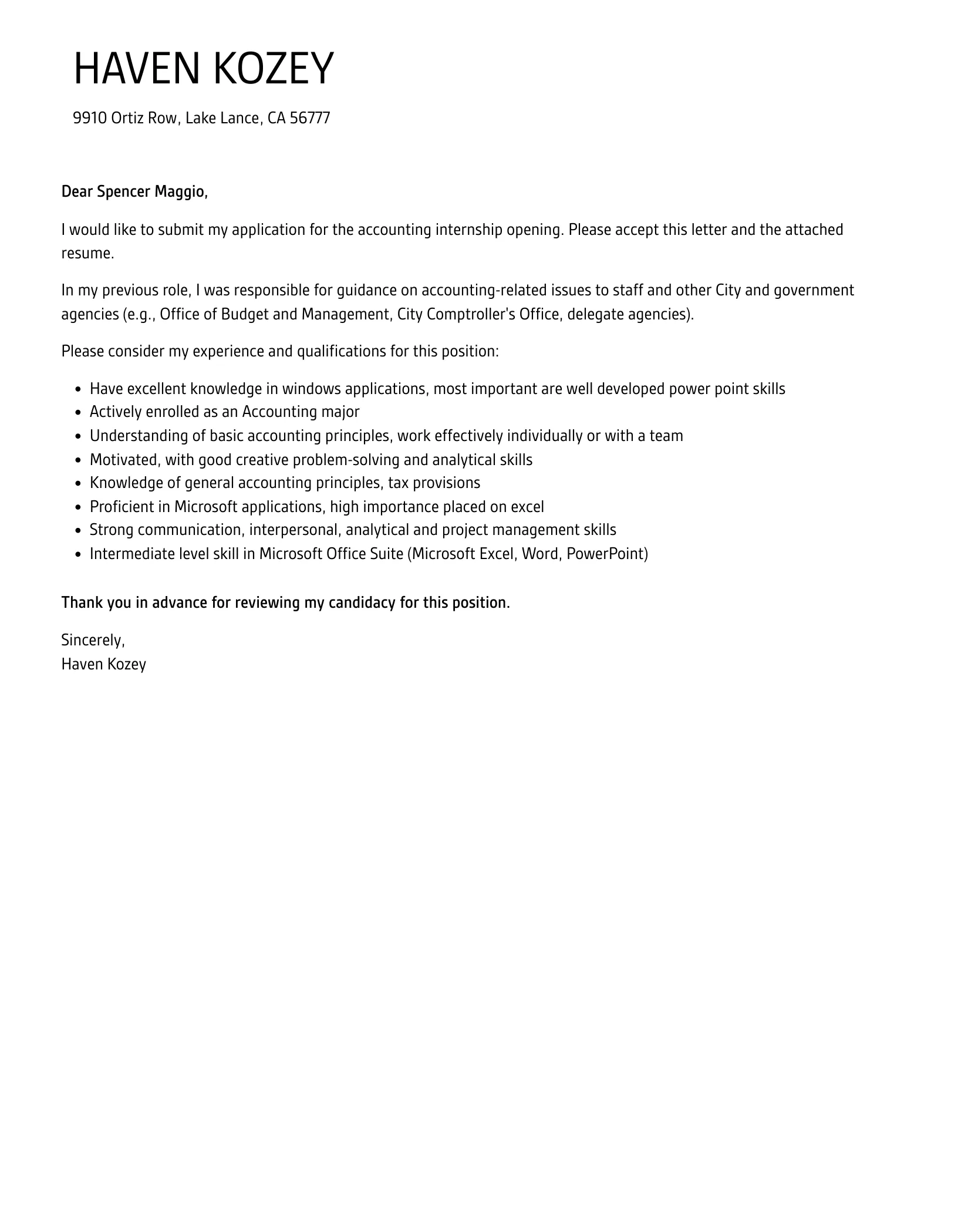
Why Cover Letters Matter for Accounting Internships
In the competitive world of accounting, securing an internship can be a crucial step towards launching your career. A well-crafted cover letter is not merely a formality; it’s your first opportunity to make a lasting impression on potential employers. Unlike a resume, which provides a factual overview of your qualifications, a cover letter allows you to showcase your personality, express your enthusiasm, and explain why you’re the perfect fit for the role. It’s a chance to connect with the hiring manager on a more personal level and demonstrate your understanding of the company’s needs. Furthermore, a cover letter gives you the space to elaborate on your skills and experiences in detail, highlighting how they align with the specific requirements of the internship. By taking the time to write a compelling cover letter, you significantly increase your chances of standing out from the crowd and landing an interview.
Highlighting Your Skills
Your cover letter is the perfect platform to showcase the skills that make you a strong candidate. Prospective employers are looking for a blend of technical and soft skills. A cover letter should focus on how your skills align with the internship’s responsibilities. You should provide specific examples of how you have applied these skills in previous experiences. This allows the employer to get a clear picture of the value you can bring to their team.
Technical Skills to Showcase

Technical skills are the foundational abilities required for accounting roles. Ensure that you mention the relevant technical skills from the job description. Consider including skills such as financial statement analysis, budgeting, and forecasting, reconciliation, and tax preparation. Show how you have applied these technical skills in previous academic or practical experiences. It’s not enough to list them; providing context and examples will help you demonstrate the depth of your skills and abilities. The employer will be impressed with your clear understanding of the technical aspects required for the role.
Software Proficiency
Accounting software is the lifeblood of modern accounting practices. Highlight your proficiency with industry-standard software. Mention specific software packages, such as QuickBooks, Xero, SAP, or Microsoft Excel. Be sure to mention advanced skills, like building macros in Excel or running complex reports. Demonstrating your ability to use these tools effectively can significantly increase your appeal to potential employers. Mentioning your software proficiency shows you can hit the ground running, streamlining the hiring process and reducing training time.
Soft Skills to Emphasize
Soft skills are equally important as technical skills, playing a crucial role in your ability to collaborate, communicate, and solve problems. Focus on key skills, like communication, teamwork, and problem-solving, providing concrete examples that illustrate these skills in action. These are essential for any accounting internship. Highlight the situations where you successfully used soft skills, allowing potential employers to appreciate your professional readiness. When writing, try and find specific situations where you used soft skills to achieve a goal, demonstrating your ability to navigate real-world professional challenges.
Communication Skills

Strong communication skills are essential for accounting professionals. Highlight your ability to communicate financial information clearly and concisely. Use examples of how you’ve presented complex data to non-financial audiences. Your cover letter will allow you to showcase your writing abilities. Show that you have used communication skills during group projects, client presentations, or any role where you had to explain accounting concepts. Effective communication promotes collaboration and contributes to the overall success of accounting projects. Make the employer confident about your capacity to articulate complex accounting concepts.
Teamwork and Collaboration
Accounting is often a collaborative field. Illustrate your teamwork skills by describing your experiences working with others on projects. Give an example of when you successfully collaborated with colleagues to complete a task. Share any experience of leading a team. Demonstrate how you contributed to a positive and productive team environment. Show your ability to work cooperatively to achieve shared goals. Accounting firms value individuals who can seamlessly integrate into their teams.
Tailoring Your Cover Letter
One of the most important aspects of a successful cover letter is tailoring it to the specific job and company. Generic cover letters often lack the impact needed to capture the attention of hiring managers. You should personalize your cover letter for each application. Research the company and the specific internship role. Show the employer that you have a genuine interest in the opportunity and the organization. This will show your attention to detail and commitment to your career in accounting.
Researching the Company

Before you start writing, research the company’s mission, values, and recent projects. Visit the company’s website, read their annual reports, and check their social media presence. Understanding the company’s goals and culture will allow you to align your skills and experiences with their needs. Demonstrate your familiarity with the organization and show why you are a good fit. This shows your genuine interest and commitment to the role. Your cover letter should reflect that you understand their business model. Doing your homework is essential for creating an effective cover letter.
Matching Skills to Requirements
Carefully review the job description and identify the key skills and qualifications the employer is seeking. Use the job description as a roadmap for your cover letter. Then, highlight the skills and experiences that directly address those requirements. Provide specific examples of how you have demonstrated these skills in the past. Use keywords and phrases from the job description to show that you understand the role and its demands. You can adapt your resume to reflect what the employer is looking for. The objective is to ensure the employer can see how you can contribute to their organization.
Structuring Your Cover Letter
The structure of your cover letter is critical. A well-organized cover letter is easy to read and highlights your key qualifications. Follow a clear and professional format to make a positive impression on hiring managers. You need to include your contact information, a professional greeting, an engaging opening paragraph, a section highlighting relevant experience, a statement of your passion for the field, and an assertive closing paragraph. A well-structured cover letter is a sign of professionalism. By structuring your letter effectively, you will ensure that your qualifications are presented in a clear and compelling way.
Header and Contact Information

Start with your contact information at the top of the letter. Include your full name, phone number, email address, and LinkedIn profile URL. Ensure your email address is professional. This allows the employer to easily contact you if they are interested in inviting you for an interview. Include the date and the recipient’s name and address. Using a formal header will make a strong first impression. A professional header reflects your attention to detail and commitment to professionalism.
Professional Greeting
Address the hiring manager by name if possible. If you don’t know the name, you can use a general greeting like “Dear Hiring Manager.” Avoid generic greetings such as “To Whom It May Concern.” Addressing the hiring manager by name shows that you have taken the time to research the company. Your cover letter will feel more personal and demonstrate your engagement with the company. When writing your cover letter, use a formal tone, be professional, and avoid being too casual.
The Opening Paragraph
Your opening paragraph is your first opportunity to grab the reader’s attention. State the specific position you’re applying for and where you saw the job posting. Then, provide a brief, compelling summary of why you are a great fit for the internship. Show the employer that you have a genuine interest in the opportunity. Express your enthusiasm for the role and the company, demonstrating that you understand the requirements of the position. You should aim to create an engaging opening that captures the reader’s interest and sets the tone for the rest of your letter.
Highlighting Relevant Experience

The main body of your cover letter should showcase your relevant experience and skills. Focus on the experiences that directly align with the requirements of the internship. Provide specific examples of how you have applied your skills and achieved results in previous roles or academic projects. Be clear about the skills you used to successfully complete a task. Whenever possible, quantify your achievements to demonstrate your impact. By highlighting relevant experience, you show employers that you have the skills and knowledge to be a successful intern.
Quantifying Achievements
Whenever possible, use numbers and data to quantify your achievements. Instead of saying, “I improved efficiency,” say “I improved efficiency by 15% by implementing a new inventory system.” Quantifying your achievements provides concrete evidence of your abilities. This allows potential employers to easily see the impact of your contributions. Using numbers and metrics adds credibility to your claims and demonstrates your ability to make a difference. Whenever possible, provide supporting statistics to highlight the positive outcomes of your efforts.
Demonstrating Passion for Accounting
Show your genuine passion for accounting. Explain why you are drawn to the field and what motivates you to pursue an internship. Sharing your passion will make your letter more memorable and show your commitment. The goal is to clearly convey your excitement for the opportunity. Mention any specific aspects of accounting that you find particularly interesting. Demonstrating your enthusiasm will help you stand out and make a strong impression.
Expressing Your Career Goals

Clearly state your career goals and how the internship aligns with them. Describe what you hope to gain from the internship. Explain how the internship will help you grow your skills and advance your career. Connecting your goals to the internship requirements shows the employer that you have a clear vision for your future. Expressing your career goals demonstrates your ambition and shows your readiness for the internship. You should show that you are forward-thinking and invested in the experience.
The Closing Paragraph
In the closing paragraph, reiterate your interest in the position and thank the hiring manager for their time and consideration. Include a call to action, such as stating that you are available for an interview. End with a professional closing, such as “Sincerely” or “Respectfully.” Always proofread your cover letter one last time. The goal is to leave the employer with a positive and lasting impression of your qualifications and enthusiasm. Be sure to also confirm the contact information.
Proofreading and Formatting
Proofreading is a crucial step in writing a successful cover letter. Errors can undermine your credibility and detract from your message. Carefully proofread your letter for any grammatical errors, spelling mistakes, and typos. Read your cover letter several times, and consider asking a friend, family member, or career counselor to review it. Ensure that the formatting is clean and professional. Use a standard font, such as Times New Roman or Arial, and maintain consistent spacing. Formatting errors can make your letter difficult to read. Proofreading helps prevent errors, which will enhance your chances of landing an accounting internship.