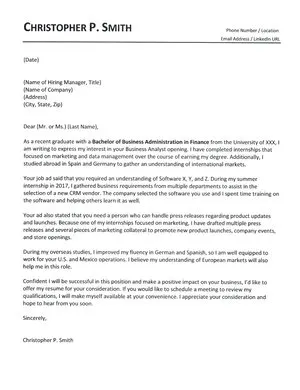
Why a Cover Letter Matters for Recent Grads
As a recent graduate, you’re likely entering a highly competitive job market. Your resume, while important, often lacks the space to fully express your skills, experiences, and personality. This is where a cover letter steps in. A well-crafted cover letter acts as your personal introduction, providing a platform to elaborate on your qualifications, demonstrate your enthusiasm for the specific role and company, and set you apart from other applicants. It allows you to connect your academic background, internships, and any other relevant experiences to the job requirements, making a compelling case for why you’re the ideal candidate. In essence, a cover letter is your chance to make a strong first impression and convince the hiring manager to take a closer look at your resume. Failing to include a cover letter when one is requested can signal a lack of attention to detail and a lack of genuine interest in the position. Therefore, a cover letter is not just a formality; it is a crucial component of your job application, especially for recent graduates.
Highlighting Your Skills
Your cover letter is the perfect space to highlight the skills that make you a strong candidate. Recent graduates may lack extensive professional experience, so it’s important to emphasize transferable skills gained through academics, extracurricular activities, and part-time jobs. Focus on the skills that directly relate to the job description. Use action verbs to describe your accomplishments and demonstrate how you applied those skills in real-world scenarios. Be specific, providing examples that illustrate your abilities. For instance, instead of simply stating that you have “good communication skills”, describe a project where you effectively presented information to a group or mediated a conflict. Tailor your skill set to match the requirements of each job you apply for, as the hiring managers will easily be able to understand your suitability for the role.
Transferable Skills to Showcase

Transferable skills are those skills that can be applied across different jobs and industries. For recent graduates, showcasing these skills can compensate for a lack of direct work experience. Some examples include communication, teamwork, problem-solving, critical thinking, leadership, time management, and adaptability. When highlighting these skills, provide specific examples of how you’ve utilized them. For example, if you’re emphasizing teamwork, describe a group project where you successfully collaborated with others to achieve a common goal. If you’re highlighting problem-solving skills, discuss a situation where you identified a problem, analyzed it, and implemented a solution. Show, don’t just tell, how you possess these skills. Be sure to correlate these skills with the job description, so that the recruiter can clearly see that you are a great fit for the role. This approach helps the hiring manager understand how your capabilities align with the job’s needs, increasing your chances of getting noticed.
Quantifying Achievements
Whenever possible, quantify your achievements. Numbers add credibility and demonstrate the impact of your contributions. Instead of saying “I improved customer service,” say “I improved customer satisfaction scores by 15%”. Instead of writing, “Managed social media accounts,” write “Managed social media accounts, increasing follower engagement by 20%”. Quantifying your accomplishments demonstrates your ability to make a tangible difference and provides concrete evidence of your capabilities. This is particularly important if you lack extensive professional experience. Include any relevant metrics, such as the size of projects you managed, the amount of money you helped save, or the number of people you led. Using data-driven examples helps illustrate the value you brought to previous experiences and makes your cover letter more compelling and memorable.
Tailoring Your Cover Letter
Generic cover letters are easily spotted and often discarded. Taking the time to tailor your cover letter to each specific job and company is crucial. This demonstrates that you’ve done your research and have a genuine interest in the role and organization. Begin by carefully reading the job description and identifying the key requirements and desired qualifications. Then, align your skills and experiences with these requirements. Highlight the specific aspects of your background that make you a good fit for the position. Don’t just reiterate your resume; instead, provide additional context and elaborate on your accomplishments. Customizing your cover letter shows that you’re not just sending out a mass application; you’re actively pursuing this particular opportunity.
Researching the Company

Before writing your cover letter, thoroughly research the company. Understand their mission, values, products or services, and recent news or initiatives. This information will allow you to demonstrate your genuine interest and show how your skills align with their goals. Visit the company’s website, read news articles, and check their social media profiles. Look for information about their culture, values, and any recent projects or achievements. Then, in your cover letter, briefly mention what excites you about the company and why you want to contribute to their mission. Showing that you’ve taken the time to learn about the organization demonstrates your dedication and enhances your chances of getting hired. Demonstrating your knowledge of the company’s activities and culture will demonstrate your genuine interest and increase the impact of your application.
Using Keywords Strategically
Many companies use Applicant Tracking Systems (ATS) to screen resumes and cover letters. These systems scan documents for specific keywords related to the job requirements. To increase your chances of passing the ATS, strategically incorporate relevant keywords from the job description into your cover letter. Carefully analyze the job posting and identify the key skills, qualifications, and responsibilities mentioned. Then, naturally weave these keywords into your cover letter. Don’t just stuff your letter with keywords; the goal is to make it clear that you meet the specific requirements. Use keywords within the context of your experiences and accomplishments, ensuring that your letter is clear, concise, and engaging. This tactic improves your chances of your application being seen by a human, as well as helping you showcase your experience to the hiring manager.
Cover Letter Structure
A well-structured cover letter makes a positive first impression and effectively conveys your qualifications. It should be clear, concise, and easy to read. Use a professional tone and formatting to create a polished presentation. The following sections are vital for a compelling cover letter, each playing a specific role in telling your story and convincing the reader of your suitability for the role.
Header and Contact Information

Start your cover letter with a professional header that includes your name, address, phone number, and email address. Make sure your contact information is current and easy to read. Below your contact information, include the date and the hiring manager’s name and title (if you know it), and the company’s name and address. If you are unable to find the hiring manager’s name, you can use a general salutation like “Dear Hiring Manager.” Ensuring the correct formatting will contribute to a professional and polished appearance. Always double-check your information to make sure that any hiring manager can contact you. This is the first information a recruiter or hiring manager will see, so it’s extremely important to give a good impression right away.
The Opening Paragraph
The opening paragraph is your opportunity to grab the hiring manager’s attention. Start by stating the position you’re applying for and how you found out about the opportunity. Briefly mention something that interests you about the company or the role. Make it clear that you’re enthusiastic about the position and want to contribute to the company’s success. This introduction should be concise and to the point, providing a quick overview of your interest and qualifications. The goal is to make the reader want to learn more. Show them why you are a great candidate immediately in the first few sentences.
Body Paragraphs Highlighting Skills
The body paragraphs are the core of your cover letter, where you showcase your skills and experiences. These paragraphs should highlight the key requirements mentioned in the job description and provide specific examples of how you’ve demonstrated those skills. Explain how your experiences have prepared you for the role. Use the STAR method (Situation, Task, Action, Result) to describe your accomplishments. For each skill you emphasize, provide a concrete example of a time you used that skill to achieve a positive outcome. This structure will make your achievements relatable, while also providing quantifiable and verifiable information to the recruiter or hiring manager. This will give the hiring manager a clear understanding of how your skills and experiences align with the job requirements and the company’s goals.
The Closing Paragraph and Call to Action

In your closing paragraph, reiterate your interest in the position and thank the hiring manager for their time and consideration. Reiterate your enthusiasm for the role and the company. Include a clear call to action, such as “I look forward to hearing from you soon” or “I am eager to discuss my qualifications further in an interview.” Also, mention your availability for an interview and reiterate your contact information. Maintain a professional tone and express your anticipation for the next steps in the hiring process. This reinforces your interest and leaves a positive lasting impression.
Cover Letter Formatting and Design
A well-formatted cover letter is easy to read and visually appealing. Proper formatting demonstrates professionalism and attention to detail, making a positive impact on the reader. Pay close attention to font choice, spacing, and overall layout to ensure that your cover letter is clear and professional. Here are a few key formatting and design elements to consider.
Font and Readability
Choose a professional and easy-to-read font, such as Times New Roman, Arial, Calibri, or Helvetica. Ensure that the font size is between 10 and 12 points. Use clear and concise language, avoiding jargon or overly complex sentence structures. Break up large blocks of text with short paragraphs and bullet points to improve readability. Use bolding or italics to highlight key information, but do so sparingly. A clean and uncluttered format will make your cover letter more appealing and easier for the hiring manager to read, increasing the chances of it being read in its entirety.
Length and Tone

Keep your cover letter concise and to the point. Aim for a length of one page. The tone should be professional, enthusiastic, and respectful. Avoid overly casual language or slang. Maintain a positive and confident tone throughout the letter, highlighting your strengths and enthusiasm. Write in a clear and concise style, using strong action verbs and active voice. Make sure your cover letter aligns with the company’s culture. Tailoring your style based on the company’s tone, and ensuring your language is professional yet reflects your personality, will create a great first impression with the hiring manager. Demonstrating your adaptability and communication skills is a key advantage in a recent graduate’s application.
Proofreading and Editing
Proofreading and editing are crucial steps in the cover letter writing process. Typos, grammatical errors, and formatting mistakes can detract from your qualifications and make a negative impression. Before submitting your cover letter, carefully proofread it for any errors. Check for spelling mistakes, grammatical errors, and punctuation issues. Ensure that your formatting is consistent throughout the document. Read your cover letter aloud to identify any awkward phrasing or unclear sentences. Ask a friend, career counselor, or mentor to review your cover letter for feedback. A second pair of eyes can often catch errors that you might miss. Taking the time to proofread and edit your cover letter will ensure that it presents you in the best possible light and increases your chances of getting noticed.
In conclusion, a well-crafted cover letter is essential for recent graduates looking to launch their careers. By following the guidelines outlined in this guide, you can create a compelling cover letter that highlights your skills, demonstrates your enthusiasm, and sets you apart from other applicants. Remember to tailor your cover letter to each specific job, quantify your achievements, and proofread carefully. Good luck with your job search!