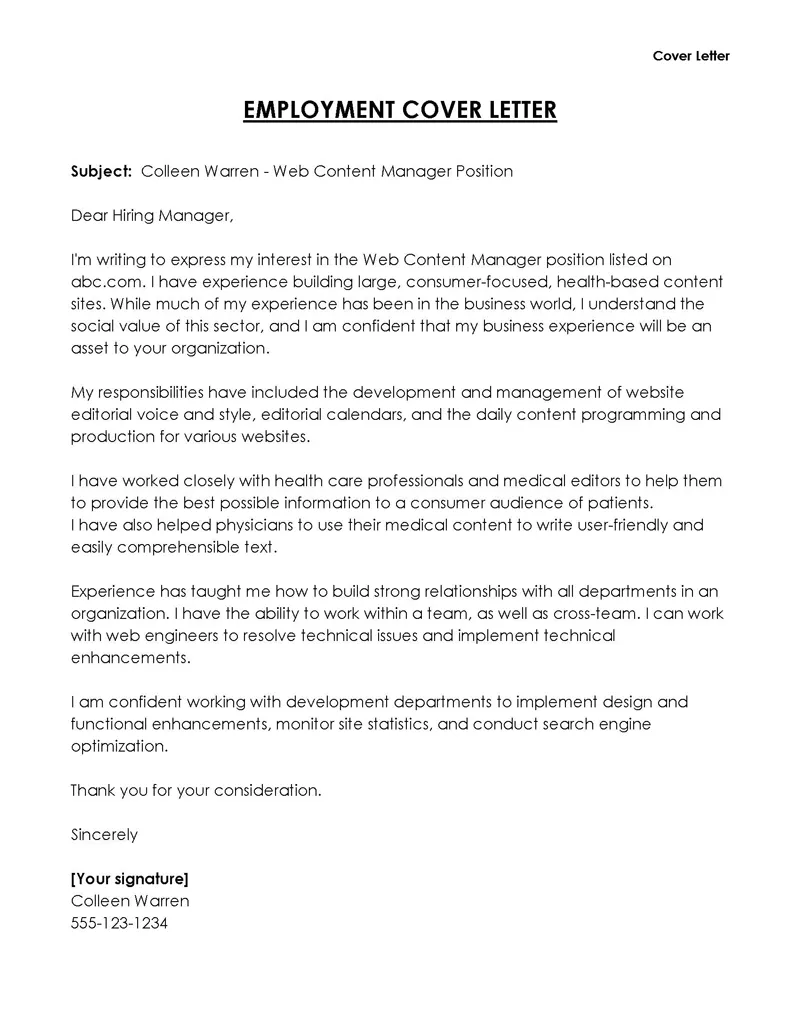
Cover Letter Format The Importance of Format
The format of your employment cover letter is crucial as it sets the tone and professionalism of your application. A well-formatted cover letter immediately grabs the reader’s attention, making a positive first impression. It demonstrates your attention to detail, organizational skills, and understanding of professional communication. A poorly formatted cover letter, on the other hand, can lead to your application being overlooked, regardless of your qualifications. The right format ensures your key information is easily accessible and highlights your suitability for the role. Ensuring your cover letter format aligns with industry standards is an essential step in your job search. A well-structured format emphasizes clarity, making it easier for hiring managers to quickly grasp your key strengths and experiences.
Cover Letter Format Key Formatting Elements
Understanding the essential elements of cover letter format is the foundation for crafting a compelling document. These elements, when correctly implemented, will guide the reader through your qualifications and demonstrate your professionalism. From the contact information to the closing, each component plays a specific role in presenting you as the best candidate for the job. By paying attention to these key formatting elements, you increase your chances of making a positive impression and advancing in the application process. Each section contributes to a cohesive and impactful cover letter, illustrating your attention to detail and understanding of professional communication.
Contact Information

At the very top of your cover letter, include your contact information. This should include your full name, address, phone number, and email address. Ensure your email address sounds professional. This section enables the employer to easily reach you. Also, consider including a link to your LinkedIn profile to provide additional information about your professional background. This information should be aligned to the left or right of the page, or centered, depending on your preferred style. The goal is to make your contact details readily available for easy reference. Always double-check this section for accuracy to avoid any communication issues.
Date
Following your contact information, include the date. This is typically the date you are sending the cover letter. The date helps the employer understand when you submitted your application. The date should be formatted appropriately and placed consistently with your contact information’s alignment. This simple detail shows attention to detail and demonstrates your organizational skills. The date should be located either right below your contact information or on the top right corner. It is important to keep all the date formats consistent for a professional and clean look.
Recipient Information
Beneath the date, include the recipient’s information. This includes the hiring manager’s name, title, company name, and address. Addressing the hiring manager by name shows that you have done your research and are genuinely interested in the position. If you are unable to find the name of the hiring manager, try searching on LinkedIn or the company’s website. Use ‘Dear Mr./Ms. Last Name’ when addressing the hiring manager. Failing to address the hiring manager by name may show a lack of interest. Always verify the accuracy of the recipient’s information to ensure that your application gets to the intended person.
Salutation

The salutation sets the tone for the entire letter. ‘Dear Mr./Ms. Last Name’ is the best choice when you have the hiring manager’s name. If you can’t find the name, use ‘Dear Hiring Manager’. Avoid generic salutations like ‘To Whom It May Concern’, as they show a lack of personalization. The salutation should be followed by a colon. Maintain a professional and respectful tone in the salutation. The right salutation shows your attention to detail and respect for the recipient.
Cover Letter Body
The body of your cover letter is where you sell yourself to the employer. The main goal is to highlight your skills, experiences, and achievements in a clear and compelling manner. Each paragraph should have a specific purpose and contribute to your overall goal of getting an interview. Make sure that you tailor your content to the job description and explain how your skills and experiences align with the job’s requirements. The body should not only be well-written but also logically structured, guiding the reader through your qualifications step by step. Use a professional tone and concise language.
Opening Paragraph
The opening paragraph is your first chance to grab the hiring manager’s attention. Start by stating the position you are applying for and where you found the job posting. Briefly mention something that interests you about the company or the job. This shows that you have done your research and are genuinely interested in the role. Keep the opening concise and engaging, making the reader want to continue reading. Make sure your introduction has a clear purpose. The opening statement should create an immediate positive impact. Show your enthusiasm for the opportunity.
Highlighting Skills and Experience

In the body of your cover letter, highlight the skills and experiences that match the job requirements. Refer back to the job description and tailor your examples to match their needs. Use specific examples from your previous work to demonstrate your achievements. Focus on your accomplishments rather than just listing your job duties. Quantify your achievements whenever possible to illustrate the impact you have made. Make sure your skills are relevant and demonstrate your qualifications for the role. Your cover letter should showcase your most relevant skills and experiences to entice the hiring manager to take action.
Quantifiable Achievements
Use numbers and data to demonstrate your achievements. For instance, instead of saying you ‘increased sales,’ say you ‘increased sales by 15% in one quarter.’ Provide specific results and metrics to support your claims. Quantifying your achievements adds credibility to your claims. Highlighting quantifiable achievements allows you to provide proof of your impact, making your qualifications more compelling. This evidence provides an objective assessment of your contributions and value to the company. This data provides a clear measure of your success. Numbers speak louder than words and can prove the value you offer.
Tailoring to the Job
It is imperative to tailor your cover letter to each job you apply for. Review the job description carefully and address the specific requirements and keywords. The goal is to align your experiences and skills with the company’s needs. Avoid using a generic cover letter; personalize it for each application. Show your deep understanding of the role and the company. Explain how you can add value and meet their challenges. Customize your letter to increase your chances of getting an interview. This personalization demonstrates that you are serious about the job and have invested time and effort in your application. Consider adding some skills that are required in the job description and highlight them with examples.
Closing Paragraph
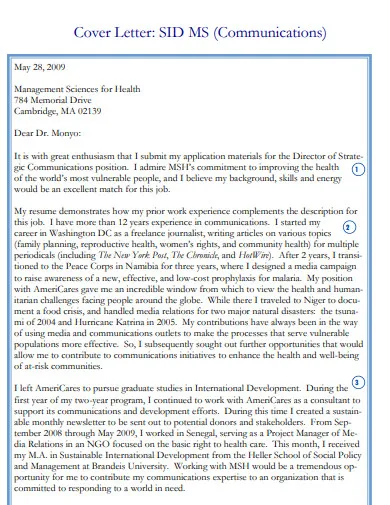
The closing paragraph should summarize your interest in the position. Reiterate your enthusiasm for the opportunity and mention how your skills align with the company’s needs. Express your confidence in your ability to contribute to the company. Keep the closing paragraph concise and professional. End with a strong statement that reinforces your candidacy. It should be clear and leave a positive impression on the hiring manager. It is the final opportunity to highlight your key skills and experience.
Call to Action
Include a call to action in your closing paragraph. Request an interview and mention your availability. State your interest in discussing your qualifications further. This clear call to action encourages the hiring manager to take the next step. Make it easy for the employer to contact you. A well-defined call to action increases your chances of moving forward in the hiring process. It ensures the hiring manager knows what you want them to do next. Make sure your call to action is direct and easy to understand.
Expressing Gratitude
Always express your gratitude for the hiring manager’s time and consideration. Thank them for reviewing your application. Show your appreciation for the opportunity to be considered for the role. Gratitude enhances your professional image. This courtesy is a sign of respect and can make a positive impression on the employer. Sincere appreciation demonstrates your professionalism.
Complimentary Close

Choose a professional and appropriate complimentary close. ‘Sincerely,’ ‘Best regards,’ or ‘Thank you’ are standard choices. Make sure it matches the overall tone of your letter. The complimentary close is the last line of your cover letter before your signature. Choose a professional complimentary close that is suitable for the application. A good complimentary close shows respect for the reader and strengthens the positive impression of your letter.
Signature
If you are submitting a digital cover letter, type your full name after your complimentary close. For a physical cover letter, sign your name above your typed name. Your signature is the final personal touch. The signature confirms the authenticity of the cover letter. In the digital format, a typed signature is fine, and in the physical format, a handwritten signature is expected.
Enclosures
If you are including any attachments, such as your resume, indicate it in the cover letter format. List the enclosures below your signature. ‘Enclosure Resume’ or ‘Enclosures Resume, Writing Sample’ are appropriate. This informs the reader of the additional documents. Including ‘Enclosures’ can help you make sure the reader knows what is included. Providing enclosures ensures all of the relevant information is available for review.
Cover Letter Formatting Best Practices

Following formatting best practices is crucial for creating a professional cover letter. These practices will make your cover letter easy to read and visually appealing. The correct formatting significantly enhances the readability and professionalism of the document. The overall presentation of the cover letter greatly affects the reader’s initial impression. Using these best practices will highlight your professionalism and attention to detail.
Font Choice and Size
Choose a professional and readable font, such as Times New Roman, Arial, or Calibri. Keep the font size between 10 and 12 points. Make sure the font size is easy to read and doesn’t strain the eyes. Use a consistent font throughout the letter for a clean look. A well-chosen font enhances readability and the overall appearance of your cover letter. Stick with standard fonts to make your application easy for the hiring manager to read. The goal is to make your letter easily readable and visually appealing. The right font will set a professional tone and demonstrate attention to detail.
Margins and Spacing
Use standard 1-inch margins on all sides of the page. Use single spacing within paragraphs and double spacing between paragraphs. Proper margins and spacing make the document easier to read and visually balanced. Adequate spacing and margins allow the reader to concentrate on the content. The correct margins make the cover letter look neat and organized. Good formatting shows respect for the reader and demonstrates attention to detail. The correct margins improve the overall look and readability of your cover letter.
Length Considerations
Keep your cover letter concise, typically one page long. Avoid unnecessary details and focus on relevant information. Lengthy cover letters can overwhelm the hiring manager. Be direct and get to the point quickly, ensuring that the important information is highlighted. Highlight your most relevant skills. Get to the point. The goal is to provide a brief, compelling overview of your key qualifications.
Proofreading and Editing
Proofread your cover letter carefully for any grammatical errors, spelling mistakes, and typos. Ensure your writing is clear, concise, and easy to understand. Before submitting, get a second pair of eyes to review your letter. A flawless cover letter highlights professionalism and attention to detail. Errors can undermine your credibility. Proofreading is essential to make a positive impression on the reader. Ensuring your cover letter is error-free will demonstrate attention to detail.
Common Cover Letter Formats
There are several cover letter formats you can choose from, each with its own strengths. The format you choose should depend on your experience, skills, and the specific requirements of the job. Choosing the appropriate format can help you highlight your key strengths and make your application stand out. Understanding the various formats can help you choose the best approach. Understanding the right cover letter can significantly increase your chances of landing an interview.
The Traditional Cover Letter
The traditional cover letter format is the most common. It is ideal for candidates with a straightforward career history and strong qualifications that align well with the job description. Use this format when applying for a job that requires a clear and concise summary of your skills and experiences. The key is to follow a standard structure, from the opening paragraph to the closing. This format ensures a professional look and is appropriate for various jobs. This format is suitable for most job applications where experience matters.
The Targeted Cover Letter
The targeted cover letter is tailored to a specific job and emphasizes how your skills and experiences match the job requirements. It is perfect for job applications where you want to show your specific knowledge of the role. It should be customized for each job and highlight your relevant skills. This targeted approach demonstrates that you understand the requirements of the job. This format gives you the opportunity to align your skills and experiences with the job posting. It will showcase your suitability for the position in detail.
The Skills-Based Cover Letter
The skills-based cover letter is ideal for candidates with transferable skills or gaps in their employment history. It focuses on your skills and abilities rather than your job history. This format lets you highlight your skills relevant to the job. It is a good option for those changing careers or with minimal experience. This allows you to emphasize the relevant skills. This format is designed to emphasize your skills and abilities and is a great option for those changing career paths.
Cover Letter Format Avoiding Common Mistakes
Avoiding common mistakes is essential for making a positive impression. Common mistakes can damage your credibility. It’s important to pay attention to detail and ensure that your cover letter is polished and professional. Avoiding common mistakes can make your cover letter more effective. Avoiding mistakes can significantly improve your chances of getting an interview.