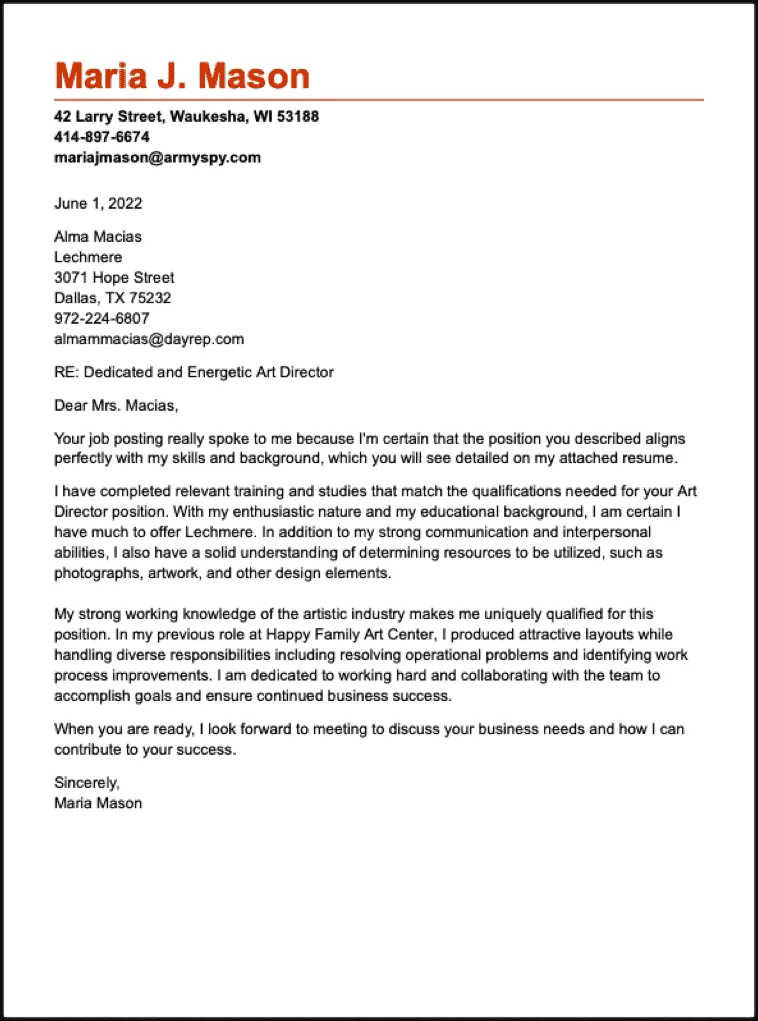
What is a Cover Letter
A cover letter is a crucial document that accompanies your resume when applying for a job. It serves as a personal introduction, allowing you to highlight your skills, experiences, and enthusiasm for the position. Unlike a resume, which provides a factual overview of your background, a cover letter enables you to express your personality, explain your motivations, and showcase why you are the ideal candidate for the role. Cover letters are typically tailored to each specific job application, demonstrating to the hiring manager that you have taken the time to understand the company and the position. In the US job market, a well-crafted cover letter can significantly increase your chances of getting an interview, making it an essential tool in your job search arsenal. Without a cover letter, your application might be overlooked, especially in competitive industries where every detail matters.
Why You Need a Cover Letter
While a resume provides a summary of your professional history, a cover letter allows you to provide context and personality. It explains your career goals, demonstrates your understanding of the company and the role, and highlights how your skills and experiences align with the job requirements. In the US job market, cover letters are often expected, and failing to include one can signal a lack of attention to detail or a lack of genuine interest in the position. A cover letter allows you to expand on your resume, providing specific examples that demonstrate your achievements and abilities. It offers an opportunity to showcase your communication skills and to set yourself apart from other candidates. A well-written cover letter can be the deciding factor in getting you an interview, making it an indispensable part of the job application process. Ultimately, a cover letter helps you to make a strong first impression and to convince the employer that you are the best fit for the role.
Key Components of a Cover Letter

A compelling cover letter consists of several key components, each serving a specific purpose in conveying your qualifications and enthusiasm to a potential employer. Understanding these components and how to structure them effectively is critical for creating a cover letter that captures the attention of the hiring manager. The goal is to present your skills, experience, and enthusiasm in a way that makes you stand out from other applicants. Each element of the letter, from the header to the closing, should be crafted with care and precision, ensuring that your message is clear, concise, and compelling. In the US job market, the clarity and professionalism demonstrated in your cover letter are important factors influencing the first impression you make. A well-structured cover letter can make a significant impact on your job search.
Header
The header of your cover letter should include your contact information, such as your full name, address, phone number, and email address. It is important to ensure that your contact information is up-to-date and easily accessible. Following your personal information, include the date and the hiring manager’s name, title, and the company’s address. If you are unable to find the hiring manager’s name, you can use a general greeting like ‘Dear Hiring Manager.’ The header provides the necessary information for the employer to reach you and also sets a professional tone for the rest of the letter. Correct formatting and attention to detail in the header are a good starting point, showing you pay attention to presentation.
Greeting
The greeting, or salutation, is your first opportunity to connect with the hiring manager. Use a professional greeting, such as ‘Dear Mr./Ms./Mx. [Last Name],’ if you know the hiring manager’s name. This personal touch demonstrates that you have taken the time to research the company and the contact person. If the name is not available, use a generic greeting like ‘Dear Hiring Manager’ or ‘Dear [Department Name] Team.’ Avoid overly casual greetings like ‘Hello’ or ‘Hi.’ Ensure that you address the hiring manager correctly, as any errors could signal a lack of attention to detail. Your greeting should be followed by a comma and set the tone for the rest of the letter. A well-crafted greeting can make a positive first impression, indicating your professionalism and respect for the employer.
Body Paragraph 1 Show Your Enthusiasm

The first paragraph of your cover letter is crucial because it sets the tone and grabs the reader’s attention. Start by stating the position you are applying for and where you found the job posting. Then, express your enthusiasm for the role and the company. Explain why you are excited about the opportunity and what specifically attracted you to the position. Consider mentioning something specific about the company that resonates with you, such as its mission, values, or recent accomplishments. Show that you have done your research and understand what the company does. This paragraph should be concise and compelling, demonstrating your genuine interest in the job and making the hiring manager want to read further. Highlight any initial connections or relevant experiences that align with the job requirements.
Body Paragraph 2 Highlight Your Skills and Experience
The second paragraph should focus on your skills and experience. Review the job description carefully and identify the key qualifications and requirements. Use specific examples from your past experiences to demonstrate how your skills and accomplishments align with these requirements. Quantify your achievements whenever possible by using numbers and data to showcase the impact of your work. For example, instead of saying ‘Managed social media,’ you could write ‘Increased social media engagement by 30% in six months.’ Tailor your examples to the specific needs of the job. Explain how your skills and experiences have prepared you for the role and why you are a good fit for the company. The goal is to provide concrete evidence of your abilities, making it clear that you possess the necessary skills and experience to succeed in the position.
Body Paragraph 3 How You Can Contribute
In the third paragraph, explain how you can contribute to the company’s goals. Demonstrate your understanding of the company’s mission, values, and challenges. Describe how your skills and experience can help the company achieve its objectives and make a positive impact. Explain the value you bring to the table and what you can accomplish in the role. Mention specific projects or initiatives you can contribute to, highlighting your ability to solve problems and drive results. Show the employer how your contributions align with their overall strategy, helping them to see you as an asset. Focus on what you can do for the company, not just what the company can do for you. Emphasize your ability to add value, demonstrating you are committed to the company’s success.
Closing

Your closing paragraph should reiterate your interest in the position and express your gratitude for the opportunity. Reiterate your enthusiasm, and thank the hiring manager for considering your application. Include a call to action, such as stating that you are eager to discuss your qualifications further in an interview. Provide your contact information once more to make it easy for the hiring manager to reach you. End with a professional closing, such as ‘Sincerely,’ ‘Best regards,’ or ‘Thank you,’ followed by your full name. Ensure that your closing paragraph is professional and leaves a positive impression, showing your commitment to the job and your professionalism.
Formatting and Style Guide
Proper formatting and style are essential to ensure your cover letter is readable, professional, and visually appealing. Use a standard, easy-to-read font like Times New Roman, Arial, or Calibri in a size between 10 and 12 points. Maintain consistent formatting throughout the letter, including margins, spacing, and alignment. Use single spacing within paragraphs and double spacing between paragraphs. Keep your letter concise, ideally no more than one page. Break up large blocks of text with bullet points or short paragraphs to improve readability. Proofread your cover letter carefully for grammar, spelling, and punctuation errors. Ensure a clean and professional layout, as this reflects attention to detail and professionalism. Adhering to a clear and consistent format is the foundation of a professional presentation.
Examples of Cover Letters for Different Industries
Different industries may require different approaches to cover letter writing. Tailor your letter to the specific industry and role you are applying for. For example, a cover letter for a creative role in the marketing field might be more expressive and highlight your creativity, while a cover letter for a legal position should be formal and detail-oriented. Research industry-specific expectations and best practices before you write. Use industry-specific keywords and phrases to demonstrate your knowledge and understanding. Review examples of successful cover letters in your industry to get inspiration and guidance. Ensure that you address the hiring manager’s needs and expectations for a position in that particular industry. Tailoring your letter demonstrates your understanding of the industry and makes your application more relevant and impactful.
Cover Letter Examples for Entry-Level Positions

For entry-level positions, cover letters should emphasize academic achievements, relevant coursework, internships, volunteer experiences, and any transferable skills. Highlight your eagerness to learn and grow within the company. Frame your lack of experience positively by focusing on your skills, enthusiasm, and willingness to take on new challenges. Demonstrate your ability to quickly adapt and contribute to the team. Explain how your academic projects or extracurricular activities have prepared you for the role. Tailor your letter to match the skills and requirements of the specific entry-level position. Showcase your potential and your commitment to the company, even if you don’t have much professional experience. Emphasize your adaptability and willingness to learn.
Cover Letter Examples for Experienced Professionals
Experienced professionals should use their cover letters to highlight their career achievements, leadership skills, and specific contributions to previous employers. Quantify your accomplishments with measurable results whenever possible. Showcase your ability to solve complex problems and drive results. Tailor your letter to highlight the skills and experiences most relevant to the target role. Emphasize your past successes and demonstrate how you can leverage them to benefit the company. Provide detailed examples of your projects, accomplishments, and the impact you’ve made in previous roles. Highlight any leadership positions or project management experience you possess. Demonstrating value through specific, quantifiable results is key for more experienced candidates.
Cover Letter Examples for Specific Industries
Different industries will require different cover letter approaches. For technical roles, showcase your technical expertise and any certifications you have. For creative roles, highlight your portfolio and creativity, and consider a more visually appealing layout. For sales positions, emphasize your sales techniques and your ability to generate results. For a cover letter in the healthcare industry, emphasize your knowledge of medical procedures and your dedication to patient care. Tailor your tone and content to match the industry’s norms and expectations. Use industry-specific keywords and language to demonstrate your understanding and expertise. Research industry-specific expectations for cover letter content and format. Present your relevant skills and experiences in a way that resonates with the industry.
Common Mistakes to Avoid

Several common mistakes can undermine your cover letter. Avoid generic templates, as they make your application appear impersonal. Ensure you tailor each cover letter to the specific job. Do not include irrelevant information that doesn’t support your application. Avoid typos and grammatical errors, which signal a lack of attention to detail. Do not be overly formal or casual; find a professional balance. Avoid exaggerating or lying about your skills or experience. Do not make negative comments about previous employers or colleagues. Avoid repeating information from your resume; instead, expand on your experiences with specific examples. Poorly crafted cover letters diminish your chances of getting an interview. Ensuring your cover letter is concise, well-written, and tailored to the job is essential for making a positive impression.
Proofreading and Editing
Proofreading and editing your cover letter is vital to ensure it is free of errors and presents you in a professional light. Carefully review your letter for typos, grammatical errors, and punctuation mistakes. Use spell-check and grammar-check tools, but don’t rely on them completely. Have someone else proofread your letter, as a fresh set of eyes can catch errors you might miss. Check for clarity and conciseness. Ensure your writing is easy to understand and that your message is clear. Read your letter aloud to identify any awkward phrasing or sentences. Pay attention to the tone and ensure it is appropriate for the job and industry. A well-proofread and edited cover letter demonstrates your attention to detail and commitment to excellence. This can make the difference between landing an interview or being overlooked.
Tailoring Your Cover Letter
Tailoring your cover letter to each job application is essential. Customize the letter to match the specific job requirements. Research the company and tailor your letter to reflect their values and mission. Highlight the skills and experiences that are most relevant to the position. Use keywords from the job description to make your application stand out. Show how your qualifications align with the company’s needs. Use specific examples from your past to demonstrate your abilities. Show genuine interest in the company by mentioning what makes you excited about the opportunity. Address the hiring manager by name and make the letter personal. Demonstrate your understanding of the role and the company. A tailored cover letter showcases your genuine interest and increases your chances of getting noticed.