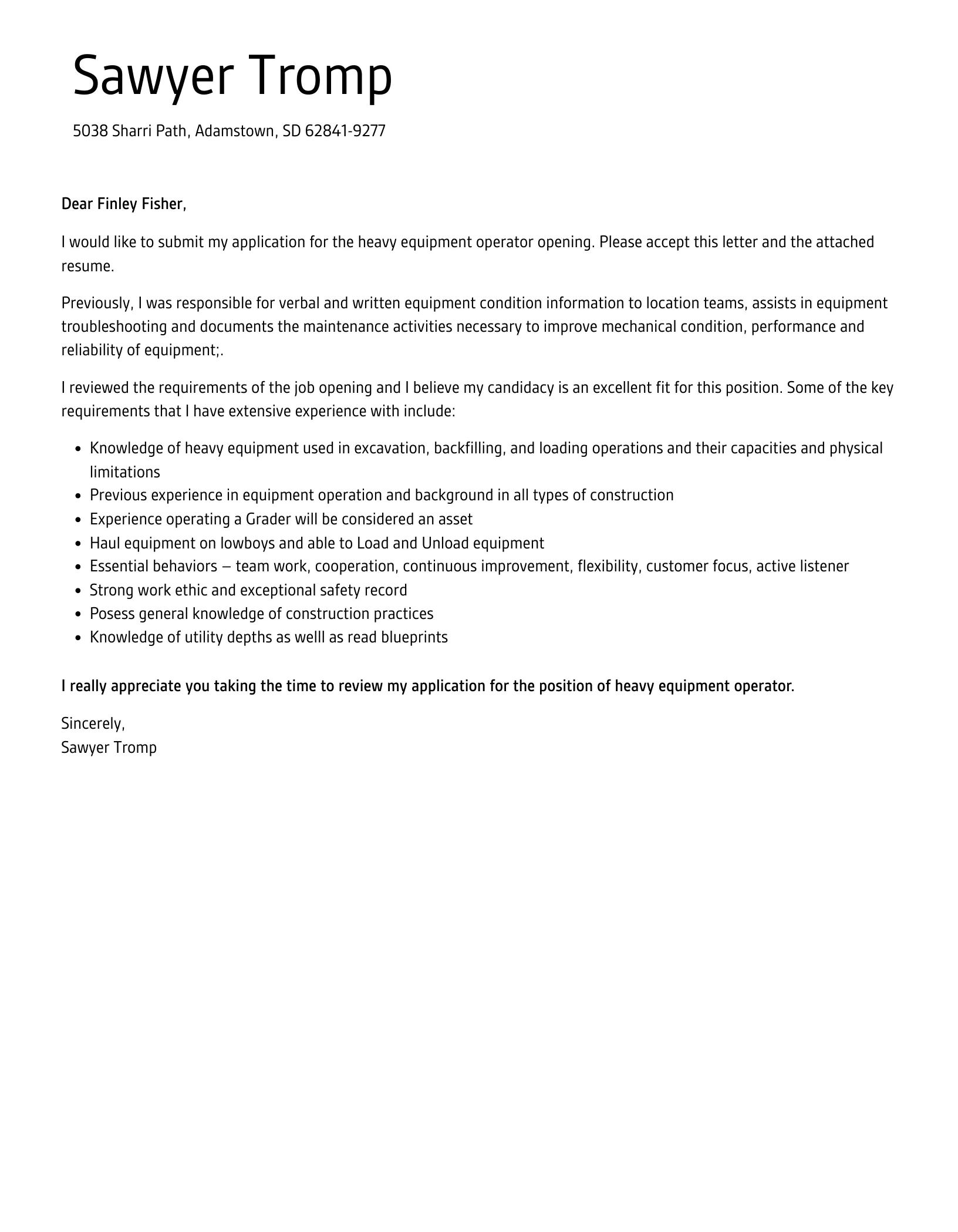
Why a Strong Cover Letter Matters for Heavy Equipment Operators
In the competitive field of heavy equipment operation, a well-crafted cover letter is your first opportunity to make a strong impression and secure an interview. Unlike a resume, which lists your qualifications, a cover letter provides a platform to showcase your personality, enthusiasm, and suitability for a specific role. It allows you to elaborate on your skills, highlight relevant experiences, and demonstrate your understanding of the employer’s needs. A compelling cover letter can be the differentiating factor that elevates your application above others and gets you noticed by hiring managers. It’s your chance to connect with the employer on a more personal level and convince them that you are the best fit for their team.
Grabbing Attention
The opening paragraph of your cover letter is crucial; it’s your first, and often only, chance to grab the reader’s attention. Start with a hook that immediately captures their interest. This could be a statement about your passion for operating heavy machinery, a brief mention of a significant accomplishment, or an enthusiastic expression of your interest in the company. Avoid generic openings; instead, tailor your greeting to the specific job and company. Research the company’s values and mission to ensure your opening aligns with their culture. Keep it concise and focused on the job description. The goal is to create a positive and memorable first impression that encourages the reader to continue through the rest of your letter.
Highlighting Relevant Skills and Experience
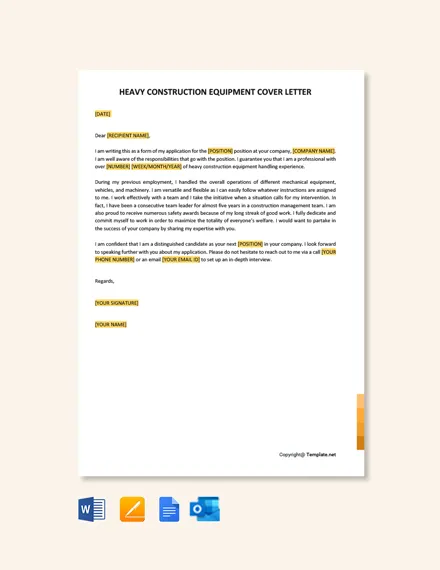
Your cover letter should effectively highlight the skills and experience that directly relate to the job requirements. Review the job description carefully and identify the key qualifications the employer is seeking. Then, use your cover letter to demonstrate how your skills and experience align with those needs. Provide specific examples of how you’ve successfully operated different types of heavy equipment, managed projects, or maintained safety protocols. Use action verbs to describe your accomplishments, such as ‘operated,’ ‘maintained,’ ‘managed,’ and ‘supervised.’ Be specific about the equipment you have experience with, the types of projects you’ve worked on, and any safety certifications you possess. This helps demonstrate your practical knowledge and makes your application stand out.
Tailoring Your Cover Letter
One of the most important aspects of a strong cover letter is tailoring it to each specific job you apply for. Generic cover letters are easily identified and often discarded. Instead, personalize your cover letter by addressing the hiring manager by name (if possible), referencing the specific job title, and mentioning the company’s name throughout the letter. Research the company’s values and mission to show that you are familiar with their work and culture. Highlight experiences and skills that are most relevant to the specific role, and explain why you are particularly interested in that position at that company. This level of customization demonstrates your genuine interest and increases your chances of getting an interview.
Key Components of a Heavy Equipment Operator Cover Letter
Contact Information and Date

Begin your cover letter with your contact information, including your name, address, phone number, and email address. Include the date below your contact information, followed by the hiring manager’s name (if known), title, and the company’s address. Ensure that your contact details are up-to-date and professional. This allows the employer to easily reach you. Proper formatting here sets a professional tone from the start, conveying your attention to detail and respect for the application process.
Greeting
The greeting should be formal and polite. If you know the hiring manager’s name, use “Dear Mr./Ms./Mx. [Last Name].” If you are unsure of the hiring manager’s name, use a general greeting such as “Dear Hiring Manager.” Avoid using generic greetings like “To Whom It May Concern,” as they can make your letter feel impersonal. Always double-check the spelling of the recipient’s name to show respect and attention to detail. A well-chosen greeting sets a professional tone and shows that you’ve taken the time to personalize your letter.
Opening Paragraph
The opening paragraph is your opportunity to capture the reader’s attention and introduce yourself. State the specific position you are applying for and where you found the job posting. Briefly mention why you are interested in the role and the company. Highlight your most relevant skill or accomplishment that aligns with the job requirements. Keep the opening paragraph concise and focused. For example, you could mention a recent project where you successfully operated a specific piece of equipment or your long-standing interest in the company’s work. The goal is to create a strong first impression that encourages the reader to continue reading.
Body Paragraphs
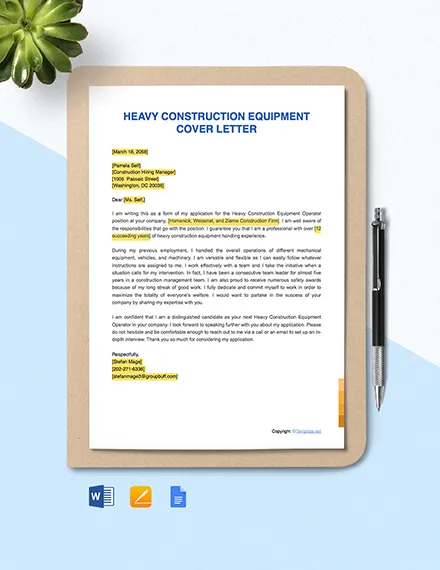
The body paragraphs are the core of your cover letter, where you showcase your skills, experience, and qualifications. Each paragraph should focus on a specific aspect of your abilities or accomplishments. Use concrete examples to demonstrate your proficiency in operating heavy equipment, maintaining safety standards, and managing projects. Elaborate on your relevant experience using action verbs and quantifiable results. Mention specific types of equipment you have experience with, the types of projects you’ve worked on, and any safety certifications you possess. Focus on the skills and experience most relevant to the job description to show how you can contribute to the company. This section should be well-organized and easy to follow, highlighting your key strengths and suitability for the role.
Highlighting Experience with Specific Equipment
Be specific about the types of heavy equipment you have experience operating. Include details such as the make and model of the equipment, as well as any specific attachments or functionalities you are familiar with. For example, instead of saying ‘operated heavy machinery,’ state ‘proficient in operating Caterpillar excavators, Komatsu dozers, and John Deere graders.’ Mention any specialized equipment or techniques you are skilled in, such as GPS grading, laser leveling, or specific safety protocols. This level of detail provides the employer with a clear understanding of your capabilities and helps them assess your fit for the job. Tailor the equipment mentioned to match the requirements listed in the job description.
Quantifying Accomplishments
Whenever possible, quantify your accomplishments to demonstrate your impact and effectiveness. Use numbers and data to illustrate your achievements, such as the amount of material moved, the number of projects completed, or improvements in efficiency or safety. For example, you could say, ‘Completed 20+ construction projects on time and within budget’ or ‘Increased site safety by 15% through implementing new protocols.’ Quantifying your accomplishments provides concrete evidence of your abilities and helps the employer understand the value you can bring to their organization. Include percentages, numbers, and specific details to back up your claims and make your accomplishments more persuasive.
Showcasing Safety Records and Certifications

Safety is paramount in the heavy equipment industry, so be sure to highlight your safety certifications and any relevant safety records. Mention any OSHA certifications, First Aid/CPR certifications, or other safety training you have completed. If you have a clean safety record, be sure to mention it; this demonstrates your commitment to safety protocols and your ability to work responsibly. You can include specific details about your involvement in safety programs, such as safety meetings or inspections. By emphasizing your safety awareness and credentials, you reassure employers of your adherence to safety standards and enhance your credibility as a candidate.
Closing Paragraph and Call to Action
The closing paragraph should summarize your interest in the position and reiterate your key qualifications. Express your enthusiasm for the opportunity and reiterate your understanding of the company’s needs. Include a call to action, such as requesting an interview or stating your availability for a discussion. Thank the hiring manager for their time and consideration. Make sure your closing is concise and professional. It’s your last chance to leave a positive impression and encourage the employer to take the next step. A well-crafted closing paragraph reinforces your qualifications and encourages the employer to contact you.
Format and Style for an Effective Cover Letter
Professional Formatting and Font Choices

The format and style of your cover letter contribute to its overall professionalism and readability. Use a standard, easy-to-read font such as Times New Roman, Arial, or Calibri, and ensure the font size is between 10 and 12 points. Maintain consistent formatting throughout your letter, including margins, spacing, and paragraph indentation. Use clear headings and subheadings to organize the content and make it easy for the reader to scan. Keep the letter concise and avoid excessive jargon. Aim for a professional and polished appearance that reflects your attention to detail and respect for the application process.
Proofreading and Editing for Errors
Before submitting your cover letter, carefully proofread and edit it for any errors in grammar, spelling, and punctuation. Errors can undermine your credibility and give the impression that you lack attention to detail. Read the letter aloud to catch any awkward phrasing or grammatical mistakes. Consider having a friend, family member, or career advisor review your cover letter for feedback. Make sure your language is clear, concise, and professional. The goal is to present a polished and error-free document that reflects your professionalism and attention to detail.
Using Action Verbs and Keywords
Use action verbs to describe your accomplishments and responsibilities. Action verbs are more impactful than passive phrases and help highlight your contributions. Review the job description and incorporate relevant keywords to demonstrate that you possess the required skills and experience. Using keywords increases the chances of your cover letter being noticed by both human readers and Applicant Tracking Systems (ATS). Incorporating keywords shows that you are a strong match for the role. This practice also helps you articulate your capabilities and achievements in a compelling way, making your application more effective and persuasive. Consider using a thesaurus to find synonyms for your most frequent action verbs and keywords to avoid repetition.
Tips for Different Heavy Equipment Operator Roles

Cover Letters for Entry Level Operators
If you are an entry-level operator, focus on your training, certifications, and any relevant coursework or internships. Highlight any transferable skills from previous jobs or experiences, such as teamwork, problem-solving, or attention to detail. Express your enthusiasm for learning and your willingness to work hard. If you have completed a heavy equipment operation training program, be sure to mention it. Even without extensive experience, a well-written cover letter can showcase your potential and determination to succeed in the field. Highlight your eagerness to learn and adapt.
Cover Letters for Experienced Operators
Experienced operators should focus on their track record of accomplishments, the specific equipment they have operated, and the projects they have completed. Quantify your achievements whenever possible, such as the number of projects completed, the amount of materials moved, or any improvements in efficiency or safety. Highlight any specialized skills or certifications. Showcase your expertise by providing detailed examples of successful projects and demonstrate your ability to work independently and as part of a team. A strong resume combined with a cover letter focused on achievements will strongly improve your chances.
Cover Letters for Specialized Equipment
For specialized equipment, such as cranes, bulldozers, or excavators, tailor your cover letter to emphasize your experience with that specific equipment. Highlight any certifications or training related to that equipment. Demonstrate your understanding of the technical aspects and operational requirements. Provide detailed examples of your experience, the projects you have worked on, and any unique skills or techniques you possess. Show how your specialized skills align with the specific needs of the job. By showcasing your specialized skills and understanding, you increase your chances of getting the role.