Understanding the Importance of a Computer Science Cover Letter
In the competitive field of computer science, a well-crafted cover letter can be the key to unlocking your dream job. More than just a formality, it serves as your initial introduction to potential employers, offering a unique opportunity to showcase your skills, experience, and personality. It’s your chance to make a compelling first impression and stand out from the multitude of applicants. A strong cover letter goes beyond simply reiterating your resume; it tells a story about your career aspirations and how you can contribute to the company’s success. It’s where you can express your enthusiasm for the specific role and demonstrate a genuine interest in the organization. Therefore, mastering the art of the computer science cover letter is a crucial step in your job search strategy, helping you to not only get noticed but also to secure an interview.
Why a Cover Letter Matters
A computer science cover letter matters because it provides context to your resume. Your resume lists your qualifications, but the cover letter explains them. It allows you to elaborate on specific projects, experiences, and skills that align with the job requirements. It gives you a platform to demonstrate your communication skills, which are essential in collaborative tech environments. A well-written cover letter shows that you’ve taken the time to understand the company, the role, and how your skills and experience match their needs. This personalized approach differentiates you from candidates who send generic applications and makes a strong case for why you should be selected for an interview. Also, it’s a chance to showcase your personality and enthusiasm, making you more memorable to the hiring manager.
Highlighting Relevant Skills and Experience

One of the primary functions of a computer science cover letter is to highlight your relevant skills and experience in a way that grabs the hiring manager’s attention. Identify the key skills and experiences most pertinent to the job description. These might include programming languages (Python, Java, C++), software development methodologies (Agile, Scrum), database management, or specific areas of expertise like cybersecurity or data science. Instead of just listing these skills, provide concrete examples of how you’ve used them to achieve results. For example, you might describe a project where you used Python to develop a particular application, mentioning the problem you solved, the approach you took, and the outcome you achieved. This approach not only demonstrates your abilities but also shows your capacity to apply them in real-world scenarios. This is where you can really let your experience shine and present your accomplishments in a captivating manner.
Key Components of a Winning Computer Science Cover Letter
A winning computer science cover letter is structured to capture the reader’s attention from the start and provide a clear and concise overview of your qualifications. It includes several key components that work together to create a compelling narrative. These elements, when combined effectively, present a strong case for why you should be considered for the role. Understanding these components and how they integrate is crucial to crafting a cover letter that stands out. This includes the ability to properly format your letter and use language that is both professional and captivating. It’s about more than just what you say; it’s about how you say it. By mastering the key components, you will be one step closer to your goal of landing that coveted computer science position.
Contact Information and Salutation
Start with your contact information at the top of the letter. Include your name, phone number, email address, and optionally, your LinkedIn profile URL. This information makes it easy for the hiring manager to reach you. The salutation should be formal and professional. If possible, address the letter to a specific person, such as the hiring manager or the recruiter. If you don’t know the name, use a general greeting like “Dear Hiring Manager” or “Dear [Company Name] Recruiting Team.” Avoid generic salutations like “To Whom It May Concern,” as these can make your letter feel impersonal. If you do know the name, do your research to ensure you spell it correctly, as this demonstrates attention to detail and respect.
Opening Paragraph

The opening paragraph should immediately grab the reader’s attention. State the position you’re applying for and where you found the job posting. Briefly mention your key qualifications and why you’re interested in the company. Demonstrate your knowledge of the company and the role, and make it clear that you’re a good fit. A strong opening paragraph sets the tone for the rest of your letter. It’s your chance to make a positive first impression and entice the reader to continue. This paragraph needs to be concise, enthusiastic, and tailored to the specific job. Always avoid generic opening lines; instead, focus on showing your passion for the position and your understanding of the company’s needs.
Body Paragraphs Highlighting Skills
The body of your cover letter is where you showcase your skills and experience. Use one or two paragraphs to highlight the most relevant aspects of your background. Structure your paragraphs around specific skills, projects, or experiences that match the job requirements. Provide concrete examples and quantify your accomplishments whenever possible. Instead of simply listing skills, describe how you’ve used them to achieve specific outcomes. For instance, if the job requires expertise in data analysis, describe a project where you utilized data analysis techniques to improve efficiency, increase revenue, or solve a particular problem. This will provide insight into your capabilities and your potential value to the company. Make sure each paragraph is concise, well-written, and focused on demonstrating your value to the company.
Showcasing Technical Proficiency
In computer science, technical proficiency is paramount. Highlight the programming languages, software, tools, and technologies you’re proficient in. Provide examples of how you’ve used these in your projects or previous roles. Mention any certifications or relevant training you’ve completed. Explain how your technical skills align with the job’s requirements. Be specific. Instead of saying you’re proficient in Python, describe specific projects you worked on using Python, such as developing web applications, analyzing data, or automating tasks. This shows your hands-on experience and ability to apply your skills. Include any specializations you have, such as expertise in data structures, algorithms, or specific development frameworks. The more specific you can be, the more compelling your application will become.
Demonstrating Problem-Solving Abilities

Computer science is all about solving problems. Highlight your problem-solving abilities by describing how you’ve approached and solved complex issues in your past experiences. Provide examples of challenging technical problems you’ve encountered and the steps you took to find solutions. Explain your analytical approach and how you used your skills and knowledge to overcome obstacles. Include examples that illustrate your ability to think critically, troubleshoot effectively, and find innovative solutions. Did you streamline a process, reduce errors, or improve efficiency? Use those achievements to demonstrate your value. Your ability to solve problems is what sets you apart, so let your cover letter demonstrate these skills clearly.
Quantifying Achievements
Whenever possible, quantify your achievements to demonstrate the impact of your work. Instead of saying you “improved efficiency,” state that you “increased efficiency by 15%” or “reduced processing time by 20%.” Use numbers, percentages, and statistics to provide concrete evidence of your contributions. This makes your achievements more credible and helps the hiring manager understand your value. For example, if you developed a new application, mention how many users it served or what cost savings it achieved. If you led a project, provide details on the team’s size, the project’s scope, and the results. Quantifiable results leave a lasting impression and clearly showcase the value you bring to the table. The goal is to provide concrete metrics that back up your claims and clearly show your impact.
Closing Paragraph and Call to Action
In the closing paragraph, reiterate your interest in the position and the company. Thank the hiring manager for their time and consideration. Express your enthusiasm for the opportunity and indicate your availability for an interview. A strong call to action might be, “I am eager to discuss how my skills and experience can contribute to [Company Name]’s success and I am available for an interview at your earliest convenience.” Close with a professional sign-off, such as “Sincerely” or “Best regards,” followed by your name. Ensure the tone is positive, confident, and leaves a lasting impression of your professionalism and enthusiasm. This is your final chance to create a strong impression and encourage the hiring manager to contact you.
Formatting and Design Best Practices

Proper formatting and design can greatly enhance the readability and impact of your cover letter. Even the most impressive content can be undermined by a poorly formatted document. A well-formatted cover letter is easy to read, professional-looking, and helps you showcase your skills effectively. Pay attention to every detail, as each contributes to a polished and professional final product. Prioritizing these elements shows that you are attentive to detail and take pride in your work. These key practices will help you create a cover letter that not only looks good but also ensures that the hiring manager easily and quickly grasps the main points.
Choosing the Right Font and Style
Select a professional and easy-to-read font, such as Times New Roman, Arial, Calibri, or Helvetica. Keep the font size between 10 and 12 points for optimal readability. Use a clean and simple layout with consistent spacing, avoiding excessive use of bolding or italics. Ensure the overall design is uncluttered and easy on the eyes. Avoid using overly decorative fonts or distracting design elements. Maintain consistent formatting throughout the letter to create a professional look. A well-chosen font and layout contribute to a positive first impression and make your letter more approachable. The goal is to make it easy for the reader to quickly grasp the key information. A classic font choice will always serve you well, and it demonstrates your respect for professional standards.
Keeping it Concise and Readable
Keep your cover letter concise, ideally no more than one page. Use short paragraphs and clear, direct language. Avoid jargon or overly complex sentences. Use bullet points to highlight key skills or accomplishments. Break up large blocks of text with headings and subheadings to improve readability. Proofread your letter carefully for grammar and spelling errors. Use concise and clear language to convey your message efficiently and effectively. Make sure your cover letter is easy to scan, allowing the reader to quickly find the most relevant information. Conciseness demonstrates respect for the hiring manager’s time. Each sentence should serve a clear purpose, and every word must contribute to the overall message of your value.
Proofreading and Editing for Perfection

Proofreading is critical. Errors can undermine your credibility and make you appear careless. Carefully review your cover letter for grammar, spelling, punctuation, and formatting errors. Use a spell checker, but don’t rely on it entirely. Read the letter aloud to catch any awkward phrasing or inconsistencies. Ask a friend, colleague, or career advisor to review your letter for feedback. Ensure that your cover letter flows naturally, with clear and concise language. A polished cover letter reflects attention to detail and professionalism, which are highly valued in computer science. Before submitting, make sure your letter is flawless, as any errors can negatively impact the first impression you make.
Tailoring Your Cover Letter to Specific Jobs
Customization is key. A generic cover letter will likely be overlooked. Each application must be tailored to the specific job and company. This demonstrates that you have taken the time to understand the role and are genuinely interested in the organization. Tailoring your cover letter demonstrates your attention to detail and your genuine interest in the position. This is essential for convincing the hiring manager that you are the right candidate for the job. By showing that you understand the specific requirements of the role, you greatly increase your chances of getting noticed. This shows that you have gone beyond the minimum effort to find employment, and shows that you are motivated to succeed.
Researching the Company and the Role
Before you start writing, thoroughly research the company and the specific role. Visit the company’s website, read their mission statement, and learn about their products or services. Study the job description carefully and identify the key skills and qualifications required. Understand the company’s culture and values, and consider how your skills and experience align with them. Show that you understand the company’s needs and the challenges of the role. Demonstrate that you’ve taken the time to understand the company’s goals and how you can help them achieve their objectives. This personalized approach is what sets a good cover letter apart from the rest. This research will allow you to show that you understand the company’s values and the role’s demands.
Customizing Your Letter for Each Application

Customize your cover letter for each job application. Use the keywords from the job description and highlight the skills and experiences that are most relevant. Address the specific requirements and challenges mentioned in the job posting. Avoid using a generic template; instead, write a unique letter that demonstrates your understanding of the role. Modify your letter to emphasize the most relevant aspects of your background and tailor your content to meet the specific requirements. Mention how you can contribute to the company’s success and what you find appealing about the role and the organization. Make sure to reference specific projects, skills, or accomplishments that align with the job requirements. This personalized approach shows the hiring manager that you are a great fit for the role.
Common Mistakes to Avoid
Avoiding common mistakes is essential to creating a successful computer science cover letter. These errors can undermine your application and make you appear unprofessional. Being aware of these pitfalls and taking steps to avoid them will significantly enhance your chances of making a strong impression. Attention to detail is important in the field of computer science, and the cover letter should reflect that attention. Addressing these common issues can drastically improve the quality of your cover letter and, as a result, the likelihood of your receiving an interview. Avoid these common errors to ensure your letter effectively represents your skills and experience.
Generic Cover Letters
Submitting a generic cover letter is one of the most common mistakes. Generic cover letters lack the personalization that shows you are genuinely interested in the role and the company. A generic letter will read like it could have been sent to any company for any job. Always customize your letter to match the specific job description and the company’s requirements. Show that you have researched the company and understand their needs. This demonstrates a level of care and attention to detail that generic letters lack. The hiring manager will know if you have taken the time to understand the company and the role, which will set you apart from other applicants. Demonstrate that you have the aptitude to properly personalize your letter.
Typos and Grammatical Errors
Typos and grammatical errors make you appear careless and unprofessional. Always proofread your cover letter carefully before submitting it. Use a spell checker, but also read the letter aloud to catch any errors that the spell checker might miss. Ask a friend or colleague to review your letter as a second pair of eyes can often spot errors that you might miss. Errors of this type undermine your credibility and can give the impression that you are not attentive to detail. A well-proofread cover letter is a sign of professionalism and respect for the hiring manager’s time. Thorough proofreading shows that you take pride in your work and are meticulous in your approach.
Lack of Enthusiasm
Your cover letter should showcase your enthusiasm for the role and the company. Avoid writing in a passive or uninspired tone. Show genuine excitement about the opportunity and the chance to contribute to the company’s success. Express your interest in the company’s mission, values, and projects. Convey your eagerness to learn, grow, and make an impact. A cover letter that is enthusiastic shows that you have a real passion for the field and are motivated to succeed. Let your personality shine through and demonstrate your excitement for the chance to be part of the team. This adds a crucial element that makes your application memorable and attractive to hiring managers. Inject passion into your writing; let the hiring manager know you genuinely want the job.
Examples of Effective Computer Science Cover Letters
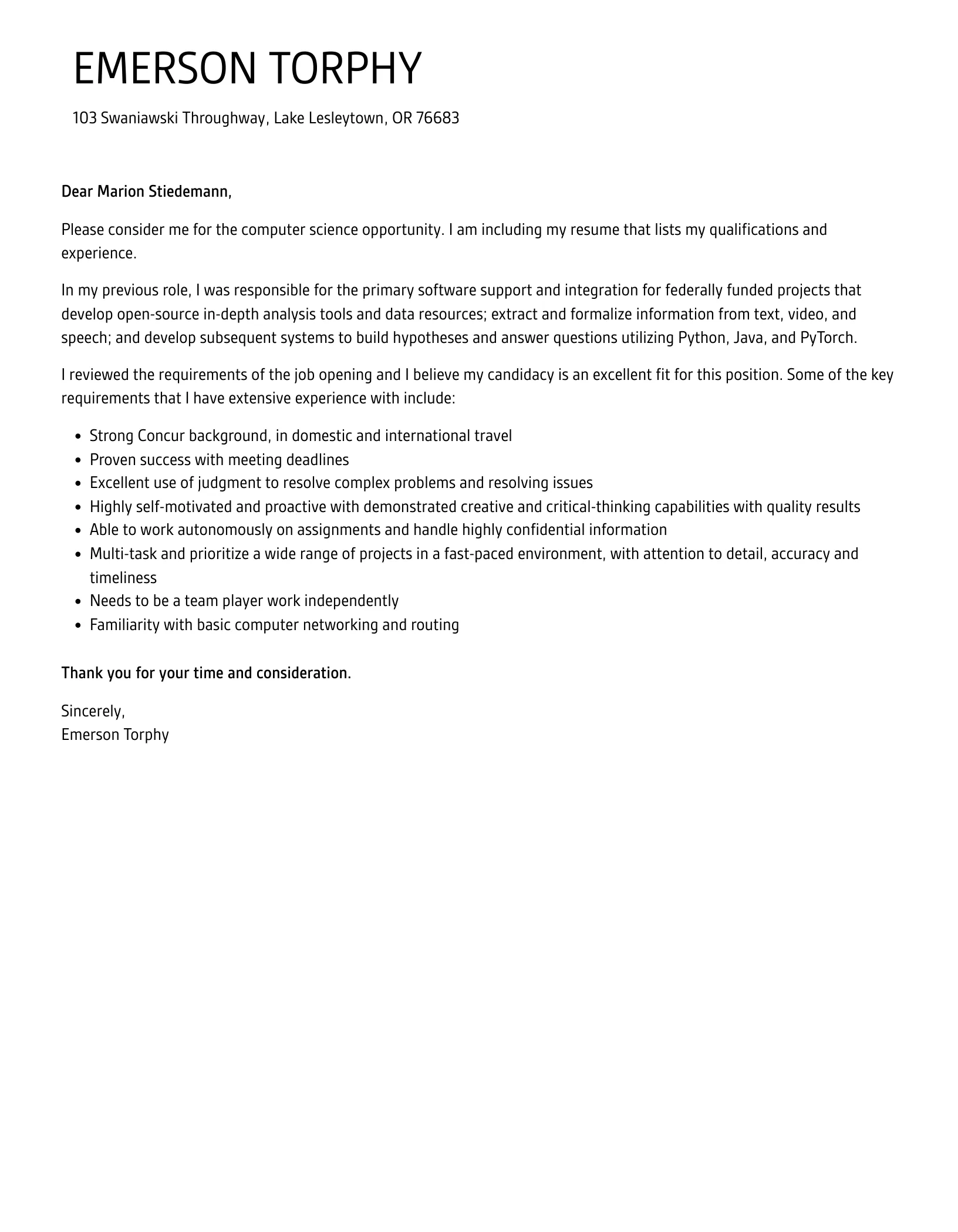
Reviewing examples of effective computer science cover letters can provide inspiration and guidance as you craft your own. Understanding the structure, language, and content used in successful applications helps you create a compelling narrative. These examples provide a basis for understanding how to effectively convey your qualifications and make a positive first impression. Examining different examples helps in crafting a cover letter that captures the reader’s attention and leads to an interview. Use these as a source of inspiration as you work on your own cover letter, to craft an outstanding letter that will gain notice from the hiring manager. Understanding the different examples can give you a significant advantage when preparing your application.
Example 1 Software Engineer
Dear [Hiring Manager Name],
I am writing to express my enthusiastic interest in the Software Engineer position at [Company Name], as advertised on [Platform]. With my strong background in software development, including proficiency in Java, Python, and C++, and a proven track record of delivering successful projects, I am confident I possess the skills and experience to excel in this role.
In my previous role at [Previous Company], I led the development of [Project Name], a [brief description] application used by over [Number] users. My responsibilities included designing, coding, testing, and deploying software solutions. I was instrumental in [quantifiable achievement], resulting in a [positive outcome].
I am particularly drawn to [Company Name]’s work in [Specific Area]. My passion for [relevant technology or field] aligns perfectly with your company’s mission. I am eager to contribute my expertise and passion to a dynamic team.
Thank you for your time and consideration. I am available for an interview at your earliest convenience.
Sincerely, [Your Name]
Example 2 Data Scientist
Dear [Hiring Manager Name],
I am writing to express my interest in the Data Scientist position at [Company Name]. I was excited to see the opportunity posted on [Platform], as my background in data analysis, machine learning, and statistical modeling aligns perfectly with the requirements outlined. My strong analytical skills, coupled with my proficiency in Python, R, and SQL, make me a great fit for this role.
During my time at [Previous Company], I developed and implemented machine learning models to predict [specific outcome]. These models improved accuracy by [Percentage] and significantly enhanced [specific metric]. I have experience working with large datasets, performing feature engineering, and deploying models in production environments.
I am particularly drawn to [Company Name]’s innovative approach to [specific field]. I am eager to apply my skills to contribute to your team’s success.
Thank you for your time and consideration. I look forward to the opportunity to discuss how I can contribute to [Company Name].
Sincerely, [Your Name]
Example 3 Web Developer
Dear [Hiring Manager Name],
I am writing to apply for the Web Developer position at [Company Name]. My passion for creating user-friendly and visually appealing web applications and my experience with HTML, CSS, JavaScript, and React make me an ideal candidate for this role. I was thrilled to see the opening on [Platform].
At [Previous Company], I was responsible for developing and maintaining the front-end of [Website Name]. I successfully implemented [specific features or improvements] that improved user engagement by [Percentage]. I have experience in responsive design, ensuring websites look great on all devices. I also have a strong understanding of back-end technologies.
I am impressed by [Company Name]’s commitment to [Company value or project]. I am eager to contribute my skills to help build and maintain high-quality web experiences.
Thank you for your consideration. I am available for an interview at your earliest convenience.
Sincerely, [Your Name]