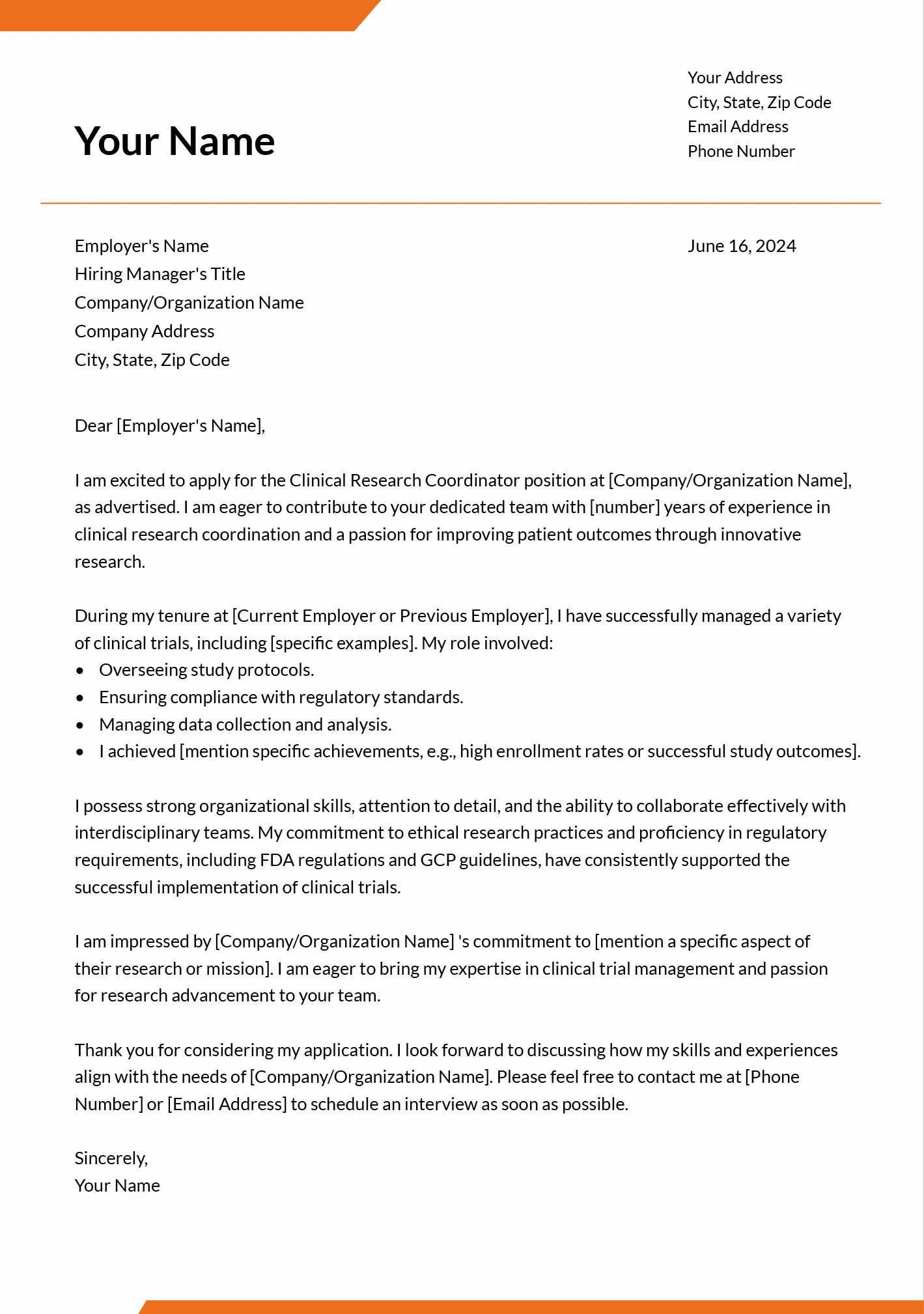
Understanding the Importance of a Cover Letter
In the competitive field of clinical research, a well-crafted cover letter can be your key to unlocking new opportunities. Many job seekers underestimate the power of a cover letter, viewing it as a mere formality. However, it serves as your first impression and an invaluable tool for setting yourself apart from other applicants. It’s your chance to showcase not just your qualifications, but also your personality, passion, and suitability for the role. A compelling cover letter can transform a routine application into a memorable one, prompting the hiring manager to eagerly delve into your resume and consider you for an interview. By understanding the importance of this document, you can leverage it to your advantage and increase your chances of landing your dream job as a Clinical Research Coordinator.
Why a Great Cover Letter Matters
A great cover letter is more than just a formality; it’s a strategic tool that directly impacts your job search success. It offers an opportunity to tell your unique story, demonstrating why you’re the ideal candidate beyond the information listed in your resume. Your cover letter conveys your understanding of the role, the company, and the specific challenges and goals. It provides context to your experiences, helping the recruiter or hiring manager connect your skills and experience to their specific needs. By highlighting your accomplishments and expressing your enthusiasm, you can make a powerful case for yourself and move closer to securing an interview. Ultimately, a well-written cover letter is a critical differentiator that significantly improves your chances of standing out in a crowded field.
Highlighting Key Skills and Experiences

When writing your cover letter, effectively showcasing your key skills and experiences is crucial. This involves a careful blend of identifying relevant competencies and presenting evidence of your past successes. Instead of simply listing skills, provide specific examples that demonstrate how you’ve applied those skills in previous roles. Tailor the content to the requirements of the specific job posting, emphasizing the experiences and attributes that align with the employer’s expectations. By doing so, you not only make your application more relevant but also showcase your understanding of the position and your suitability for it. By crafting your cover letter this way, you provide a compelling reason for the hiring manager to move forward with your application.
Key Skills for Clinical Research Coordinators
Clinical Research Coordinators need a broad range of skills to succeed. Excellent organizational skills are paramount for managing multiple projects and data. Strong communication skills, both written and verbal, are vital for interacting with patients, investigators, and other team members. Attention to detail ensures accurate data collection and adherence to protocols. Problem-solving skills enable you to address challenges that arise during the research process. Proficiency in data management systems, such as electronic data capture (EDC) systems, is becoming increasingly important. Adaptability and flexibility are also essential as research protocols can change, and unexpected situations may arise. Familiarity with medical terminology and research regulations, particularly Good Clinical Practice (GCP), is equally important. Demonstrating these skills in your cover letter makes your application stand out.
Essential Experience to Showcase
Highlighting relevant experience is key to catching a recruiter’s attention. Showcase your experience in patient recruitment, outlining how you successfully enrolled participants. Detail your experience with protocol adherence, emphasizing your ability to ensure compliance with research guidelines. Include your experience with data management, such as data entry, cleaning, and validation, to demonstrate your attention to detail. Mention your experience with informed consent processes, including patient education and obtaining consent. Emphasize your familiarity with regulatory requirements, such as FDA guidelines, to showcase your knowledge of the industry. Whenever possible, quantify your achievements, such as the number of patients recruited or the efficiency improvements you implemented. All of these experiences should be included, but also showcase the relevance of each experience for the particular job application.
Formatting Your Cover Letter for Success

A well-formatted cover letter is essential for making a positive first impression. Proper formatting enhances readability and professionalism, making it easier for the hiring manager to quickly grasp your qualifications. Use a clear, professional font such as Times New Roman or Arial, and maintain a consistent font size. Keep your letter concise, ideally no more than one page. Use clear headings and subheadings to break up the text and guide the reader. Ensure your letter is well-structured with proper margins and spacing. By paying attention to these formatting details, you can ensure that your cover letter is both visually appealing and easy to read. A well-formatted letter not only looks good but also shows that you pay attention to detail, a crucial skill in clinical research.
Header and Contact Information
Your header should start with your full name, contact information (phone number and professional email address), and optionally, your LinkedIn profile URL. Place this information at the top of your letter. Ensure your email address is professional and uses your full name. Use the date of your letter immediately below your contact information. Follow this with the recipient’s contact information, which typically includes the hiring manager’s name, title, company name, and address. If you do not know the hiring manager’s name, you can research this information on LinkedIn or the company’s website. Double-check all information for accuracy, as errors can create a negative first impression.
Professional Salutation
Start your cover letter with a professional salutation. If you know the hiring manager’s name, use it (e.g., “Dear Ms. Smith”). Addressing the hiring manager by name shows that you have taken the time to personalize your application. If you’re unsure of the hiring manager’s name, a generic salutation such as “Dear Hiring Manager” or “Dear [Company Name] Hiring Team” is acceptable. Avoid overly casual greetings like “Hello” or “Hi.” The salutation sets the tone for the rest of your letter, so it is important to be courteous and respectful.
Body Paragraphs Best Practices

The body of your cover letter is where you highlight your qualifications and express your interest. Start with an engaging opening paragraph. State the position you’re applying for and briefly mention where you learned about the opportunity. In the subsequent paragraphs, discuss your relevant skills and experience. Tailor these paragraphs to align with the job description and the company’s needs. Use specific examples to showcase your accomplishments. Quantify your results whenever possible. Keep your tone enthusiastic and professional, highlighting your passion for clinical research. Conclude with a call to action, such as expressing your interest in an interview and thanking the reader for their time and consideration. Carefully structured body paragraphs make a powerful impact.
Tailoring Your Letter
One of the most critical aspects of a successful cover letter is tailoring it to each specific job application. Generic cover letters rarely make a strong impression. Instead, you should customize your letter to match the requirements of the position and the values of the company. Start by carefully reading the job description, identifying the key skills and experiences the employer is seeking. Then, adjust your letter to highlight the relevant qualifications. Use keywords from the job description to showcase your understanding of the role. Research the company and tailor your letter to reflect your understanding of their mission, values, and current projects. Demonstrate how your skills and experience align with their specific needs. Tailoring shows your genuine interest and demonstrates that you have taken the initiative to understand the company’s needs.
Quantifying Your Achievements
Quantifying your achievements is a powerful way to demonstrate your impact and value as a Clinical Research Coordinator. Whenever possible, use numbers to illustrate your accomplishments. Instead of saying “Managed clinical trials,” say “Managed five clinical trials simultaneously.” Instead of “Improved data accuracy,” say “Improved data accuracy by 15% through implementing new validation processes.” Including metrics makes your achievements more concrete and easier to understand. Examples like these show that you’re results-oriented and understand how to measure success. Highlighting your impact can differentiate you from other applicants. Consider these examples to make your experience shine.
Providing Specific Examples

Providing specific examples is crucial for illustrating your skills and experience. General statements are less impactful than detailed descriptions. Instead of saying “I have strong communication skills,” describe a specific situation where you effectively communicated with patients, investigators, or other team members, and what the outcome was. Instead of saying “Managed patient recruitment,” describe how you developed and implemented a successful recruitment strategy, including the specific tactics you used and the results achieved. Provide context to your examples by briefly describing the situation, your actions, and the results. Specific examples provide clear evidence of your capabilities, making your cover letter more persuasive and memorable. They show potential employers how you have performed in the past and the value you can bring.
The Closing and Call to Action
The closing paragraph of your cover letter is your final chance to make an impression, so it is important to conclude on a positive note. Reiterate your interest in the position and express your enthusiasm for the opportunity. Clearly state that you are looking forward to an interview. Thank the hiring manager for their time and consideration. Provide contact information, especially if it is not already in the header. Conclude with a professional closing such as “Sincerely,” “Respectfully,” or “Best regards,” followed by your full name. A well-written closing paragraph leaves a positive impression and prompts the hiring manager to take the next step.
Expressing Your Enthusiasm
Expressing your enthusiasm is an important part of your cover letter. It conveys your genuine interest in the role and the company. Show your enthusiasm by expressing your excitement about the opportunity, referencing aspects of the job that appeal to you. Demonstrate your interest in the company’s mission or values. Indicate your passion for clinical research and your eagerness to contribute to their goals. Avoid generic statements and show genuine excitement. Your enthusiasm can make a significant difference, as it shows you are motivated and ready to take on new challenges. This will make the hiring manager more interested in you and your application.
Proofreading and Editing

Proofreading and editing are essential for ensuring your cover letter is professional, polished, and error-free. Before submitting your application, carefully review your letter for any spelling, grammatical, and punctuation errors. Check for inconsistencies in formatting, such as font sizes, spacing, and margins. Read your letter aloud to catch any awkward phrasing or sentences that don’t flow smoothly. Ensure your tone is professional and enthusiastic throughout the letter. Consider having a friend, mentor, or career advisor review your letter for feedback. A flawless cover letter reflects attention to detail and professionalism. A well-proofread and edited cover letter can leave a positive lasting impression.
Common Mistakes to Avoid
Several common mistakes can undermine your cover letter and reduce your chances of getting an interview. Being aware of these pitfalls and actively avoiding them is crucial. Avoid these common mistakes to give yourself the best chance to succeed.
Generic Templates
Using generic cover letter templates is a major mistake. These templates often lack the personalization and detail needed to make your application stand out. Hiring managers can easily spot these generic letters, which indicates a lack of effort and a lack of genuine interest in the role or the company. Instead of using a template, write a unique cover letter that is tailored to the specific job and company. Research the company, review the job description carefully, and customize your letter to reflect your understanding of the role and the company’s needs.
Typos and Grammatical Errors

Typos and grammatical errors can make a poor impression. They show a lack of attention to detail and undermine your credibility. Always proofread your cover letter carefully before submitting it. Use a grammar checker tool to catch any errors you might have missed. Having a friend or mentor review your letter can also help. A polished, error-free letter reflects your professionalism. Make sure your cover letter is perfect before submitting it.
Failure to Tailor
Failing to tailor your cover letter to each specific job is a common mistake. A generic cover letter that is not adjusted to the job description or the company is unlikely to impress hiring managers. They want to see that you understand their needs. Show your genuine interest by researching the company and demonstrating how your skills and experience align with their specific needs. Customizing your letter demonstrates your attention to detail, your ability to understand requirements, and a level of interest in the position. Be specific about the job and what you can bring to the position.
Cover Letter Samples That Work
Reviewing sample cover letters for Clinical Research Coordinators can provide inspiration and guidance. However, remember to adapt these samples to your own experiences and the specific job application. These samples can provide structure and help you understand how to effectively showcase your skills and experience. You can adapt these samples by replacing the content with your own information. Use these examples to guide your writing, but always make sure your cover letter is unique and tailored to your application.
Sample 1 Cover Letter

This section will provide a sample cover letter for a Clinical Research Coordinator position. The sample letter will demonstrate how to highlight relevant skills and experiences, tailor the letter to the job description, and use quantifiable achievements to show impact. Remember to replace the details with your own experiences and adjust the language to match your personal style. This example will showcase the basics of a good cover letter for a clinical research coordinator position.
Sample 2 Cover Letter
This section will provide a second sample cover letter, focusing on a different approach. This sample cover letter will highlight the importance of communication and teamwork. It will provide insight into how you can show your enthusiasm and passion for the position. Remember, your cover letter should convey your individuality and the value you bring.
Sample 3 Cover Letter
This section offers a third sample cover letter, which focuses on demonstrating adaptability and problem-solving skills. This example will highlight your capacity to manage unexpected situations and your commitment to research. Adaptability and a positive attitude are crucial in this field, so showcasing these traits is an important step. These examples are designed to show how to structure your cover letter and include some of the key skills and experiences you should mention. Remember, these are examples only and should be customized to reflect your own background and the specific role.
Adapting Samples to Your Needs
When using cover letter samples, it is crucial to adapt them to your individual needs. Samples are helpful as templates and for guidance, but they should never be submitted verbatim. Modify the content to accurately reflect your qualifications, experiences, and the specifics of the job you’re applying for. Replace the generic phrases with your own language, tailored to the job description and the company’s requirements. Customize the examples by adding details from your background and the particular position to which you are applying. Adapt and tailor any cover letter sample to ensure your cover letter is unique and effective.