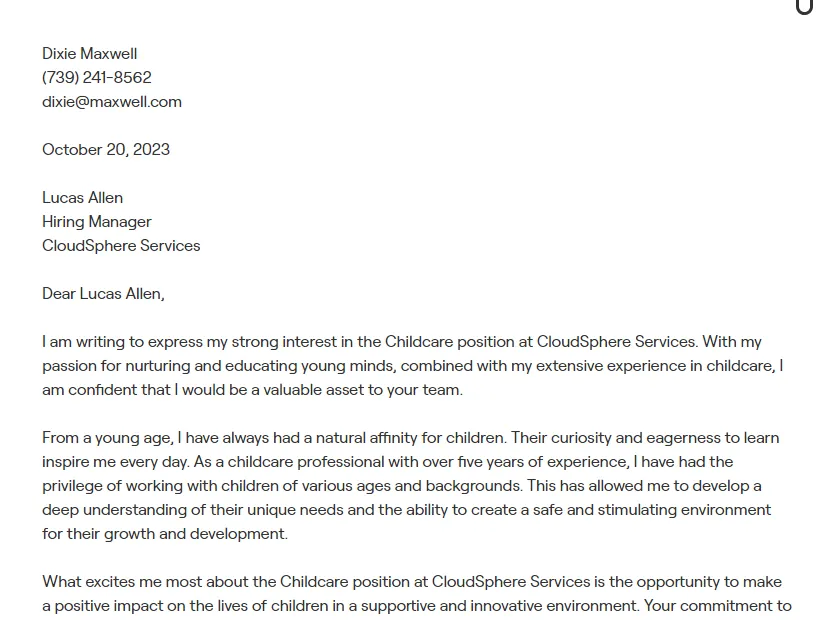
Understanding the Importance of a Childcare Cover Letter
In the competitive field of childcare, a well-crafted cover letter can make all the difference. It’s your first impression, a chance to showcase your personality, passion, and qualifications beyond what a resume can convey. This document serves as a vital tool, offering a glimpse into your approach to childcare, your understanding of child development, and your commitment to creating a safe and nurturing environment. A strong cover letter demonstrates your professionalism and allows you to connect with potential employers on a personal level, setting you apart from other applicants. It is not just a formality; it is a crucial step in securing your dream childcare position, highlighting why you are the ideal candidate.
Highlighting Your Qualifications
Your qualifications are the foundation of your cover letter. This section should provide a clear and concise overview of your abilities, ensuring that potential employers immediately recognize your suitability for the position. Focus on your key strengths and how they align with the specific requirements of the childcare role. Mentioning relevant certifications, training, and any specialized skills, such as experience with children with special needs or expertise in early childhood education methodologies, will set you apart. Demonstrate your understanding of child development principles and your ability to implement age-appropriate activities. Always ensure that your qualifications are presented in a way that resonates with the needs of the employer, making it clear why you are the best fit for their childcare needs.
Education and Certifications

Detailing your educational background is crucial. Include any degrees, diplomas, or certifications relevant to childcare, such as an Associate’s or Bachelor’s degree in Early Childhood Education or a Child Development Associate (CDA) credential. Highlight any specialized training, such as CPR and First Aid certifications, which are often mandatory for childcare roles. If you have taken courses related to child psychology, behavior management, or special education, make sure to mention them as well. Be specific about the institutions you attended and the dates you obtained your qualifications. This will help potential employers verify your credentials and assess your level of preparedness to handle different aspects of childcare effectively. Ensure that your certifications are up to date and valid.
Experience with Children
Your hands-on experience with children is a critical aspect of your cover letter. Provide a detailed account of your experience, including the types of childcare settings you have worked in, such as daycare centers, preschools, or private homes. Describe your responsibilities in each role, such as planning and implementing age-appropriate activities, assisting with meals, and maintaining a safe and stimulating environment. Quantify your experience whenever possible. For instance, state how many children you have cared for, or the duration of your employment. Highlight any specific achievements or skills you have demonstrated, such as successfully managing a group of children, resolving conflicts, or providing emotional support. This section should paint a clear picture of your practical abilities and your capacity to handle different situations in a childcare setting.
Soft Skills and Personal Attributes
Childcare requires more than just qualifications and experience; it demands a particular set of soft skills and personal attributes. Highlight your key interpersonal skills, such as patience, empathy, communication, and the ability to work well with both children and their parents. Showcase your ability to be adaptable, creative, and energetic in a childcare setting. Mention your organizational skills and your ability to maintain a structured and engaging environment. Your cover letter is also an opportunity to demonstrate your enthusiasm, commitment to child safety, and your understanding of child development principles. Show how your values align with the role and the organization. Illustrate these qualities with concrete examples from your past experiences.
Structuring Your Childcare Cover Letter

A well-structured cover letter is essential for making a positive impression. The format should be clear, concise, and easy to read, allowing potential employers to quickly grasp your qualifications and enthusiasm. Each section should serve a specific purpose, from introducing yourself to summarizing your key skills and expressing your interest. Avoid any unnecessary jargon or overly complex sentence structures, which can be distracting. A professional layout demonstrates your attention to detail and respect for the reader’s time. By adhering to a structured format, you can guide the reader through your qualifications logically, creating a compelling case for why you are the perfect fit for the childcare position.
Header and Contact Information
Start with a professional header that includes your full name, address, phone number, and email address. Make sure the header is clearly formatted and easy to read. Include the date and the employer’s contact information, such as the hiring manager’s name, title, and the organization’s address. This information is essential for ensuring that your cover letter is correctly addressed and that the hiring manager can easily contact you. It also demonstrates your attention to detail and your professionalism. Always double-check this information to ensure its accuracy before submitting your cover letter.
The Opening Paragraph
Your opening paragraph sets the tone for your entire cover letter. It should immediately grab the reader’s attention and convey your enthusiasm for the childcare position. State the position you are applying for and where you found the job posting. Briefly mention why you are interested in the role and the organization. You can start with a compelling sentence that highlights your most relevant skill or experience, setting the stage for the rest of your letter. Express your excitement and passion for childcare from the outset. This helps create a positive initial impression and encourages the reader to continue reading. Make sure the opening paragraph is concise and to the point, capturing the essence of your intentions in a few sentences.
Body Paragraphs Emphasizing Key Skills

The body paragraphs are where you elaborate on your qualifications and skills, providing detailed examples of your experience. Use separate paragraphs to discuss your education, relevant certifications, and practical experience with children. Highlight specific achievements or responsibilities that demonstrate your abilities, such as successfully managing a group of children, creating engaging activities, or ensuring a safe environment. Use action verbs to describe your accomplishments, and quantify your experience whenever possible. Customize these paragraphs to align with the specific requirements of the childcare position, demonstrating how your skills and experience match the employer’s needs. Provide concrete examples that show how you have applied your skills in previous childcare settings.
Closing the Cover Letter Effectively
Your closing paragraph is your final opportunity to make a lasting impression. Restate your interest in the childcare position and reiterate why you are a strong candidate. Express your enthusiasm for the opportunity to contribute to the organization. Include a call to action, such as stating that you are available for an interview and providing your contact information again. End with a professional closing, such as “Sincerely” or “Best regards,” followed by your name. Ensure that your closing paragraph is concise, enthusiastic, and leaves the reader with a positive and memorable impression. Avoid ending with vague or generic statements; instead, create a strong and impactful finish.
Action-Oriented Language
Using action-oriented language in your cover letter is crucial for making a strong impression. Instead of passively describing your duties, use verbs that highlight your accomplishments and showcase your initiative. For example, instead of writing “Responsible for planning activities,” use “Planned and implemented engaging educational activities.” Other effective action verbs include “created,” “managed,” “supervised,” “facilitated,” “motivated,” and “developed.” By using these action verbs, you make your accomplishments sound more dynamic and demonstrate your capacity to take action and achieve results. This creates a more compelling and professional narrative.
Expressing Enthusiasm

Expressing genuine enthusiasm in your cover letter can significantly boost your chances of getting hired. Your passion for childcare should be evident throughout your letter, from the opening paragraph to the closing statement. Show your excitement by highlighting your interest in the specific childcare position, the organization’s mission, or the opportunity to work with children. Use enthusiastic language and phrases that convey your commitment, such as “I am passionate about,” “I am excited to,” or “I am eager to.” Tailor your enthusiasm to the specific role and organization. This will show potential employers that you are not only qualified but also truly invested in the work. This authenticity can set you apart from other applicants.
Proofreading and Formatting
Proofreading and formatting your cover letter is a critical step in ensuring that it is polished and professional. Thoroughly check for any grammatical errors, typos, or punctuation mistakes. Make sure that the layout is clean and easy to read, with consistent font styles and sizes. Review the letter’s structure to ensure it flows logically and that the key points are clearly articulated. Proofreading demonstrates your attention to detail, which is vital in childcare. Having a well-formatted cover letter helps create a positive impression and shows your professionalism. It is recommended to ask someone else to review your cover letter as a second set of eyes can often catch errors that you might miss.
Tailoring Your Letter to the Specific Job
To increase your chances of success, tailor your cover letter to each specific job you apply for. Start by carefully reading the job description and identifying the key skills, qualifications, and experiences the employer is seeking. Then, customize your cover letter to highlight the aspects of your background that align with these requirements. Use the same keywords and phrases from the job description in your cover letter. This demonstrates that you have the skills and experience that the employer is looking for. Research the childcare provider or organization to gain insights into their values, mission, and any specific needs they may have. By personalizing your cover letter, you demonstrate that you have taken the time and effort to understand the role and are a perfect fit for the position.
Researching the Childcare Provider

Before submitting your cover letter, take the time to research the childcare provider. Visit their website, read their mission statement, and learn about their values and approach to childcare. If possible, look for information about the children they serve, their activities, and their educational philosophy. This research will help you tailor your cover letter to address their specific needs and demonstrate your interest in their organization. It allows you to highlight how your qualifications and experiences align with their values and mission. Show potential employers that you understand their organization by mentioning specific programs, philosophies, or initiatives in your cover letter, which will showcase your commitment and enhance your application.
Customizing the Letter’s Content
After researching the childcare provider, customize the content of your cover letter to align with their needs. In your opening paragraph, express your interest in working with their specific organization and mention something that attracted you to their approach to childcare. Throughout the body paragraphs, highlight your skills and experience that are most relevant to the job description and the provider’s values. Use the language and keywords found in the job posting to ensure that your cover letter resonates with the hiring manager. Mention any specific programs or initiatives of the childcare provider, such as their focus on outdoor activities or their approach to early literacy. This personalization demonstrates that you have taken the time and effort to understand their needs and are a suitable fit for the role.
Common Mistakes to Avoid in Childcare Cover Letters
While writing your childcare cover letter, it’s essential to be mindful of the common mistakes that can undermine your application. Avoiding these pitfalls will help you present yourself in the best possible light and increase your chances of success. Common mistakes include using generic language, making grammatical errors, and failing to provide specific examples of your skills and experience. Pay close attention to the details and ensure that your cover letter is clear, concise, and tailored to the specific job. This will significantly improve your chances of impressing the hiring manager and getting an interview.
Generic and Unenthusiastic Language

Avoid generic and unenthusiastic language that can make your cover letter seem bland and uninspired. Phrases like “I am a hard worker” or “I have experience with children” are too vague. Instead, use specific examples to illustrate your skills and express your enthusiasm for childcare. Show, don’t tell, the hiring manager what you can do. Use strong action verbs, and provide details about your accomplishments and how you made a positive impact in previous childcare roles. Express your genuine passion for working with children and your excitement about the opportunity. The more specific and enthusiastic your language, the more memorable your cover letter will be.
Grammatical Errors and Typos
Grammatical errors and typos can easily undermine your credibility and damage your chances of getting hired. Proofread your cover letter carefully, checking for spelling mistakes, punctuation errors, and grammatical inconsistencies. Consider using grammar and spelling checkers, but don’t rely solely on them. These tools may not catch all errors, and they can sometimes lead to mistakes. Ask someone else to review your cover letter, as a fresh pair of eyes can often spot errors that you might miss. By taking the time to ensure that your cover letter is error-free, you demonstrate your attention to detail and your professionalism, qualities that are highly valued in the childcare field.
Lack of Specific Examples
Another common mistake is failing to provide specific examples to demonstrate your skills and experience. Instead of simply stating that you are patient and creative, provide concrete examples of how you have demonstrated these qualities in the past. Describe a specific situation where you successfully managed a challenging behavior or created an engaging activity that the children enjoyed. Quantify your achievements whenever possible. For example, you might mention how many children you have cared for or how you improved a child’s reading skills. Specific examples add credibility to your claims and help the hiring manager to understand your capabilities. Use the STAR method - Situation, Task, Action, Result - to structure your examples effectively.
Showcasing Your Childcare Cover Letter
Once you have crafted a compelling childcare cover letter, it’s time to showcase it effectively. Carefully consider the format, and choose the method that best suits the application requirements. Whether you are submitting your cover letter online, as a hard copy, or through an email, make sure that your document is formatted correctly and easy to read. Be professional in your communication, and always follow the specific instructions provided by the employer. Remember that your cover letter is a crucial tool in your job search, and showcasing it effectively can significantly increase your chances of success. Make sure your cover letter complements your resume to present a complete picture of your qualifications.
Preparing for the Interview Stage
If your cover letter successfully captures the attention of a potential employer, you may be invited for an interview. Preparation is key. Review your cover letter and resume, and anticipate the questions that the interviewer may ask. Be prepared to discuss your qualifications, your experience, and your approach to childcare in detail. Research the childcare provider, and have some questions prepared to ask the interviewer. Dress professionally and arrive on time. Consider practicing your answers to common interview questions, such as “Why are you interested in childcare?” or “How do you handle challenging behaviors?” By preparing in advance, you can make a positive impression and showcase your skills and suitability for the role.
Following Up After Submission
After submitting your cover letter, it’s important to follow up with the potential employer. Within a week or two after submitting your application, send a polite email to the hiring manager or contact person to express your continued interest in the position. Briefly reiterate your qualifications and enthusiasm for the role. A follow-up email demonstrates your professionalism and your commitment to the job. It also reminds the employer of your application and ensures that it is not overlooked. If you haven’t heard back after a reasonable amount of time, consider sending a second follow-up email or making a phone call. Be respectful and polite, and thank the employer for their time.