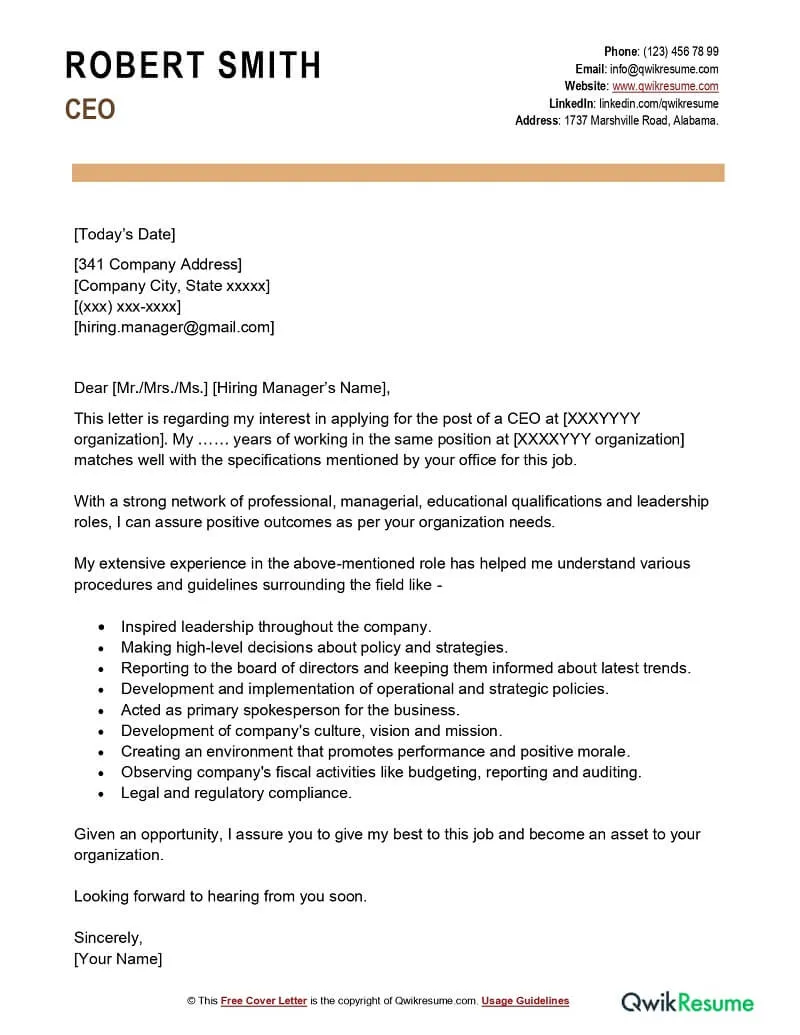
What Is a CEO Cover Letter?
A CEO cover letter is a crucial document in your job application process, acting as your first introduction to the hiring committee or the board of directors. It’s more than just a formality; it’s your opportunity to showcase your unique qualifications, leadership capabilities, and vision for the company. Unlike a standard resume, a cover letter allows you to articulate your career narrative, explain why you’re the ideal candidate for the specific CEO role, and demonstrate your understanding of the company’s needs and challenges. A well-crafted letter can set you apart from other applicants and significantly increase your chances of securing an interview. It is your chance to express your professional experience and convince the company you have what it takes to be a CEO.
Key Components of a Powerful CEO Cover Letter
A successful CEO cover letter must follow a specific format to provide a professional look and feel. Structuring the information in a logical flow helps the reader to absorb your key qualifications and experience. Furthermore, attention to detail is vital because it is a demonstration of your approach to the highest level of professionalism. By including each part to the cover letter you will have a better chance of securing the CEO position you desire.
Your Contact Information

Start your cover letter with your complete contact information, including your name, address, phone number, and professional email address. This ensures the hiring manager can easily reach you. Ensure that your contact information is accurate and up-to-date to avoid missing out on any communication.
Date
Always include the current date. This provides context and shows when the letter was written. Ensure your cover letter is formatted correctly for a professional look.
Recipient’s Information
Address the letter to the hiring manager or, if possible, the CEO or board member. Find their name and title to personalize the letter. This will help establish a sense of respect.
Professional Salutation

Use a professional salutation such as “Dear Mr./Ms. [Last Name],” or “Dear [Hiring Manager Name].” Avoid informal greetings. Addressing the reader by name is important because it adds a personal touch, and also shows you are serious about getting the job. It demonstrates respect and attention to detail.
Crafting a Compelling Opening
Your opening paragraph should immediately grab the reader’s attention. Start with a strong statement about why you are the ideal candidate. Briefly mention the position you are applying for and how you learned about the opportunity. Make it clear why you are interested in the role and the company. Demonstrate your interest and knowledge of the company and its current status and position. This is your chance to capture the reader’s attention from the start.
Highlighting Your Achievements
Use the body of your letter to showcase your most significant achievements. Focus on accomplishments relevant to the CEO role. This is not a mere recounting of your resume. Quantify your results whenever possible to provide measurable impact. By including your accomplishments, you present yourself as a results-driven leader.
Quantifiable Results

Always provide numbers and data to support your claims. Provide measurable achievements such as revenue growth, cost savings, market share increase, or successful project completion. These quantifiable results provide concrete evidence of your impact and leadership capabilities. Quantifying your achievements makes your claims more credible and memorable.
Showcasing Leadership Skills
Emphasize your leadership skills. Describe how you have successfully led and motivated teams. This can include examples of your strategic thinking, decision-making abilities, and ability to drive organizational change. Provide examples of your leadership style, decision-making process, and ability to build a high-performing team.
Demonstrating Industry Knowledge
Demonstrate your understanding of the industry and the specific company. Include knowledge of market trends, competitors, and challenges. Show your awareness of the company’s position and the opportunities for growth. Including industry knowledge adds credibility and demonstrates your preparedness for the CEO role.
Expressing Your Value Proposition

Clearly state the value you bring to the company. Articulate how you plan to contribute to the company’s success. This should be a concise summary of your core strengths and how they align with the company’s goals. Highlighting your value makes the hiring manager better understand your suitability for the role.
Closing Your Cover Letter
End your letter with a strong closing statement. Reiterate your interest in the position and express your enthusiasm for the opportunity. Include a call to action by stating your availability for an interview. Thank the hiring manager for their time and consideration and end professionally.
Proofreading and Formatting
Before sending your cover letter, proofread it carefully for any errors in grammar, spelling, and punctuation. Ensure the formatting is clean and easy to read. Formatting errors can detract from your message, so pay attention to details. Have someone else review your letter for a fresh perspective.
Tips for a Standout CEO Cover Letter

To maximize your chances of success, tailor your cover letter to each specific job application. Highlight the most relevant skills and experiences, and use action verbs to describe your achievements. Always keep your letter concise and easy to read, and proofread it carefully for any errors.
Tailor Your Letter to the Company
Customize your cover letter for each company. Research the company’s mission, values, and recent developments. Highlight how your experience and vision align with the company’s specific needs and goals. Avoid using a generic cover letter. Showing that you understand the organization will show the hiring manager you are serious.
Use Action Verbs
Use action verbs to start your sentences and describe your accomplishments. Words like “led,” “managed,” “achieved,” “developed,” and “implemented” create a dynamic tone. This will make your letter more compelling and show you are a proactive leader. Action verbs provide a professional and high-impact tone to show your strengths.
Keep It Concise

Keep your cover letter concise, ideally no more than one page. Focus on the most important information and avoid unnecessary details. Get straight to the point, highlighting key achievements and skills that demonstrate your suitability for the role. A clear and concise letter is easier to read and more effective.
Proofread Meticulously
Always proofread your cover letter carefully before submitting it. Check for any grammatical errors, spelling mistakes, or typos. Proofreading is important to ensure that your letter represents you in the best possible light. An error-free letter demonstrates your attention to detail and professionalism.