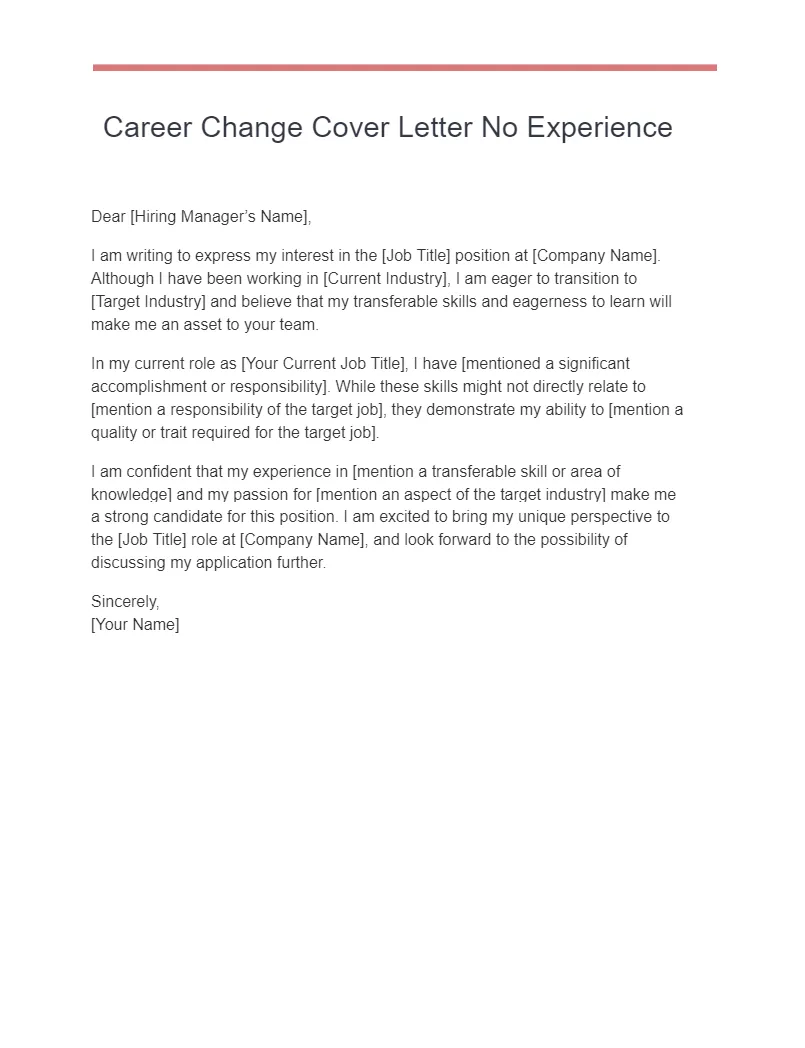
Understanding the Importance of a Career Change Cover Letter
Embarking on a career change can be both exciting and daunting. You’re venturing into new territory, and the traditional methods of job searching may not always suffice. This is where a well-crafted career change cover letter becomes your most valuable asset. It’s more than just a formality; it’s your opportunity to bridge the gap between your past experiences and your desired future, showcasing your potential to employers and addressing their concerns about your transition. A cover letter is your chance to tell your story, explain your motivations, and demonstrate why you’re a strong candidate, even without direct experience in the new field.
Why a Cover Letter is Crucial for Career Changers
For career changers, a cover letter serves as a crucial tool for contextualizing your application. Unlike those with direct experience, you need to explain your shift and convince potential employers of your suitability. It allows you to proactively address any perceived shortcomings related to your lack of direct experience. It’s a chance to highlight your transferable skills, which are the core competencies you’ve developed in previous roles and that are applicable to your new field. The cover letter gives you the space to articulate your passion for the new role and industry, which is often a key differentiator. By showing your enthusiasm and understanding of the new field, you can compensate for a lack of experience and make a powerful first impression.
Highlighting Transferable Skills

One of the most important aspects of a career change cover letter is showcasing your transferable skills. These are the skills you’ve acquired in previous roles that are relevant to the new position. Think about communication, problem-solving, leadership, project management, and teamwork. Identify which of your existing skills align with the requirements of the job you’re applying for. Provide concrete examples of how you’ve used these skills in the past. Instead of simply listing your skills, describe a specific situation, the actions you took, and the positive results you achieved. This approach brings your skills to life and demonstrates your ability to apply them effectively in a new context, making you a more compelling candidate.
Researching the Target Industry and Role
Before writing your cover letter, thorough research is essential. Research the target industry and the specific role you’re applying for. Understand the key responsibilities, required skills, and the company culture. This knowledge will inform your cover letter and demonstrate your genuine interest. Visit the company’s website, read industry publications, and explore professional networking sites like LinkedIn to gain insights. Tailor your cover letter to the specific requirements of the job description. Highlight the skills and experiences that align with the employer’s needs and expectations. Mentioning specific company values or initiatives shows that you’ve done your homework and that you’re genuinely interested in the opportunity.
Finding the Right Keywords
In today’s job market, Applicant Tracking Systems (ATS) are common. These systems scan applications for relevant keywords. To ensure your cover letter gets noticed, incorporate keywords from the job description into your letter. Identify the most important skills, responsibilities, and qualifications listed by the employer. Weave these keywords naturally into your writing, but avoid keyword stuffing. Focus on using the right words in the right context to showcase your qualifications effectively. By strategically including relevant keywords, you increase the chances of your cover letter passing through the ATS and reaching the hiring manager.
Tailoring Your Cover Letter

Avoid using a generic cover letter. Each application should be tailored to the specific job and company. Research the company’s mission, values, and recent projects. Personalize your cover letter by addressing the hiring manager by name, if possible. Highlight the specific skills and experiences that make you a good fit for the role. Explain why you’re interested in the company and the position. Customization shows that you’ve invested time and effort in the application, and it significantly increases your chances of making a positive impression. Demonstrating your knowledge of the company and showing how your goals align with theirs helps you stand out from the crowd.
Crafting a Compelling Cover Letter Structure
A well-structured cover letter guides the reader through your qualifications and makes a strong case for your candidacy. Follow a clear and concise structure that includes an opening paragraph, a body that showcases your skills and experiences, and a closing paragraph with a call to action. The structure should be easy to follow, allowing the hiring manager to quickly grasp your key qualifications. Use short paragraphs and bullet points where appropriate to improve readability. Break up large blocks of text to keep the reader engaged. Using a clear, well-organized structure will make your letter more effective.
The Opening Paragraph
The opening paragraph is your first opportunity to grab the reader’s attention. Start with a strong hook that captures their interest. State the position you are applying for and where you saw the advertisement. Briefly explain your motivation for the career change and why this particular role appeals to you. Clearly state the value you bring to the company and mention a key accomplishment or skill that aligns with the job requirements. Make it clear why you are making the change, and show a genuine interest in the new field. Aim for a confident and enthusiastic tone, setting the stage for the rest of your letter. Keep it concise and compelling.
Showcasing Your Value Proposition

The body of your cover letter is where you sell yourself. Highlight your key skills and experiences, focusing on transferable skills and accomplishments. Provide specific examples that demonstrate how you’ve used your skills in the past. Quantify your achievements whenever possible, using numbers to show the impact of your work. Connect your skills to the job requirements listed in the job description. Explain how your past experiences have prepared you for the new role. Illustrate your understanding of the industry and the role. Emphasize what sets you apart from other candidates and why you’re the best fit for the position.
Addressing the Career Change
Acknowledge your career change directly and explain your motivations. Be honest about your reasons for transitioning to a new field. Clearly state your passion for the new industry and the specific role. Frame your career change as a strategic move that aligns with your long-term goals. If possible, connect your previous experience to your new career path, highlighting the relevant skills. Avoid being apologetic or defensive about your career change. Instead, focus on the positive aspects of your transition and how it will benefit the employer. Frame your change positively and show how it is a benefit.
Emphasizing Enthusiasm and Fit
Throughout your cover letter, demonstrate your enthusiasm for the role and the company. Show that you’ve researched the company and understand its mission and values. Explain why you’re excited about the opportunity and how it aligns with your career goals. Express your desire to contribute to the team and make a positive impact. Conclude by reiterating your interest in the position and your confidence in your abilities. Let your passion for the new field shine through, demonstrating your genuine commitment to the opportunity. Show that you are a good fit.
The Call to Action

End your cover letter with a clear call to action. Express your interest in an interview and your availability. Thank the reader for their time and consideration. Reiterate your enthusiasm for the position and your confidence in your ability to succeed. Provide your contact information and make it easy for the hiring manager to reach you. Make it clear that you are looking forward to hearing from them. A strong call to action encourages the hiring manager to take the next step and invite you for an interview.
Writing a Strong Cover Letter
A well-written cover letter should be concise, clear, and engaging. Use strong action verbs to describe your accomplishments and responsibilities. Focus on highlighting your skills and experiences that are most relevant to the job. Tailor your letter to each job application, emphasizing how your qualifications meet the specific requirements. Maintain a professional tone and use proper grammar and punctuation. Avoid jargon and overly complex language. Keep the tone positive and enthusiastic, and make sure that the cover letter is easy to read and understand. The writing should flow smoothly and highlight your key strengths.
Formatting and Tone
Pay attention to the formatting of your cover letter. Use a professional font like Arial or Times New Roman. Keep the font size between 10 and 12 points. Use appropriate spacing and margins to make the letter easy to read. The tone of your cover letter should be professional and enthusiastic. Show your personality and express your genuine interest in the role. Address the hiring manager by name if you can. Use a positive and confident tone throughout the letter. Always proofread carefully to avoid errors that could detract from your message. Maintaining a professional format and positive tone will greatly impact the reader.
Proofreading and Editing

Proofreading is an essential step in the cover letter writing process. Check for any grammatical errors, spelling mistakes, and typos. Read the cover letter aloud to ensure that the writing flows smoothly and that the sentences make sense. Ask a friend or family member to review your cover letter and provide feedback. Ensure that your contact information is accurate and up to date. Having a second pair of eyes can help you catch errors that you might have missed. Taking the time to proofread your cover letter helps ensure that it is polished and error-free, presenting you in the best possible light.
Cover Letter Examples
Reviewing cover letter examples can provide valuable insights and inspiration. Analyze the structure, language, and content of different examples. Pay attention to how the writers highlight their skills, address the career change, and express their enthusiasm. Adapt these examples to fit your own situation. Customize them to reflect your unique experiences and the specific requirements of the jobs you’re applying for. The following examples provide a starting point for crafting an effective cover letter.
Example 1 Focus on skills
In this example, the applicant focuses on highlighting their transferable skills. For example, a project manager transitioning to a marketing role might emphasize project management, communication, and analytical skills. The cover letter should provide specific instances where the applicant used their project management skills in past roles. Describe how they successfully led projects, managed teams, and delivered results. Provide concrete examples of their communication skills, such as making presentations, writing reports, and negotiating with stakeholders. Demonstrate analytical abilities by showcasing their skills in data analysis, problem-solving, and strategic planning. By providing concrete examples, they can showcase skills in action.
Example 2 Highlighting Experience

The example is from a teacher transitioning to a corporate training role. The cover letter emphasizes experience in curriculum development, lesson planning, and public speaking. Highlight past experience in designing and delivering engaging training materials and providing detailed examples of any prior training experience, including creating online courses, conducting workshops, or leading training sessions. Focus on the ability to adapt training materials to meet specific needs, which is crucial in a corporate environment. The applicant can also address their experience in facilitating group discussions, providing feedback, and evaluating performance, linking it to corporate training goals.
Example 3 Addressing a specific industry
An example of a customer service representative looking to enter the tech industry. The cover letter shows how the representative can transfer their customer service skills to a role in tech support. It’s important to showcase their strong communication skills, including active listening, problem-solving, and the ability to explain technical information clearly. Demonstrate their ability to troubleshoot issues, provide effective solutions, and build rapport with customers. Highlight any prior experience with tech products, software, or customer relationship management (CRM) systems. The goal is to provide a solid foundation for a tech support role.