Why a Strong Biologist Cover Letter Matters
In the competitive field of biology, a compelling cover letter can be your most potent tool for securing an interview. It’s your first opportunity to make a positive impression on a potential employer. A well-crafted cover letter serves as a concise introduction, expanding on your resume and highlighting the specific skills and experiences that align with the job requirements. It is a chance to showcase your passion for biology and demonstrate why you are the ideal candidate. Moreover, a strong cover letter can differentiate you from other applicants, giving you a competitive edge and increasing your chances of landing your dream job.
Highlighting Your Skills and Experience
Your cover letter should be a dynamic narrative of your skills and experience. Instead of merely restating your resume, use this space to elaborate on your accomplishments and explain how they have prepared you for the specific role. Consider the key skills that employers in biology typically seek, such as research abilities, data analysis expertise, laboratory techniques, and communication skills. Highlight projects or experiences where you have demonstrated these skills. For example, if you have experience with molecular biology techniques, detail your involvement in specific experiments and the outcomes achieved. Use the STAR method (Situation, Task, Action, Result) to provide concrete examples and showcase your achievements.
Research and Customize Your Cover Letter

Before you begin writing, thoroughly research the company and the specific job you’re applying for. Understand their mission, values, and the specific requirements of the role. This will enable you to tailor your cover letter to meet their needs. Showing that you’ve taken the time to learn about the organization demonstrates your genuine interest in the position and increases your chances of making a favorable impression. Personalize your letter by addressing it to the hiring manager by name (if possible). Mention the company by name and highlight your understanding of their work.
Showcasing Relevant Skills
Identify the skills that are most pertinent to the job description and showcase them prominently in your cover letter. This might include technical skills, such as proficiency in specific laboratory techniques or software, and soft skills like teamwork, problem-solving, and communication. Instead of simply listing these skills, provide examples of how you have utilized them in past roles or projects. For example, describe a time when you successfully collaborated with a team to solve a complex research problem, or how you effectively presented scientific findings to a non-technical audience.
Quantifying Your Achievements
Whenever possible, quantify your achievements to demonstrate the impact of your work. Use numbers and data to show the results you have achieved. For example, instead of saying “Managed research projects”, you might write “Managed a research project involving a team of five, resulting in a 20% increase in efficiency.” Numbers make your accomplishments more concrete and impressive. If you’ve published research papers, mention the number of publications and any associated impact factors. If you’ve received any awards or recognitions, be sure to highlight them. Quantifying your achievements makes your cover letter more compelling and demonstrates your value to potential employers.
Tailoring to the Job Description

Each job application requires a tailored cover letter. Carefully review the job description and align your skills and experience with the specific requirements outlined. Use the same keywords and phrases that the employer uses to describe the ideal candidate. This helps your application get past the applicant tracking systems (ATS) used by many companies. Highlight the specific skills and experiences that align with the job’s requirements. If the job requires experience with a particular technique, make sure to emphasize your experience with that technique. Also, briefly discuss why you are interested in the specific role and the company.
Structuring Your Biologist Cover Letter
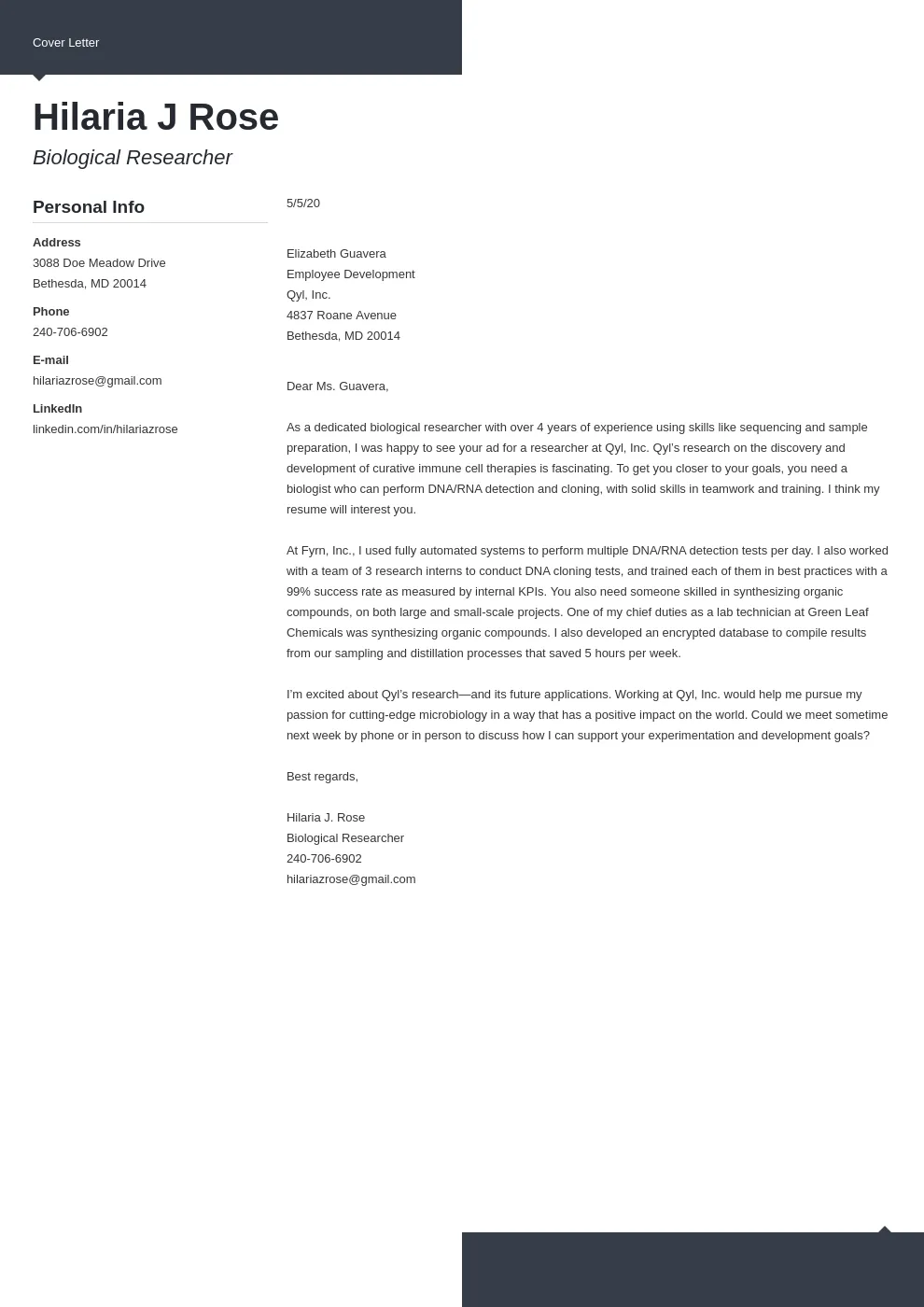
A well-structured cover letter is essential for making a good impression. It should be concise, well-organized, and easy to read. A standard cover letter format typically includes a header with your contact information, a formal salutation, an introductory paragraph, body paragraphs that detail your qualifications, and a closing paragraph with a call to action. Use clear headings and bullet points to break up text and make the information easily digestible. The overall tone should be professional, enthusiastic, and tailored to the specific job and company. The following structure gives a clear example on how to structure the perfect cover letter.
Header and Contact Information
The header of your cover letter should include your full name, address, phone number, and email address. You can place this information at the top left or center of the page. Ensure your contact information is current and professional. If you have a LinkedIn profile, consider including the link in your header. This makes it easy for the hiring manager to learn more about your professional background. The header sets the stage for your letter and makes it easy for the recruiter to contact you. Make sure that your email address is professional and appropriate.
Opening Paragraph Grab the Reader’s Attention

Your opening paragraph should immediately grab the reader’s attention and make them want to learn more. Start by stating the position you are applying for and where you found the job posting. Then, briefly introduce yourself and highlight your most relevant qualifications. You can express your enthusiasm for the position and the company, as well. The opening should be concise and compelling, setting the tone for the rest of your letter. You may also mention a specific achievement or skill to immediately grab the reader’s attention. Always tailor your opening paragraph to the specific job and company.
Body Paragraphs Highlight Your Qualifications
The body paragraphs are the heart of your cover letter. They should provide detailed information about your qualifications, skills, and experience. Use these paragraphs to showcase how your skills and experiences align with the job requirements. Provide specific examples of your achievements and responsibilities. Use the STAR method to illustrate your accomplishments. Each paragraph should focus on a specific aspect of your qualifications. Keep the language clear, concise, and professional. Avoid jargon and ensure your writing is easy to understand. Organize your body paragraphs logically, using clear topic sentences to guide the reader.
Closing Paragraph Call to Action
Your closing paragraph should reiterate your interest in the position and the company. Express your enthusiasm for the opportunity and thank the hiring manager for their time and consideration. Include a call to action, such as inviting the hiring manager to contact you for an interview. Make it clear that you are eager to discuss your qualifications further. End with a professional closing, such as “Sincerely” or “Best regards,” followed by your full name. Review your closing paragraph to ensure it reflects your enthusiasm and professionalism.
Proofreading and Formatting for Impact

Before submitting your cover letter, it’s crucial to proofread it thoroughly for any errors. Spelling and grammatical mistakes can undermine your credibility and create a negative impression. The formatting should also be neat and easy to read. Use a professional font, such as Times New Roman, Arial, or Calibri, with a font size between 10 and 12 points. Keep your paragraphs concise and use bullet points or numbered lists to break up text. Ensure that your cover letter is formatted consistently throughout and that there are no unnecessary spaces or formatting issues. A well-formatted cover letter demonstrates attention to detail, a highly desirable quality.
Reviewing for Grammar and Spelling
Carefully proofread your cover letter to eliminate any grammatical errors or spelling mistakes. These errors can significantly detract from your credibility and make you appear unprofessional. Use a grammar and spell-checker tool, but also read your cover letter carefully to catch any errors the software might miss. Ask a friend or colleague to review your cover letter. They can often spot errors that you have overlooked. A fresh pair of eyes can provide valuable feedback. Make sure all proper nouns and company names are spelled correctly.
Formatting for Readability
Ensure your cover letter is easy to read and visually appealing. Use a clear, professional font like Times New Roman or Arial. A font size of 10-12 points is recommended. Keep your paragraphs relatively short and use bullet points or numbered lists to highlight key information. Use headings and subheadings to break up the text and make the content more scannable. The overall goal is to make the letter easy to understand at a glance. Consider using a professional cover letter template to ensure proper formatting. Avoid excessive use of bolding, italics, or underlining.
Biologist Cover Letter Samples & Examples

Reviewing cover letter samples and examples can provide valuable insights and inspiration. Pay attention to the language, tone, and structure used in these samples. Adapt the examples to fit your unique skills, experiences, and the specific job requirements. The samples can help you understand how to effectively highlight your qualifications and tailor your letter to different types of positions. These examples can serve as a starting point for writing your own cover letter. They can help with formatting and the language, and help you understand what works and what doesn’t.
Cover Letter Sample for Entry Level Biologist
For entry-level positions, focus on highlighting your education, relevant coursework, lab skills, and any internships or volunteer experiences. Show enthusiasm and a willingness to learn. Emphasize any research projects you’ve been involved in, even if they were part of your coursework. Demonstrate your passion for biology and your eagerness to contribute to the organization. Use specific examples to show how your skills and experiences align with the job requirements. Be sure to keep the letter concise and easy to read. Highlight your academic achievements and any relevant skills gained during your education.
Cover Letter Sample for Experienced Biologist
For experienced biologists, focus on highlighting your professional accomplishments, research publications, and leadership roles. Quantify your achievements whenever possible. Use data and numbers to illustrate your impact. Demonstrate your expertise and knowledge in your area of specialization. Provide examples of your successful project management, team leadership, and ability to solve complex scientific problems. Tailor your cover letter to match the specific requirements of the job and company. Showcase your experience in the context of the job description.
Common Mistakes to Avoid
Avoid common mistakes that can hurt your chances of getting hired. These mistakes include generic cover letters, focusing too much on yourself, and ignoring the job description. A generic cover letter doesn’t demonstrate that you’ve taken the time to research the company and position, and can portray a lack of interest. Overly focusing on yourself instead of demonstrating how you can benefit the company shows a lack of understanding of the employer’s needs. Failing to tailor your cover letter to the job requirements shows that you are not invested in the position. Avoiding these mistakes will significantly improve your chances.
Generic Cover Letters
Avoid sending a generic cover letter that is not tailored to the specific job and company. Generic letters lack personalization and fail to demonstrate your genuine interest in the position. Take the time to research the company and the job requirements. Tailor your letter to highlight the specific skills and experiences that match the job description. Always address your cover letter to the hiring manager by name (if possible). Personalize your letter by mentioning the company by name and explaining why you are interested in working for them.
Focusing on Yourself Too Much
Focus on demonstrating how you can contribute to the company’s goals, not just listing your skills and experience. Explain how your skills align with the job requirements and how you can help the company achieve its objectives. Provide specific examples of how you have solved problems or achieved results in the past. Emphasize the value you can bring to the company. By focusing on the employer’s needs, you can make a more compelling case for why you are the right candidate for the job. Highlight the skills and experience that match the job description.
Ignoring the Job Description
Carefully review the job description and tailor your cover letter to meet the specific requirements outlined. Make sure you address the essential qualifications and highlight the skills and experiences that the employer is seeking. Ignoring the job description suggests a lack of attention to detail and a lack of interest in the position. Use the same keywords and phrases that the employer uses in the job description. Customize your cover letter to address the specific needs of the hiring company. This shows you have carefully read the job description and are a good fit for the role.
Final Thoughts and Next Steps
Crafting a winning biologist cover letter requires careful planning, research, and attention to detail. By highlighting your skills, tailoring your letter to the job, and avoiding common mistakes, you can increase your chances of landing an interview and securing your dream job. Always proofread your cover letter before submitting it. Follow the advice provided. Take the time to create a professional and compelling cover letter that sets you apart from the competition. Ensure that your cover letter reflects your enthusiasm for the position, your passion for biology, and your commitment to contributing to the company’s success. Good luck with your job search!