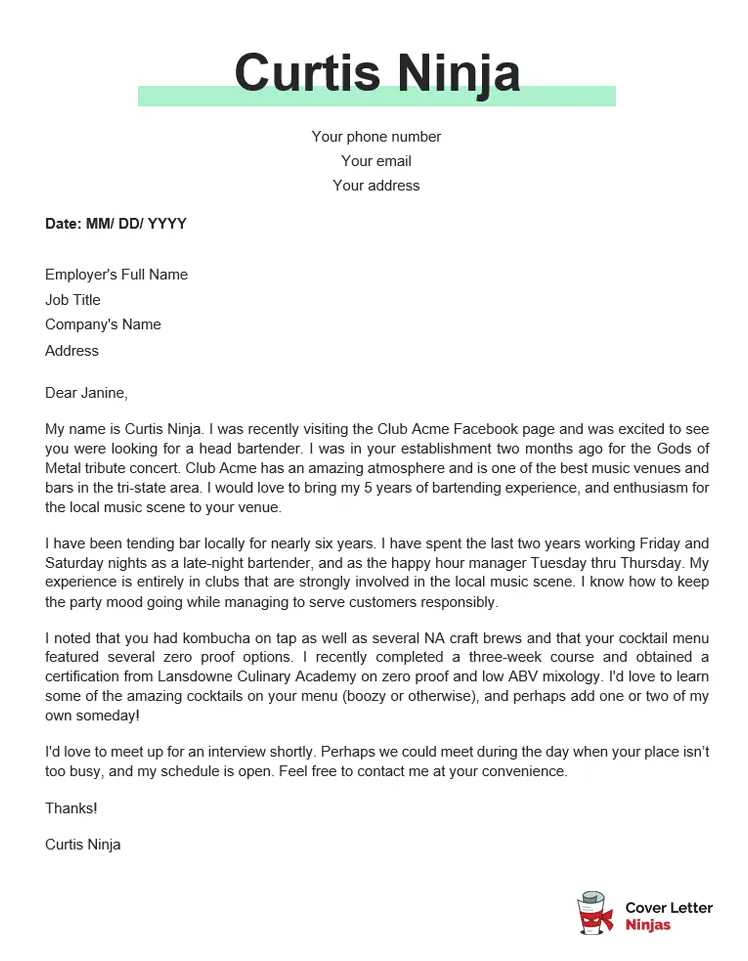
Crafting Your Bartending Cover Letter
A bartending cover letter is your first chance to make a stellar impression on a potential employer. It’s more than just a formality; it’s your personal introduction, a sneak peek into your personality, and a showcase of your skills. In the competitive world of bartending, a well-crafted cover letter can be the key that unlocks the door to your dream job. This guide will walk you through the essential elements of a compelling cover letter that grabs attention and sets you apart from the crowd. Remember, it’s your chance to shine, so let your personality and passion for mixology take center stage. Take your time, be genuine, and let your enthusiasm for the craft of bartending come through in every word you write. A memorable cover letter can make all the difference.
Understanding the Purpose of a Cover Letter
The primary function of a bartending cover letter is to provide context to your resume. While your resume lists your qualifications, your cover letter tells the story behind them. It’s an opportunity to express your passion for bartending, highlight your key skills, and explain why you’re the perfect fit for the specific role and bar. Think of it as your personal elevator pitch, where you can sell yourself and your abilities. This is your chance to demonstrate your communication skills, your understanding of the hospitality industry, and your genuine interest in the opportunity. A well-written cover letter can persuade the hiring manager to see beyond the qualifications on your resume and consider you for an interview.
Key Elements of a Bartending Cover Letter

Your Contact Information and Date
Start with your full name, phone number, email address, and possibly your LinkedIn profile (if you have one). Include the date below your contact information. This is basic but essential for the hiring manager to easily reach you. Ensure that your email address is professional – avoid using nicknames or casual language. The goal is to make a polished and professional first impression, so attention to detail is crucial. This section is the foundation; if you don’t provide it, it will immediately turn off the hiring manager. Keep it clear, concise, and easy to read. A well-formatted header will make it simple for them to contact you.
The Hiring Manager’s Information
Whenever possible, address your cover letter to a specific person – the hiring manager, the bar manager, or the owner. This shows that you’ve done your research and are genuinely interested in the position. If you can’t find a name, it’s acceptable to use a professional title such as “Hiring Manager.” Research the bar beforehand, either on the internet or by visiting them, to gather all the information you may need. Avoid generic greetings like “To Whom It May Concern.” Personalizing your cover letter makes it stand out and demonstrates your attention to detail. Always strive to make your cover letter less generic and more personal.
Opening the Cover Letter with Impact

Your opening paragraph should grab the reader’s attention immediately. Instead of a generic introduction, express your enthusiasm for the opportunity. Mention where you saw the job posting and why the bar excites you. Consider starting with a compelling anecdote, such as an impressive cocktail you created or a positive experience at a similar establishment. Make it clear that you are applying for the bartender position, and briefly explain why you are the best candidate. The first few sentences are critical; they set the tone for the rest of your letter. A captivating opening makes the hiring manager eager to keep reading and learn more about you. This will allow you to get to the next steps, like an interview.
Highlighting Relevant Bartending Skills
Showcase the bartending skills that align with the job description. Highlight your experience with specific cocktails, spirits, and bar equipment. Mention your knowledge of mixology techniques, customer service, and cash handling. Don’t just list your skills; provide examples of how you’ve used them successfully in previous roles. For example, mention your ability to manage a busy bar, handle customer complaints, or train new staff members. Tailor your skills to match the specific requirements of the job. If they emphasize craft cocktails, highlight your expertise in that area; if it’s a high-volume bar, focus on your speed and efficiency. Focus on aspects that are in line with the specific bar.
Showcasing Experience and Accomplishments
Describe your previous bartending experience, emphasizing your key accomplishments. Instead of just listing your job duties, focus on what you achieved in each role. Did you increase bar sales, improve customer satisfaction, or streamline operations? Use action verbs to describe your responsibilities and contributions. Be specific about your responsibilities and the impact you made. For instance, ‘Managed a team of bartenders to ensure smooth operation during peak hours’ or ‘Implemented a new cocktail menu that increased sales by 15%’. Employers want to know how you can add value to their team, so focus on your successes and the results you achieved. Mentioning your awards or any additional training you have will only help your chances of getting hired.
Quantifying Your Achievements

Whenever possible, quantify your achievements with numbers. Instead of saying ‘Improved customer service,’ say ‘Increased customer satisfaction scores by 20%’. Provide specific figures to demonstrate the impact you’ve made in previous roles. This adds credibility to your claims and makes it easier for the hiring manager to understand your value. For example, ‘Increased bar revenue by 10% within six months’ or ‘Reduced drink preparation time by 15%’. Numbers are more persuasive than vague statements and provide tangible evidence of your abilities. Also, make sure to provide numbers or figures that you can back up. Make sure to be realistic and honest with these numbers.
Mentioning Specifics of the Job and Bar
Demonstrate that you’ve researched the bar and understand its unique aspects. Mention any specific cocktails on their menu that you’re excited to create or any unique aspects of the bar’s atmosphere that appeal to you. This shows that you’re genuinely interested in the position and that you’ve taken the time to learn about the establishment. Tailor your letter to the specific bar and the role. Highlight how your skills and experience align with their brand and values. If the bar is known for its craft cocktails, emphasize your mixology skills; if it’s a sports bar, mention your ability to handle high-volume service. Be authentic and genuine in your approach.
Expressing Enthusiasm and Personality
Let your personality shine through your cover letter. Bartending is a people-oriented profession, so express your enthusiasm for the role and your passion for mixology. Use a friendly and professional tone throughout the letter. Highlight what you love about bartending and why you’re excited about the opportunity. Mention any hobbies or interests that are relevant to the job. Your personality is what makes you unique and memorable, so be yourself. The hiring manager wants to get a sense of who you are and whether you’d be a good fit for their team. Keep the tone of your letter positive, and focus on what you bring to the bar. Show your passion by making it easy for the hiring manager to get excited about your application.
Closing the Cover Letter

End your cover letter with a strong call to action. Reiterate your interest in the position and express your enthusiasm for an interview. Thank the hiring manager for their time and consideration. Include a professional closing, such as ‘Sincerely’ or ‘Best regards,’ followed by your name. Make it clear that you’re eager to discuss your qualifications further. Be confident in your closing and leave a lasting impression. Your closing paragraph should leave the reader with a positive impression and encourage them to contact you for an interview.
Proofreading and Formatting
Before submitting your cover letter, carefully proofread it for any errors in grammar, spelling, and punctuation. A well-written cover letter demonstrates your attention to detail and professionalism. Check for any inconsistencies in formatting and ensure that your letter is easy to read. Use a standard font and keep the layout clean and organized. Ask a friend or family member to read your cover letter and provide feedback. Errors in your cover letter can make it seem like you’re not serious about the job. This can lead to your application being instantly rejected. Make sure that the cover letter and your resume have similar formatting.
Formatting for Readability
Use a professional font, such as Times New Roman, Arial, or Calibri, in a size between 10 and 12 points. Keep your cover letter concise and easy to read; aim for one page. Use clear and concise language, avoiding jargon or overly complex sentences. Use bullet points to highlight your skills and achievements. Break up large blocks of text with paragraphs to make the letter visually appealing. A well-formatted cover letter is easier to read and more likely to grab the hiring manager’s attention. Make sure that your paragraphs are properly spaced, and the overall layout is balanced. Also, ensure that you are using the proper grammar.
Common Mistakes to Avoid

Generic Cover Letters
Avoid using generic cover letters that are not tailored to the specific job and bar. Generic letters show a lack of interest and effort. Always customize your cover letter to match the requirements of the position. Research the bar, highlight skills that align with their needs, and express your genuine interest. This shows that you’ve taken the time to understand the opportunity and are serious about the job. Take the time to find out who you are sending the cover letter to. Your letter needs to specifically address the establishment you are sending it to.
Typos and Grammatical Errors
Carelessly written cover letters with typos and grammatical errors can ruin your chances. Proofread your cover letter carefully before submitting it. Run a spell check and grammar check, and ask someone else to review it. Errors can create a negative impression and make you appear unprofessional. Pay close attention to detail and take the time to ensure that your cover letter is error-free. This will significantly improve your chances of getting noticed.
Overly Formal or Informal Tone

Finding the right tone is essential for a bartending cover letter. While you want to sound professional, avoid being overly formal. On the other hand, avoid being overly informal or casual, as this can come across as unprofessional. Balance your tone with enthusiasm and professionalism, showcasing your personality while maintaining a respectful and businesslike demeanor. Use a friendly yet professional tone that reflects your personality, while remaining respectful. Always be polite and considerate of the hiring manager’s time.
Focusing Solely on Yourself
While it’s important to highlight your skills and experience, don’t make your cover letter all about yourself. Focus on how you can benefit the bar and what you can bring to the role. Instead of just stating what you’ve done, explain how your skills and experience align with the job requirements. Provide evidence of your ability to deliver value. The cover letter should be centered around why you are a good fit for the bar. Demonstrate your value and highlight how you can contribute to the bar’s success.