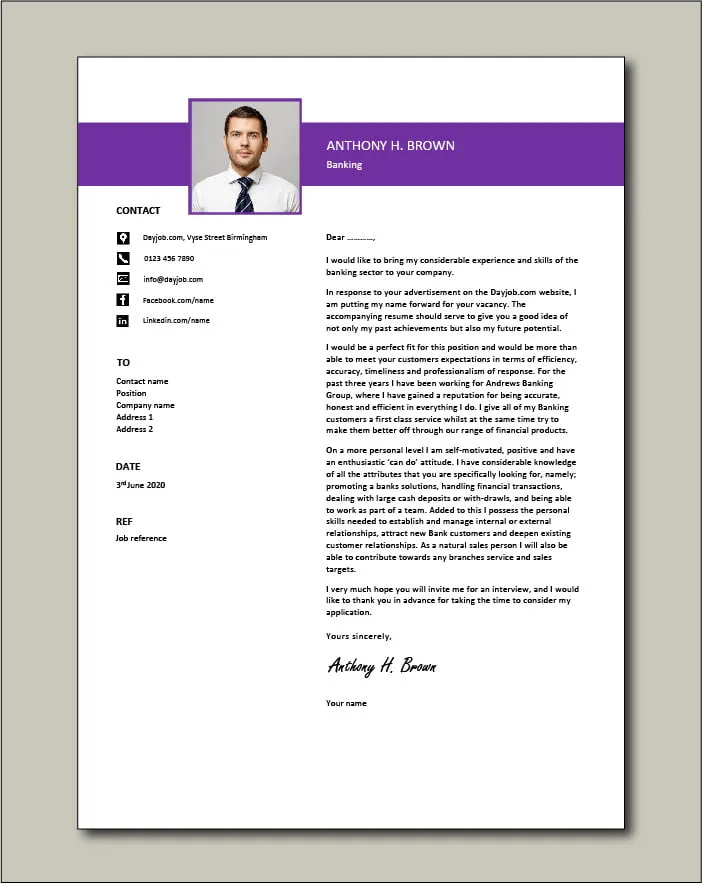
Bank Job Cover Letter Sample Top 5 Tips
Landing a bank job requires more than just a strong resume; a compelling cover letter is crucial. Your cover letter is your first introduction to a potential employer, and it’s your opportunity to showcase why you’re the perfect fit for the role. A well-crafted cover letter can significantly increase your chances of getting an interview. This guide provides top tips, accompanied by a bank job cover letter sample to help you create a standout application. Let’s dive into the top 5 tips to help you write a cover letter that gets noticed and land you that bank job.
Highlight Your Relevant Skills
When applying for a bank job, it’s essential to highlight skills that are most relevant to the position. Banks seek candidates with a specific set of abilities that contribute to the smooth operation of their services and customer satisfaction. These skills not only demonstrate your understanding of the industry but also your potential to excel in the role. Remember to tailor this section to the specific job description. Look at the job description and match your skills to what the employer is looking for, so you can highlight them in your cover letter. It shows that you have taken the time to carefully consider the role and have a good understanding of the bank’s requirements, which increases your chances of getting the interview.
Banking Experience

Banking experience is highly valued in this field. If you have previous experience in a bank or a financial institution, emphasize your roles and responsibilities, and the achievements and contributions you made. Even if you don’t have banking experience, don’t worry. You can still make your letter stand out. Provide details on any related experience or transferable skills from other industries. The key is to connect your past experiences with the requirements of the bank job you are applying for. If you have been in a customer service role, for example, that is a great asset to leverage.
Customer Service Skills
Banks thrive on providing exceptional customer service. Therefore, your customer service skills are incredibly important to any bank. Illustrate your ability to assist customers, resolve issues, and provide a positive experience. Give examples of how you’ve handled customer inquiries, resolved complaints, and ensured customer satisfaction. If you have experience providing customer service, whether face to face or over the phone, the ability to interact with customers will be a great asset to the bank. Any experience in customer service will give you an edge in this area.
Adaptability and Problem-Solving
Banks often face a dynamic environment. So, adaptability and problem-solving skills are important. Show that you can quickly adjust to new situations and handle challenges. Give examples of how you’ve overcome difficulties, implemented solutions, and managed complex situations. Banks are constantly changing and looking for ways to adapt to the market. Your problem-solving abilities and adaptability can be significant assets in a bank job, as banks often seek solutions and improvements in various areas of their operations.
Demonstrate Your Knowledge of the Bank

Showing that you are familiar with the bank is another key tip for writing a strong cover letter. Banks appreciate candidates who take the time to understand their organization. This demonstrates your genuine interest in the company and your seriousness about the job opportunity. Researching the bank will help you show your interest, tailoring your cover letter to the role, and making sure that you address the company’s needs and how your skills match them.
Research the Bank
Before writing your cover letter, do some research on the bank. Learn about its mission, values, services, and recent achievements. This information will allow you to tailor your cover letter to the bank’s specific needs and demonstrate your interest in the organization. Visit the bank’s website, check its social media profiles, and read news articles about the company. This will give you the necessary insights to create a personalized and impactful cover letter.
Tailor Your Cover Letter
Always tailor your cover letter to the specific bank and the job you are applying for. Do not use a generic template. Customize your letter to reflect your understanding of the bank’s values and the requirements of the role. This will show the hiring manager that you have taken the time to understand the bank and that you are a serious candidate. Be specific about why you want to work at that bank and how your skills and experience align with their goals.
Quantify Your Accomplishments

Numbers speak louder than words. Whenever possible, quantify your accomplishments with data and metrics. Provide tangible evidence of your achievements to show potential employers the value you can bring to the bank. Quantifying your accomplishments not only makes your cover letter more compelling but also provides concrete proof of your abilities. It helps to give the hiring manager a clear idea of your past performance and the impact you’ve had in previous roles. This approach helps set you apart from other candidates.
Use Numbers and Data
When describing your achievements, use numbers and data to illustrate your impact. For example, instead of saying “Improved customer satisfaction,” say “Increased customer satisfaction by 15% through implementing new training programs.” Using precise numbers shows that you are results-oriented and can effectively measure and improve performance. These metrics will add weight to your accomplishments and showcase your ability to achieve results, which is highly valued in banking.
Provide Specific Examples
In addition to using numbers, provide specific examples that demonstrate your accomplishments. Describe a situation, your actions, and the outcome. For instance, if you improved the efficiency of a process, describe the original process, the steps you took to improve it, and the results you achieved. Such examples provide context and help the hiring manager understand your capabilities better. Using specific examples can bring your experience to life, make your accomplishments more relatable, and help the hiring manager picture you succeeding in the role.
Proofread and Edit Meticulously

Typos and grammatical errors can undermine your credibility and detract from the positive impression you are trying to make. Before submitting your cover letter, proofread it carefully. Ensure that it is free of errors in grammar, spelling, and punctuation. If possible, have a friend, family member, or career counselor review your cover letter for you. Another pair of eyes can help catch mistakes that you may have missed. The more time you take to proofread, the better.
Check for Grammatical Errors
Thoroughly check your cover letter for any grammatical errors. Pay attention to sentence structure, subject-verb agreement, and the correct use of tenses. Grammatical errors make your cover letter look unprofessional and can make it difficult for the hiring manager to understand your message. Reviewing the cover letter will ensure that your message is clear, concise, and polished.
Ensure Proper Formatting
Proper formatting is equally important. Ensure your cover letter follows a professional format, with appropriate spacing, font, and layout. Use a standard font, such as Times New Roman or Arial, and keep your font size between 10 and 12 points. Make sure that there is consistent spacing between paragraphs and sections. Proper formatting makes your cover letter easy to read and visually appealing.
Follow Up After Submission

After submitting your cover letter, follow up with the hiring manager to express your interest in the position. Send a brief email or make a phone call within a week or two of submitting your application. Briefly restate your interest, reference the position, and inquire about the status of your application. Following up shows that you are proactive and genuinely interested in the opportunity, which can enhance your chances of getting an interview. It is also a good way to confirm that the hiring manager has received your application. When you take the time to follow up, it can positively influence the hiring manager.