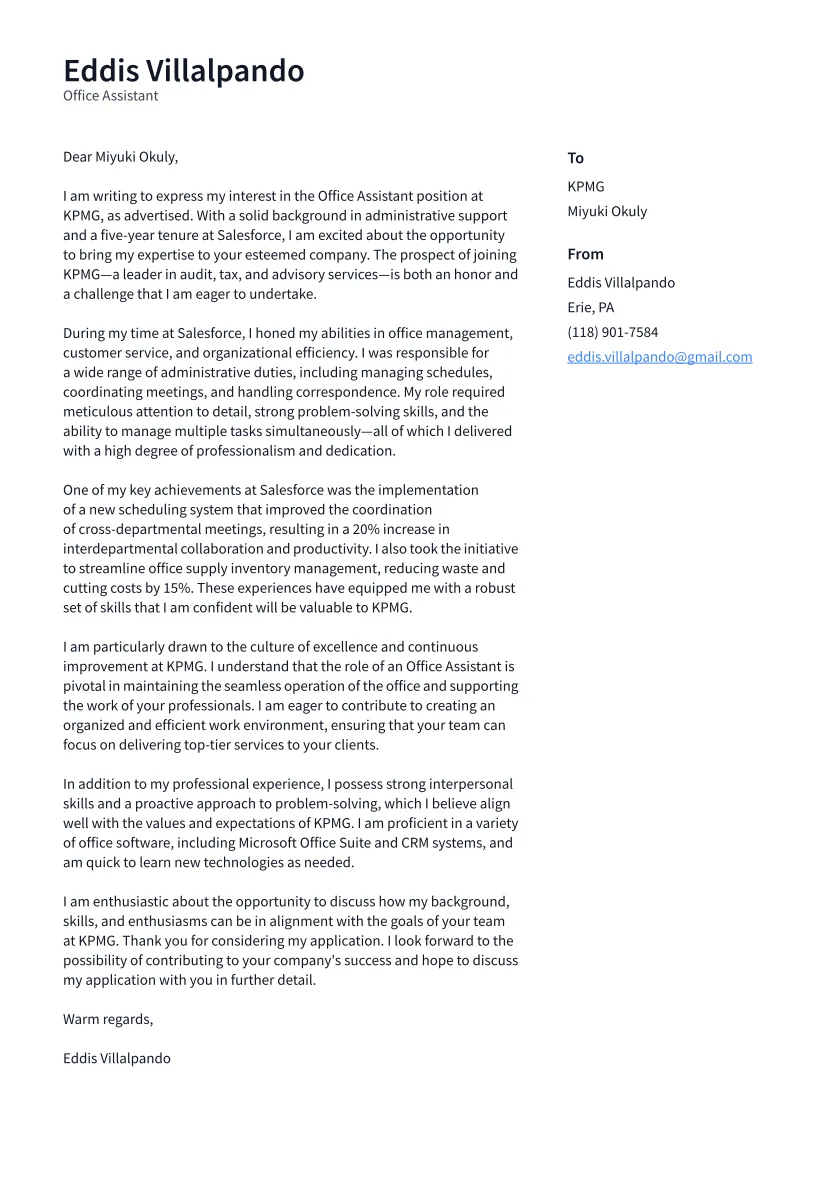
Why a Strong Assistant Cover Letter Matters
Your assistant cover letter is your first chance to make a strong impression on a potential employer. It’s more than just a formality; it’s a crucial tool that can significantly influence whether you get an interview. A well-crafted cover letter allows you to showcase your relevant skills, experience, and personality in a way that a resume alone cannot. It’s your opportunity to connect with the hiring manager, demonstrate your understanding of the role, and express your genuine interest in the company. Ignoring the importance of this document could mean missing out on the chance to demonstrate why you’re the best fit for the position and the organization’s needs. A compelling cover letter can differentiate you from other applicants and make you stand out from the crowd. Furthermore, it helps to set the tone for the rest of your application and provides the context to fully understand your strengths.
Highlighting Your Skills and Experience
When writing your assistant cover letter, focus on highlighting the skills and experiences that directly align with the job description. Review the job posting carefully and identify the key requirements. Then, provide concrete examples of how you’ve demonstrated these skills in past roles. Instead of simply listing your skills, tell a story that showcases your abilities. For instance, if the job description emphasizes organizational skills, describe a situation where you successfully managed multiple projects simultaneously, met deadlines, and kept everything organized. Quantify your accomplishments whenever possible. For example, you could state that you improved office efficiency by a certain percentage or managed a budget of a specific amount. This provides tangible evidence of your capabilities. By showing how your skills and experiences meet the needs of the employer, you make it clear that you are the ideal candidate. Remember, the goal is to convince the reader that you’re the perfect fit.
Relevant Skills for an Assistant

Assistant positions demand a diverse skillset. Depending on the role, these may include administrative support, communication, project management, and technical abilities. You should identify the specific skills mentioned in the job description and tailor your cover letter to highlight those. Strong writing, proofreading and editing skills are essential to ensure clarity and professionalism in all communications. Proficiency in Microsoft Office Suite (Word, Excel, PowerPoint, and Outlook) is almost always expected. Additionally, skills in using other software like CRM systems, project management tools, or specific industry software could be beneficial. Time management, organization, and the ability to prioritize tasks are essential. These demonstrate you can handle a heavy workload efficiently. Be sure to include any experience in managing calendars, scheduling meetings, and arranging travel. Adaptability and the ability to learn new technologies quickly are also highly valued.
Experience in Administrative Tasks
Detailing your administrative experience is critical to getting noticed. Emphasize any experience with tasks like answering phones, managing emails, handling correspondence, and preparing reports. Include examples of how you have successfully managed office supplies and maintained an organized workspace. If the role requires experience with specific office equipment, such as printers, scanners, or fax machines, be sure to include that information. Showcase your ability to handle confidential information with discretion and maintain a professional demeanor. Highlight any experience in managing databases or filing systems. Experience with coordinating meetings, taking minutes, and preparing presentations is also highly valued. Make sure you include the experience relevant to the role you are applying for, and quantify your results whenever possible.
Showcasing Your Soft Skills
While hard skills are important, soft skills are equally critical for success as an assistant. These are the interpersonal and personal attributes that enable you to interact effectively with others. These include communication, problem-solving, and teamwork. Strong communication skills are essential for interacting with colleagues, clients, and superiors. Highlight your ability to listen actively, speak clearly, and write effectively. Problem-solving skills enable you to address unexpected challenges or issues. Showcase your ability to think critically, analyze situations, and find solutions. Teamwork skills demonstrate your ability to collaborate with others to achieve common goals. Provide examples of instances where you’ve worked successfully with teams. Adaptability is also key; demonstrate your ability to adjust to new tasks, environments, and priorities. Detail your experience in multitasking and managing multiple responsibilities simultaneously. Finally, mention your commitment to continuous learning and willingness to develop new skills.
Communication and Interpersonal Skills

Effective communication is at the heart of any successful assistant role. This extends beyond simply writing emails; it includes active listening, clear articulation, and adapting your communication style to different audiences. Interpersonal skills also play a significant role, encompassing empathy, diplomacy, and building rapport. Showcase instances in your cover letter where you have successfully handled sensitive information, resolved conflicts, or provided excellent customer service. Emphasize your ability to communicate clearly and concisely, whether in writing, on the phone, or in person. Provide examples of your ability to build positive relationships with colleagues, clients, and stakeholders. Mention any experience in managing expectations, providing constructive feedback, and resolving issues with tact and professionalism. Your ability to communicate effectively helps to create a positive work environment.
Organization and Time Management
Exceptional organization and time management skills are crucial for assistants. This involves being able to manage tasks, prioritize deadlines, and maintain a structured approach to work. Your cover letter should demonstrate your capacity to plan and organize schedules, manage multiple projects simultaneously, and meet deadlines consistently. Provide specific examples of how you have streamlined workflows, improved efficiency, or reduced errors through effective organization. Highlight your proficiency with calendar management, scheduling appointments, and arranging travel. Discuss your ability to create and maintain filing systems, both physical and digital. Mention any experience with project management tools or systems. Showcase your ability to adapt to changing priorities, manage your time effectively, and meet deadlines without compromising quality.
Detail-Oriented Approach
A detail-oriented approach is essential for assistants, as they often handle tasks that require precision and accuracy. Demonstrate your ability to pay close attention to detail, spot errors, and ensure accuracy in your work. Provide examples of times when you have proofread documents, checked data for accuracy, or identified and corrected errors. Highlight your ability to manage tasks that require careful attention, such as data entry, report preparation, or maintaining records. Mention any experience with quality control or ensuring compliance with specific standards. Showcase your commitment to producing accurate, error-free work. Your cover letter should clearly communicate your commitment to accuracy and attention to detail.
Tailoring Your Cover Letter to the Job

Generic cover letters rarely impress employers. To maximize your chances of success, always tailor your cover letter to the specific job and company. Start by carefully reviewing the job description to understand the required skills, experience, and qualifications. Then, customize your cover letter to address each of these points directly. Use the same keywords and phrases that are used in the job description to show that you understand the role and the company’s needs. Focus on the specific responsibilities and expectations of the role. Demonstrate how your qualifications meet those requirements. Show, don’t just tell, that you have the skills and experience the employer is seeking. Personalize your letter by researching the company and mentioning any specific aspects of their work or values that resonate with you. This personalized approach helps you stand out and demonstrates your genuine interest.
Researching the Company and the Role
Before writing your cover letter, conduct thorough research on the company and the role you are applying for. This research will help you customize your letter and demonstrate your understanding of the company’s mission, values, and culture. Visit the company’s website to learn about their products or services, their history, and their recent achievements. Read news articles, press releases, and social media posts to gain additional insights. Review the job description carefully to understand the specific responsibilities, required skills, and desired qualifications. Identify the company’s values and culture. Tailor your cover letter to reflect these aspects, showing how your skills and experience align with their mission and culture. Mention any specific initiatives, projects, or achievements of the company that resonate with you and that you want to be a part of.
Customizing Your Letter for Each Application
Customization is a critical aspect of writing an effective cover letter. Avoid using a generic template and instead, tailor your letter to each job application. Start by addressing the specific requirements listed in the job description. Highlight the skills and experience that align most closely with the role’s demands. Mention any specific projects, experiences, or qualifications that are particularly relevant to the role. Personalize your letter by incorporating information about the company and the hiring manager. Reference something you admire about the company or the position. Use the company’s name, industry terms, and the language used in the job description throughout your letter. Take the time to tailor each cover letter specifically for the job you’re applying for. This effort will reflect your interest in the role and your understanding of the company’s needs.
Formatting and Structure for Impact

The format and structure of your assistant cover letter play a significant role in its impact. A well-formatted cover letter is easy to read and presents your information in a clear, organized manner. Use a professional font such as Arial, Calibri, or Times New Roman, and ensure that the font size is legible (typically 11 or 12 points). Maintain consistent formatting throughout the document, including spacing, margins, and alignment. Divide your letter into clear sections with headings and subheadings. Use bullet points to highlight key skills and experiences. Proofread carefully for any typos or grammatical errors. A well-formatted cover letter shows attention to detail, organization, and professionalism. This helps you make a positive first impression.
Creating a Professional Header
Your header is the first thing the hiring manager will see, so it’s essential to create a professional and visually appealing header. Include your full name, contact information (phone number and email address), and professional links (such as your LinkedIn profile or online portfolio) at the top of the letter. Use a clear and readable font. Make sure your contact information is accurate and up to date. Add the date and the hiring manager’s name and title (if known). If you are applying through an online portal and the application specifies otherwise, follow the specific instructions provided. Ensuring the header is clean and professional sets the tone for the rest of your cover letter and demonstrates your attention to detail.
Writing a Compelling Opening
The opening of your cover letter is crucial for capturing the reader’s attention and making them want to read more. Start by addressing the hiring manager by name if possible. If you do not know the hiring manager’s name, use a general greeting. Clearly state the position you are applying for and where you found the job posting. Then, immediately grab the reader’s attention by highlighting your most relevant skill or experience. Briefly mention why you are interested in the role and the company. Keep it concise, professional, and engaging. Avoid generic opening statements like “I am writing to express my interest…” Instead, use a more dynamic approach that demonstrates your enthusiasm and understanding of the role.
Structuring the Body of Your Letter

The body of your cover letter should provide detailed examples of your skills, experience, and qualifications. This is where you demonstrate how your abilities align with the job requirements. Use the STAR method (Situation, Task, Action, Result) to structure your examples. Describe the situation you were in, the task you needed to complete, the actions you took, and the results you achieved. This method allows you to provide concrete evidence of your accomplishments and show the impact of your work. Focus on the most relevant and compelling experiences that align with the job description. Use action verbs to describe your responsibilities and achievements. Break up your body into clear, concise paragraphs and use bullet points to highlight key skills and accomplishments. Make sure your body paragraphs are engaging and easy to read.
Crafting a Strong Closing
Your closing should leave a lasting impression and encourage the hiring manager to take action. Restate your interest in the position and reiterate your key qualifications. Thank the hiring manager for their time and consideration. Include a call to action, such as inviting them to contact you for an interview or to discuss your qualifications further. Reiterate your contact information. Keep your closing concise and professional. Ensure the closing is enthusiastic and conveys your genuine interest. A strong closing demonstrates your confidence and makes it easy for the hiring manager to take the next step.
Avoiding Common Mistakes
To increase your chances of success, avoid common mistakes when writing your assistant cover letter. These mistakes can make you look unprofessional or unqualified. Be aware of the most frequent errors and proofread your cover letter before submitting it. Doing so shows that you pay attention to detail and that you take the application process seriously.
Generic Cover Letters

Generic cover letters are a major turn-off for hiring managers. They show a lack of effort and a lack of genuine interest in the specific job or company. Always customize your cover letter to match the requirements of the role and the values of the company. Avoid using a template that can be easily identified as generic. Instead, tailor your letter to each application, highlighting relevant skills, experiences, and accomplishments. Research the company and reference something specific that interests you. Use the keywords and phrases from the job description. A customized letter demonstrates to the hiring manager that you’ve taken the time to understand their needs and are truly interested in the position.
Typos and Grammatical Errors
Typos and grammatical errors can undermine your credibility and create a negative impression. A cover letter riddled with errors demonstrates a lack of attention to detail and professionalism. Before submitting your cover letter, proofread it carefully for any spelling, grammar, and punctuation errors. Use a grammar checker, but also read it aloud to catch any mistakes that the software might miss. Ask a friend, family member, or career counselor to review your cover letter for errors. A clean, error-free cover letter demonstrates your professionalism, and attention to detail. This is an absolute must for any assistant cover letter.
Focusing on Yourself Too Much
While it’s important to highlight your skills and experience, avoid making the cover letter all about you. The best cover letters focus on how you can help the company achieve its goals. Instead of focusing solely on what you want or need, emphasize what you can bring to the table. Tailor your cover letter to the employer’s needs and expectations. Focus on the value you can provide to the company. Show how your skills and experience align with the requirements of the role and can contribute to the organization’s success. Describe how your contributions can help the hiring manager. By demonstrating how your skills and experience benefit the company, you make it more likely that the hiring manager will consider you a strong candidate.
Show, Don’t Tell
Instead of simply stating your skills, show the employer what you can do. Use examples from your past experiences to demonstrate your capabilities. Provide specific instances where you have successfully applied your skills and achieved positive results. For instance, instead of saying “I am a good communicator,” describe a situation where you effectively communicated with a diverse group of people to achieve a common goal. Use the STAR method (Situation, Task, Action, Result) to provide detailed examples of your accomplishments. Quantify your achievements whenever possible, such as increasing efficiency by a certain percentage or reducing errors by a specific amount. Show, don’t tell, ensures that your claims are credible and memorable.
Including a Call to Action
Always include a call to action in your assistant cover letter. A call to action encourages the hiring manager to take the next step. Without one, the hiring manager might not know what you want them to do next. Invite them to contact you for an interview or to discuss your qualifications further. Reiterate your enthusiasm for the position and the company. Provide your contact information. Make it easy for them to respond. Your call to action should be clear, concise, and specific. Include a direct invitation to the next step, which encourages the hiring manager to take action.